 Image 1 of 1
Techniques, Safety, and Professional Application
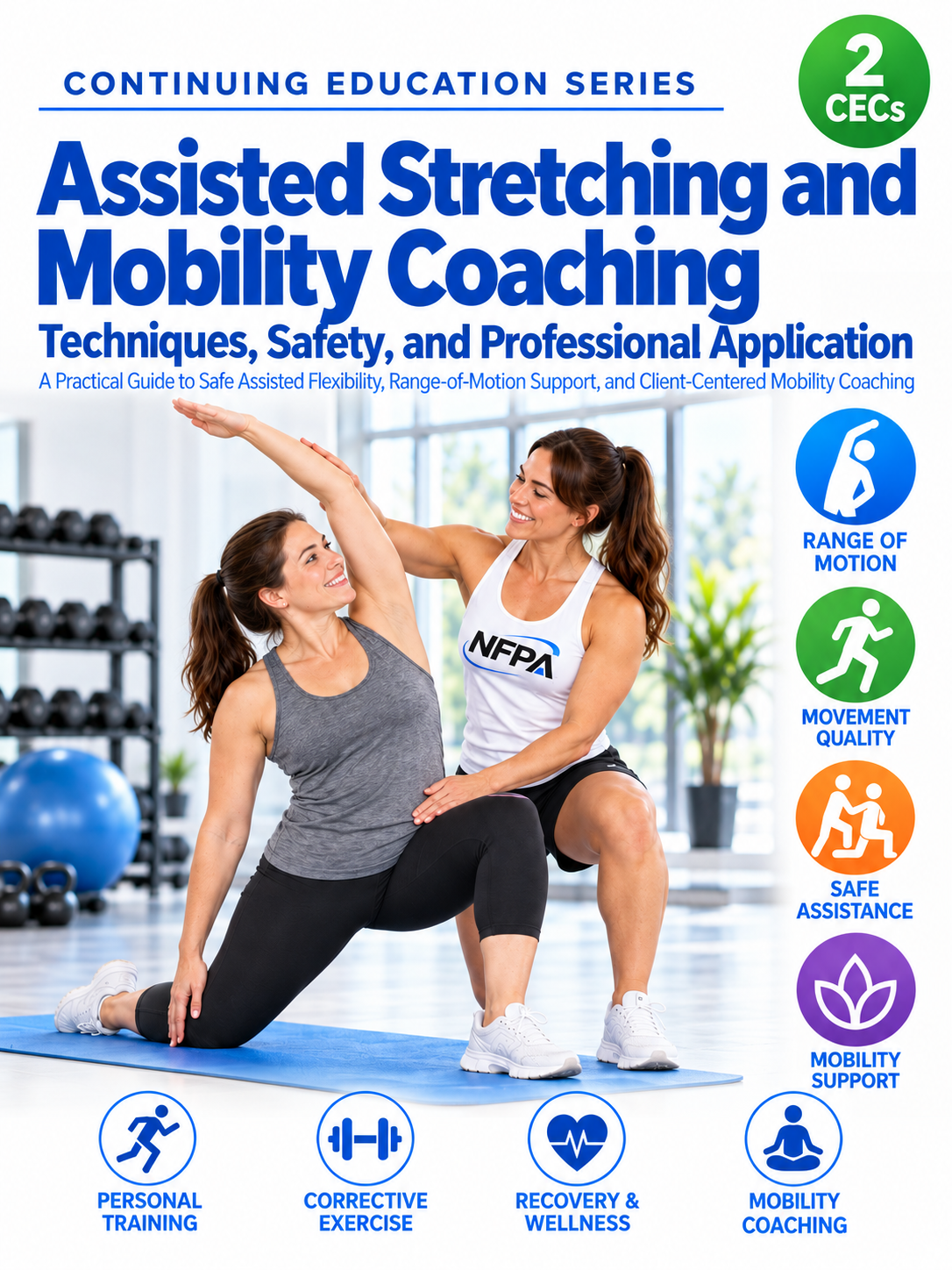
Learn how to help clients improve flexibility, usable range of motion, and movement quality through safe stretching techniques, appropriate hands-on assistance, and individualized mobility programming.
Assisted Stretching and Mobility Coaching is a practical 2-CEC continuing education course exploring evidence-informed flexibility training, assisted stretching, movement preparation, and professional coaching applications.
The course examines the differences between passive flexibility and functional mobility, how stretching influences range of motion, and when assisted stretching provides meaningful benefits beyond self-stretching, active mobility, or resistance training.
Fitness professionals will learn how to use appropriate positioning, controlled force, client communication, and ongoing consent when providing hands-on stretching assistance.
Special emphasis is placed on professional scope of practice, recognizing symptoms that require modification or referral, and helping clients develop the strength and control needed to use newly gained range of motion.
Topics Include:
Understanding flexibility, mobility, and usable range of motion
Passive versus active range of motion
Stretch tolerance and flexibility adaptations
Static, dynamic, ballistic, and PNF stretching methods
Self-stretching versus assisted stretching
Full-range resistance training and mobility development
Safe hand placement, stabilization, and force application
Trainer body mechanics during assisted stretching
Client consent and professional communication
Stretching intensity and client feedback
Recognizing pain, neurological symptoms, and warning signs
Static stretching dosage and progression
PNF hold-relax and contract-relax techniques
Stretching before and after exercise
Stretching, injury prevention, and recovery misconceptions
Assisted stretching for hamstrings, hips, quadriceps, and calves
Shoulder, chest, and neck stretching precautions
Mobility considerations for older adults
Osteoporosis, joint replacement, pregnancy, and hypermobility
Integrating passive range with active mobility and strength
Professional scope, documentation, and referral
Practical assisted stretching coaching scenarios
The NFPA Assisted Stretching Coaching Process
Course Includes:
2 NFPA Continuing Education Credits
Self-paced PDF continuing education course
10-question Practice Knowledge Check with answer key and explanations
Practical assisted-stretching techniques, mobility programming examples, and applied coaching scenarios
Course Code: CEC-ASM-201
Improve usable movement without forcing range, creating pain, or exceeding professional scope.
Techniques, Safety, and Professional Application
Learn how to help clients improve flexibility, usable range of motion, and movement quality through safe stretching techniques, appropriate hands-on assistance, and individualized mobility programming.
Assisted Stretching and Mobility Coaching is a practical 2-CEC continuing education course exploring evidence-informed flexibility training, assisted stretching, movement preparation, and professional coaching applications.
The course examines the differences between passive flexibility and functional mobility, how stretching influences range of motion, and when assisted stretching provides meaningful benefits beyond self-stretching, active mobility, or resistance training.
Fitness professionals will learn how to use appropriate positioning, controlled force, client communication, and ongoing consent when providing hands-on stretching assistance.
Special emphasis is placed on professional scope of practice, recognizing symptoms that require modification or referral, and helping clients develop the strength and control needed to use newly gained range of motion.
Topics Include:
Understanding flexibility, mobility, and usable range of motion
Passive versus active range of motion
Stretch tolerance and flexibility adaptations
Static, dynamic, ballistic, and PNF stretching methods
Self-stretching versus assisted stretching
Full-range resistance training and mobility development
Safe hand placement, stabilization, and force application
Trainer body mechanics during assisted stretching
Client consent and professional communication
Stretching intensity and client feedback
Recognizing pain, neurological symptoms, and warning signs
Static stretching dosage and progression
PNF hold-relax and contract-relax techniques
Stretching before and after exercise
Stretching, injury prevention, and recovery misconceptions
Assisted stretching for hamstrings, hips, quadriceps, and calves
Shoulder, chest, and neck stretching precautions
Mobility considerations for older adults
Osteoporosis, joint replacement, pregnancy, and hypermobility
Integrating passive range with active mobility and strength
Professional scope, documentation, and referral
Practical assisted stretching coaching scenarios
The NFPA Assisted Stretching Coaching Process
Course Includes:
2 NFPA Continuing Education Credits
Self-paced PDF continuing education course
10-question Practice Knowledge Check with answer key and explanations
Practical assisted-stretching techniques, mobility programming examples, and applied coaching scenarios
Course Code: CEC-ASM-201
Improve usable movement without forcing range, creating pain, or exceeding professional scope.