 Image 1 of 1
Behavior Change Coaching and Adherence
Motivational Interviewing, Readiness, Goal Setting, and Sustainable Client Change
Learn how to help clients move from good intentions to consistent exercise habits through effective communication, meaningful goal setting, realistic action planning, and confidence-building strategies.
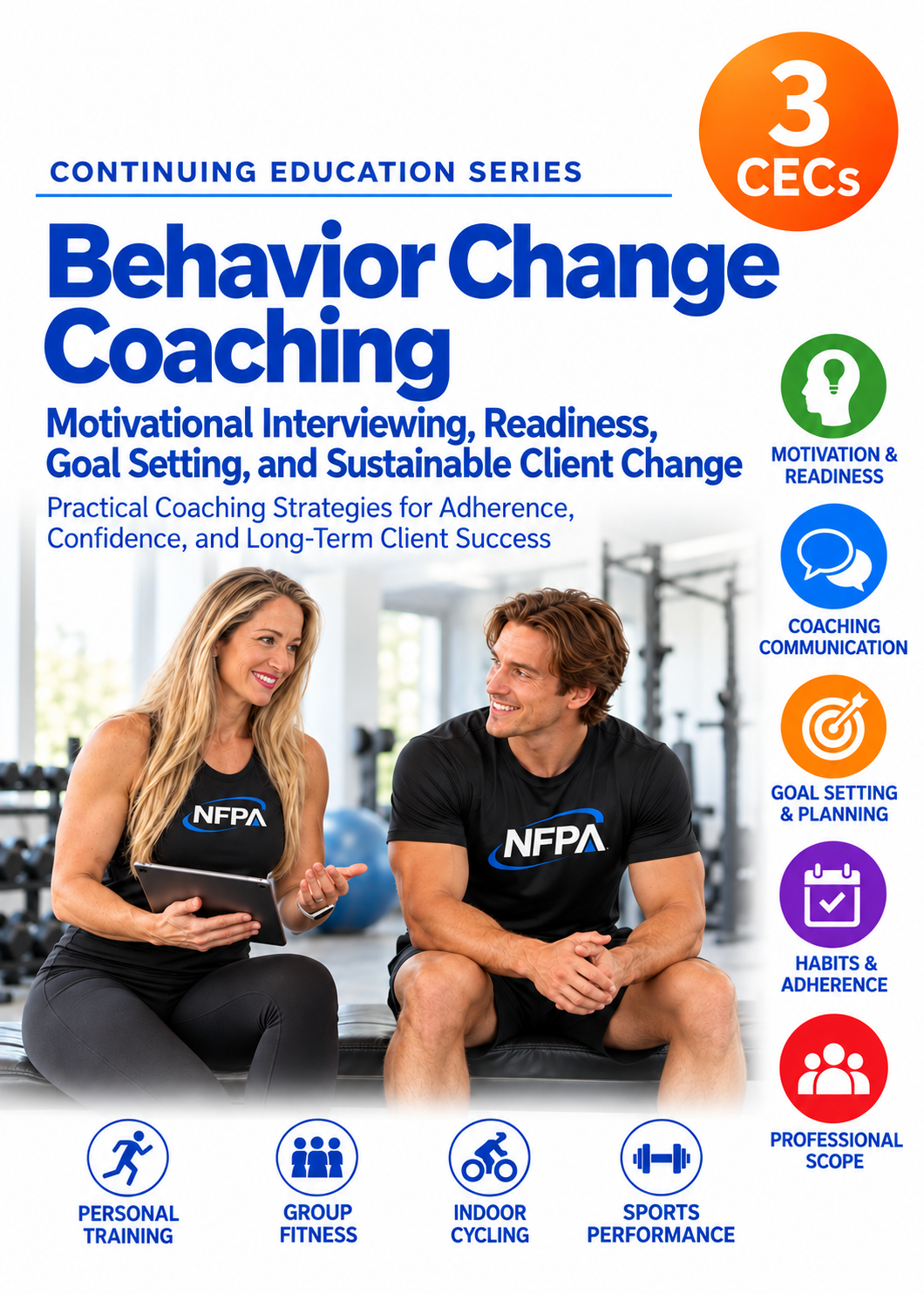
Behavior Change Coaching is a practical 3-CEC continuing education course exploring evidence-informed behavior-change principles and their application to personal training, group fitness, and other professional exercise settings.
The course examines why knowing the benefits of exercise does not automatically lead to consistent participation. Fitness professionals will learn how motivation, confidence, personal values, environmental barriers, social support, stress, and daily routines influence exercise adherence.
Special attention is given to motivational interviewing-informed communication, understanding ambivalence, supporting client autonomy, and recognizing readiness for specific behavior changes.
Fitness professionals will learn how to use open questions, affirmations, reflections, and summaries to develop collaborative coaching conversations without relying on guilt, pressure, or confrontation.
The course also explores practical strategies for setting meaningful goals, developing action and backup plans, reducing environmental barriers, monitoring progress, responding constructively to setbacks, and helping clients become increasingly independent.
Topics Include:
Understanding the knowledge-action gap in fitness
Personal, social, and environmental influences on exercise adherence
Intrinsic, extrinsic, autonomous, and controlled motivation
Self-determination theory and exercise behavior
Autonomy, competence, and relatedness
Readiness for change and behavior-specific planning
Understanding client ambivalence
Motivational interviewing-informed fitness coaching
Engaging, focusing, evoking, and planning
Recognizing and reducing the righting reflex
Open questions, affirmations, reflections, and summaries (OARS)
Change talk versus sustain talk
Helping clients identify their own reasons for change
Developing confidence and self-efficacy
Importance and confidence scaling
Mastery experiences and achievable exercise progressions
Outcome, performance, process, and action goals
SMART goals and their limitations
Action planning and coping planning
Implementation intentions and if-then strategies
Developing realistic backup exercise plans
Minimum viable exercise behaviors
Habit formation and common misconceptions
Environmental design, cues, and reducing friction
Self-monitoring, feedback, and supportive accountability
Responding constructively to missed workouts and setbacks
Supporting long-term client independence
Maintaining professional boundaries in behavior-change coaching
Recognizing mental-health and eating-disorder referral concerns
Practical client coaching scenarios
The NFPA Behavior Change Coaching Process
Course Includes:
3 NFPA Continuing Education Credits
Self-paced PDF continuing education course
15-question Practice Knowledge Check with answer key and explanations
7 practical coaching cases involving motivation, readiness, exercise barriers, confidence, setbacks, and professional referral
Practical communication examples, goal-setting frameworks, and action-planning strategies
Course Code: CEC-BCC-301
The goal is not simply to make clients follow instructions—it is to help them become increasingly capable of making useful decisions independently.
Motivational Interviewing, Readiness, Goal Setting, and Sustainable Client Change
Learn how to help clients move from good intentions to consistent exercise habits through effective communication, meaningful goal setting, realistic action planning, and confidence-building strategies.
Behavior Change Coaching is a practical 3-CEC continuing education course exploring evidence-informed behavior-change principles and their application to personal training, group fitness, and other professional exercise settings.
The course examines why knowing the benefits of exercise does not automatically lead to consistent participation. Fitness professionals will learn how motivation, confidence, personal values, environmental barriers, social support, stress, and daily routines influence exercise adherence.
Special attention is given to motivational interviewing-informed communication, understanding ambivalence, supporting client autonomy, and recognizing readiness for specific behavior changes.
Fitness professionals will learn how to use open questions, affirmations, reflections, and summaries to develop collaborative coaching conversations without relying on guilt, pressure, or confrontation.
The course also explores practical strategies for setting meaningful goals, developing action and backup plans, reducing environmental barriers, monitoring progress, responding constructively to setbacks, and helping clients become increasingly independent.
Topics Include:
Understanding the knowledge-action gap in fitness
Personal, social, and environmental influences on exercise adherence
Intrinsic, extrinsic, autonomous, and controlled motivation
Self-determination theory and exercise behavior
Autonomy, competence, and relatedness
Readiness for change and behavior-specific planning
Understanding client ambivalence
Motivational interviewing-informed fitness coaching
Engaging, focusing, evoking, and planning
Recognizing and reducing the righting reflex
Open questions, affirmations, reflections, and summaries (OARS)
Change talk versus sustain talk
Helping clients identify their own reasons for change
Developing confidence and self-efficacy
Importance and confidence scaling
Mastery experiences and achievable exercise progressions
Outcome, performance, process, and action goals
SMART goals and their limitations
Action planning and coping planning
Implementation intentions and if-then strategies
Developing realistic backup exercise plans
Minimum viable exercise behaviors
Habit formation and common misconceptions
Environmental design, cues, and reducing friction
Self-monitoring, feedback, and supportive accountability
Responding constructively to missed workouts and setbacks
Supporting long-term client independence
Maintaining professional boundaries in behavior-change coaching
Recognizing mental-health and eating-disorder referral concerns
Practical client coaching scenarios
The NFPA Behavior Change Coaching Process
Course Includes:
3 NFPA Continuing Education Credits
Self-paced PDF continuing education course
15-question Practice Knowledge Check with answer key and explanations
7 practical coaching cases involving motivation, readiness, exercise barriers, confidence, setbacks, and professional referral
Practical communication examples, goal-setting frameworks, and action-planning strategies
Course Code: CEC-BCC-301
The goal is not simply to make clients follow instructions—it is to help them become increasingly capable of making useful decisions independently.