 Image 1 of 1
Cognition, Mobility, Safety, and Active Aging
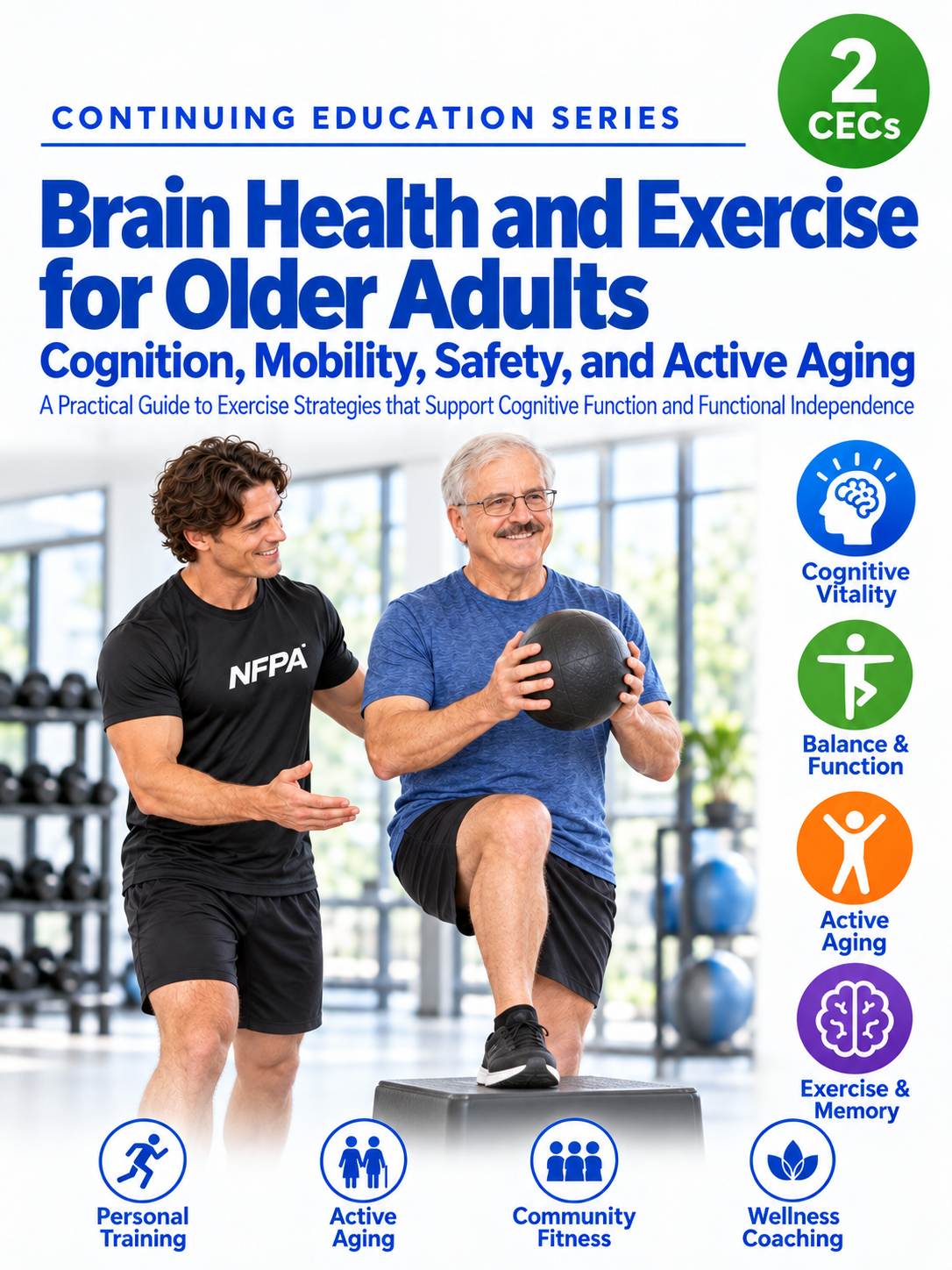
Learn how to use evidence-informed exercise programming to support cognitive health, physical function, balance, motor learning, and independence in older adults.
Brain Health and Exercise for Older Adults is a practical 2-CEC continuing education course exploring the relationship between physical activity, cognitive function, healthy aging, and safe exercise programming.
The course explains how normal aging can influence attention, memory, processing speed, coordination, and motor learning without making dementia an inevitable part of aging. Fitness professionals will examine how aerobic exercise, resistance training, balance activities, and multicomponent programming may support physical and cognitive health.
Special attention is given to dual-task exercise, progressive cognitive-motor challenges, respectful communication, clients with mild cognitive impairment, and recognizing meaningful changes that warrant medical evaluation.
Fitness professionals will learn to build challenging but appropriate programs that support the whole person while maintaining clear professional boundaries.
Topics Include:
Understanding brain health beyond memory
Normal cognitive aging versus dementia
Mild cognitive impairment and exercise participation
Attention, processing speed, working memory, and executive function
Cardiovascular, metabolic, and cerebrovascular health
Neural plasticity and exercise-related brain-health mechanisms
Aerobic exercise and cognitive health
Resistance training and functional independence
Balance, mobility, coordination, and fall-related safety
Multicomponent exercise programming for older adults
Motor learning, repetition, and purposeful movement challenges
Motor-cognitive and motor-motor dual-task training
Understanding dual-task cost and safe progression
Tai chi, dance, walking groups, and social engagement
Developing individualized brain-health fitness programs
Communication strategies for clients with cognitive changes
Programming considerations for mild cognitive impairment
Exercise participation for clients with diagnosed dementia
Recognizing neurological warning signs and emergency situations
Professional scope, referral, and appropriate healthcare coordination
Practical older-adult coaching scenarios
The NFPA Brain Health Programming Process
Course Includes:
2 NFPA Continuing Education Credits
Self-paced PDF continuing education course
10-question Practice Knowledge Check with answer key and explanations
Practical older-adult programming examples, dual-task progressions, and applied coaching scenarios
Course Code: CEC-BH-201
Train the whole person—not simply the muscles.
Cognition, Mobility, Safety, and Active Aging
Learn how to use evidence-informed exercise programming to support cognitive health, physical function, balance, motor learning, and independence in older adults.
Brain Health and Exercise for Older Adults is a practical 2-CEC continuing education course exploring the relationship between physical activity, cognitive function, healthy aging, and safe exercise programming.
The course explains how normal aging can influence attention, memory, processing speed, coordination, and motor learning without making dementia an inevitable part of aging. Fitness professionals will examine how aerobic exercise, resistance training, balance activities, and multicomponent programming may support physical and cognitive health.
Special attention is given to dual-task exercise, progressive cognitive-motor challenges, respectful communication, clients with mild cognitive impairment, and recognizing meaningful changes that warrant medical evaluation.
Fitness professionals will learn to build challenging but appropriate programs that support the whole person while maintaining clear professional boundaries.
Topics Include:
Understanding brain health beyond memory
Normal cognitive aging versus dementia
Mild cognitive impairment and exercise participation
Attention, processing speed, working memory, and executive function
Cardiovascular, metabolic, and cerebrovascular health
Neural plasticity and exercise-related brain-health mechanisms
Aerobic exercise and cognitive health
Resistance training and functional independence
Balance, mobility, coordination, and fall-related safety
Multicomponent exercise programming for older adults
Motor learning, repetition, and purposeful movement challenges
Motor-cognitive and motor-motor dual-task training
Understanding dual-task cost and safe progression
Tai chi, dance, walking groups, and social engagement
Developing individualized brain-health fitness programs
Communication strategies for clients with cognitive changes
Programming considerations for mild cognitive impairment
Exercise participation for clients with diagnosed dementia
Recognizing neurological warning signs and emergency situations
Professional scope, referral, and appropriate healthcare coordination
Practical older-adult coaching scenarios
The NFPA Brain Health Programming Process
Course Includes:
2 NFPA Continuing Education Credits
Self-paced PDF continuing education course
10-question Practice Knowledge Check with answer key and explanations
Practical older-adult programming examples, dual-task progressions, and applied coaching scenarios
Course Code: CEC-BH-201
Train the whole person—not simply the muscles.