 Image 1 of 1
Coaching for Consistency: Habits and Adherence
Motivation, Habits, and Client Adherence
Learn how to help fitness clients turn good intentions into sustainable exercise behaviors through evidence-informed motivation strategies, effective communication, realistic goal setting, habit development, and personalized accountability.
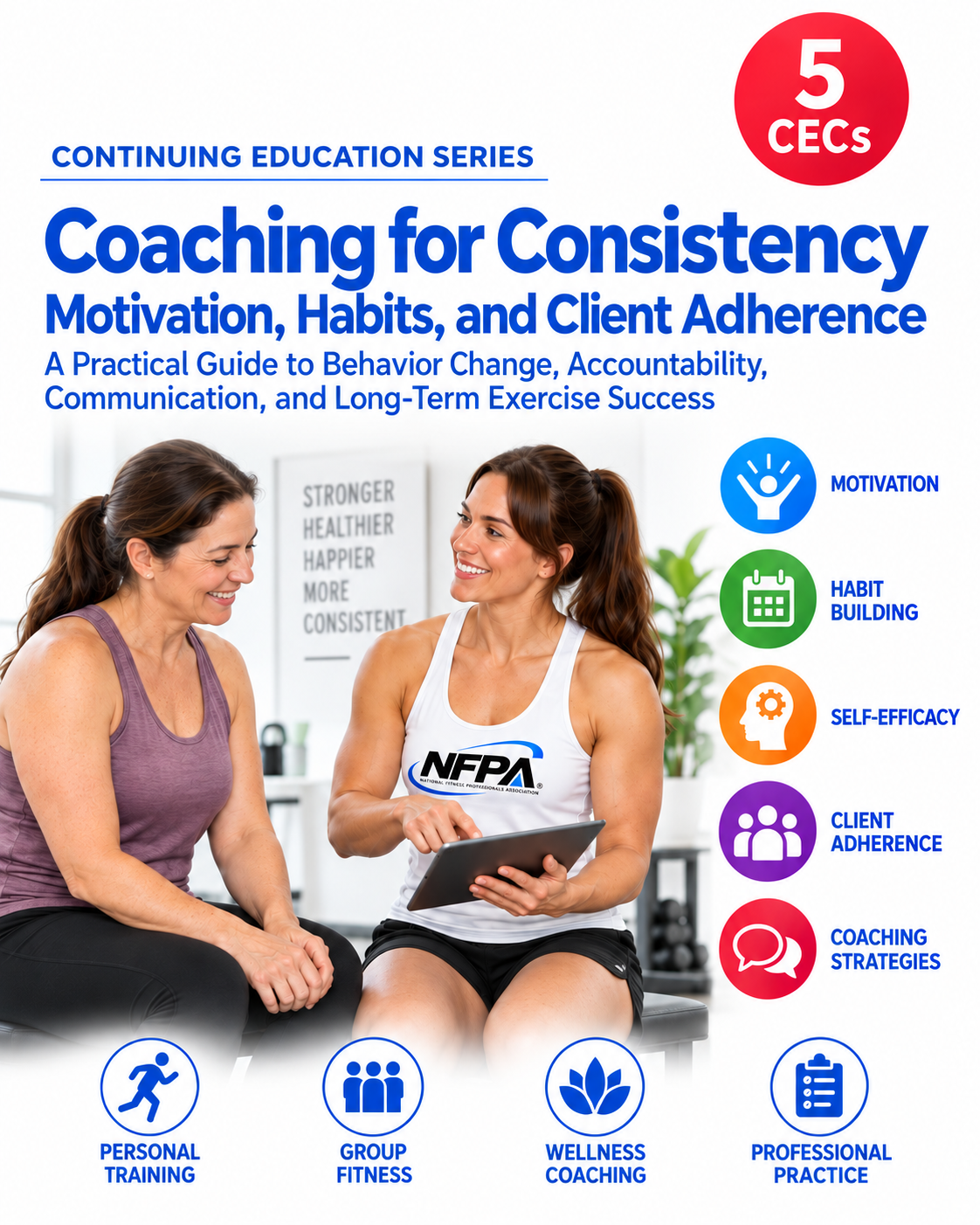
Coaching for Consistency is a comprehensive 5-CEC continuing education course exploring the behavioral and practical foundations of long-term exercise participation.
The course examines why understanding the benefits of exercise does not automatically lead to consistent physical activity. Fitness professionals will learn how motivation, confidence, personal values, environmental barriers, habits, social support, and everyday responsibilities influence a client's ability to follow an exercise program.
Special attention is given to the difference between motivation and behavioral systems. Participants will learn why effective coaching is not simply about encouraging clients to try harder, but about designing realistic routines and exercise plans that can be sustained when time, energy, and motivation fluctuate.
The course explores autonomous versus controlled motivation, self-efficacy, motivational interviewing-informed communication, readiness for change, implementation intentions, and practical methods for reducing barriers to exercise.
Fitness professionals will learn how to use open questions, affirmations, reflective listening, and summaries to improve coaching conversations without relying on guilt, shame, or excessive pressure.
Participants will also explore how to design flexible exercise programs, create alternative workout plans, monitor consistency, respond constructively to setbacks, and support greater client independence.
The course emphasizes that successful coaching builds long-term capabilities rather than making clients permanently dependent on a trainer for motivation.
Topics Include:
Understanding the intention-action gap in exercise
Why education alone does not guarantee exercise adherence
Treating adherence as part of exercise-program design
Motivation versus sustainable behavioral systems
Controlled and autonomous motivation
Self-determination theory and physical activity
Autonomy, competence, and relatedness
Developing personally meaningful reasons for exercise
Client readiness, ambivalence, and behavior-specific change
Understanding the Stages of Change framework
Importance and confidence scaling
Self-efficacy and exercise participation
Developing confidence through successful experiences
Mastery, modeling, feedback, and interpretation
Habit formation and environmental cues
Why there is no universal 21-day habit rule
Reducing behavioral friction and unnecessary decisions
Developing minimum viable exercise behaviors
Outcome, performance, behavior, and process goals
Creating implementation intentions and if-then plans
Developing coping plans for predictable obstacles
Building Plan A, Plan B, and Plan C exercise options
Motivational interviewing-informed fitness coaching
Partnership, acceptance, evocation, and compassion
Open questions, affirmations, reflective listening, and summaries (OARS)
Recognizing change talk and sustain talk
Asking permission before providing advice
Communication strategies that support client autonomy
Avoiding shame-based coaching and fear-based motivation
Identifying logistical, emotional, and environmental barriers
Supporting clients through missed workouts and setbacks
Distinguishing temporary lapses from recurring adherence problems
Self-monitoring and constructive progress reviews
Accountability without unnecessary trainer dependence
Flexible program design for challenging schedules
Adapting goals as client circumstances change
Supporting long-term exercise participation and independence
Recognizing psychological concerns requiring professional referral
Practical client adherence and motivation scenarios
The NFPA Coaching for Consistency Process
Course Includes:
5 NFPA Continuing Education Credits
Self-paced PDF continuing education course
25-question Practice Knowledge Check with answer key and explanations
4 integrated client coaching cases involving repeated exercise restarts, weight-loss expectations, motivation, habit development, and long-term engagement
Practical goal-setting, communication, accountability, and adherence-building frameworks
Evidence-informed strategies for helping clients develop sustainable exercise habits and greater independence
Course Code: CEC-CC-501
Motivation starts behavior. Systems sustain it. Coaching helps the client build both.
Motivation, Habits, and Client Adherence
Learn how to help fitness clients turn good intentions into sustainable exercise behaviors through evidence-informed motivation strategies, effective communication, realistic goal setting, habit development, and personalized accountability.
Coaching for Consistency is a comprehensive 5-CEC continuing education course exploring the behavioral and practical foundations of long-term exercise participation.
The course examines why understanding the benefits of exercise does not automatically lead to consistent physical activity. Fitness professionals will learn how motivation, confidence, personal values, environmental barriers, habits, social support, and everyday responsibilities influence a client's ability to follow an exercise program.
Special attention is given to the difference between motivation and behavioral systems. Participants will learn why effective coaching is not simply about encouraging clients to try harder, but about designing realistic routines and exercise plans that can be sustained when time, energy, and motivation fluctuate.
The course explores autonomous versus controlled motivation, self-efficacy, motivational interviewing-informed communication, readiness for change, implementation intentions, and practical methods for reducing barriers to exercise.
Fitness professionals will learn how to use open questions, affirmations, reflective listening, and summaries to improve coaching conversations without relying on guilt, shame, or excessive pressure.
Participants will also explore how to design flexible exercise programs, create alternative workout plans, monitor consistency, respond constructively to setbacks, and support greater client independence.
The course emphasizes that successful coaching builds long-term capabilities rather than making clients permanently dependent on a trainer for motivation.
Topics Include:
Understanding the intention-action gap in exercise
Why education alone does not guarantee exercise adherence
Treating adherence as part of exercise-program design
Motivation versus sustainable behavioral systems
Controlled and autonomous motivation
Self-determination theory and physical activity
Autonomy, competence, and relatedness
Developing personally meaningful reasons for exercise
Client readiness, ambivalence, and behavior-specific change
Understanding the Stages of Change framework
Importance and confidence scaling
Self-efficacy and exercise participation
Developing confidence through successful experiences
Mastery, modeling, feedback, and interpretation
Habit formation and environmental cues
Why there is no universal 21-day habit rule
Reducing behavioral friction and unnecessary decisions
Developing minimum viable exercise behaviors
Outcome, performance, behavior, and process goals
Creating implementation intentions and if-then plans
Developing coping plans for predictable obstacles
Building Plan A, Plan B, and Plan C exercise options
Motivational interviewing-informed fitness coaching
Partnership, acceptance, evocation, and compassion
Open questions, affirmations, reflective listening, and summaries (OARS)
Recognizing change talk and sustain talk
Asking permission before providing advice
Communication strategies that support client autonomy
Avoiding shame-based coaching and fear-based motivation
Identifying logistical, emotional, and environmental barriers
Supporting clients through missed workouts and setbacks
Distinguishing temporary lapses from recurring adherence problems
Self-monitoring and constructive progress reviews
Accountability without unnecessary trainer dependence
Flexible program design for challenging schedules
Adapting goals as client circumstances change
Supporting long-term exercise participation and independence
Recognizing psychological concerns requiring professional referral
Practical client adherence and motivation scenarios
The NFPA Coaching for Consistency Process
Course Includes:
5 NFPA Continuing Education Credits
Self-paced PDF continuing education course
25-question Practice Knowledge Check with answer key and explanations
4 integrated client coaching cases involving repeated exercise restarts, weight-loss expectations, motivation, habit development, and long-term engagement
Practical goal-setting, communication, accountability, and adherence-building frameworks
Evidence-informed strategies for helping clients develop sustainable exercise habits and greater independence
Course Code: CEC-CC-501
Motivation starts behavior. Systems sustain it. Coaching helps the client build both.