 Image 1 of 1
Evidence, Dosing, Safety, and Professional Scope
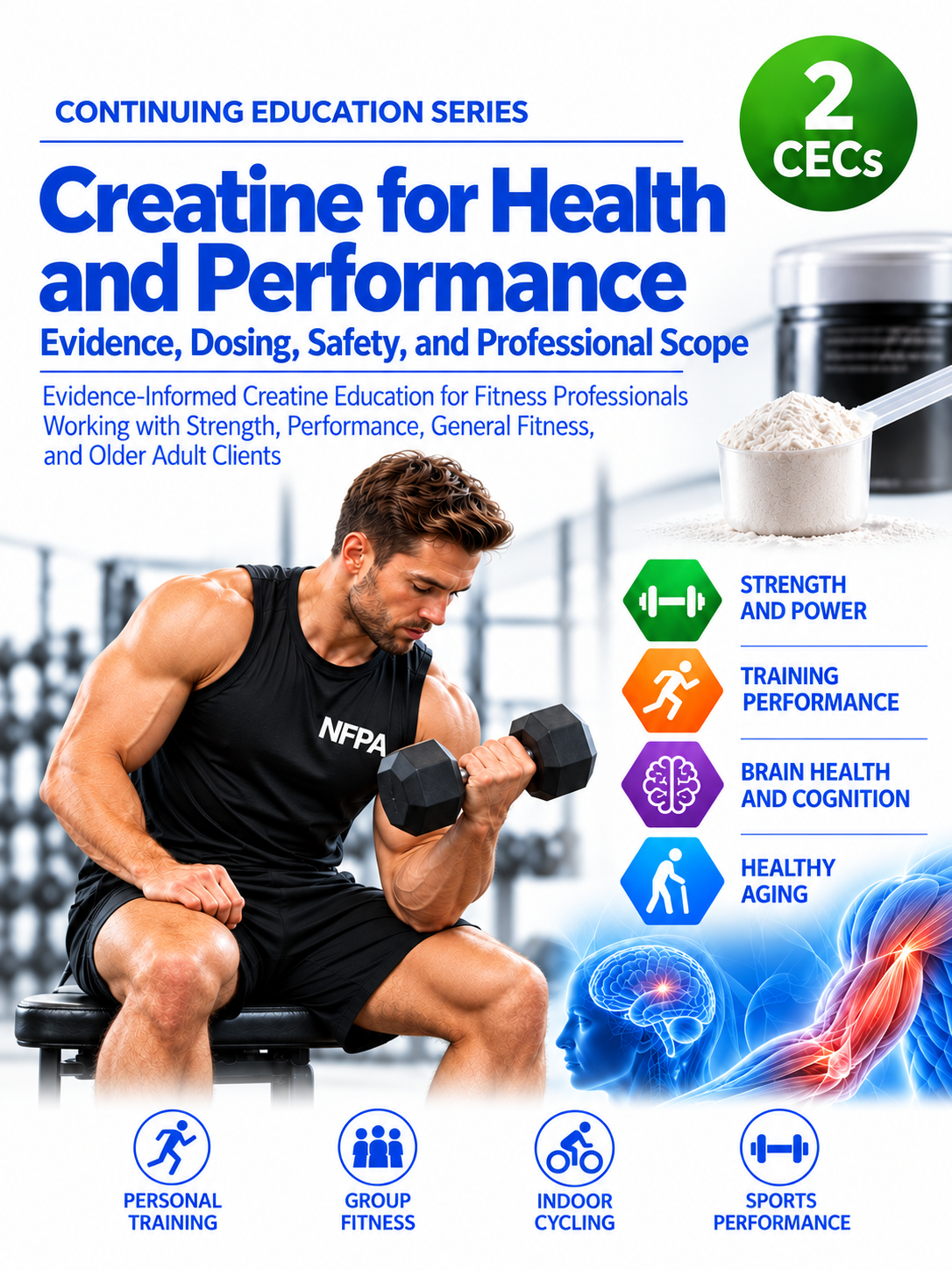
Learn how to explain creatine supplementation accurately, distinguish established performance benefits from emerging health claims, and provide evidence-informed education while respecting professional scope of practice.
Creatine for Health and Performance is a practical 2-CEC continuing education course exploring one of the most extensively studied dietary supplements in exercise science.
The course examines how creatine supports rapid ATP regeneration, why supplementation can improve resistance training and repeated high-intensity performance, and how common dosing strategies influence muscle creatine saturation.
Fitness professionals will learn how to explain early body-weight changes, evaluate common safety concerns, understand potential applications for older adults, and distinguish promising cognitive research from established evidence.
Special emphasis is placed on creatine monohydrate, realistic client expectations, supplement quality, medical considerations, and appropriate referral.
Topics Include:
Creatine physiology and the phosphocreatine energy system
ATP regeneration and repeated high-intensity exercise
Creatine supplementation for strength and resistance training
Power, sprint performance, and training capacity
Lean body mass and long-term training adaptations
Creatine monohydrate versus alternative supplement forms
Loading and non-loading dosing strategies
Common maintenance dosing and supplement timing
Creatine cycling and carbohydrate co-ingestion
Intracellular water, body-weight changes, and fat-gain misconceptions
Creatine for older adults and healthy aging
Emerging research on cognition and brain energy metabolism
Kidney function, serum creatinine, and laboratory interpretation
Hydration, muscle cramping, and gastrointestinal considerations
Common myths involving steroids, hair loss, and excessive dosing
Supplement quality and third-party certification
Considerations for kidney disease, pregnancy, adolescents, and complex medical conditions
Professional scope and appropriate healthcare referral
Practical client coaching scenarios
The NFPA Creatine Education Process
Course Includes:
2 NFPA Continuing Education Credits
Self-paced PDF continuing education course
10-question Practice Knowledge Check with answer key and explanations
Seven practical coaching cases covering performance, dosing, safety, and professional application
Course Code: CEC-CRT-201
Creatine is a well-studied performance tool—not a universal cure.
Evidence, Dosing, Safety, and Professional Scope
Learn how to explain creatine supplementation accurately, distinguish established performance benefits from emerging health claims, and provide evidence-informed education while respecting professional scope of practice.
Creatine for Health and Performance is a practical 2-CEC continuing education course exploring one of the most extensively studied dietary supplements in exercise science.
The course examines how creatine supports rapid ATP regeneration, why supplementation can improve resistance training and repeated high-intensity performance, and how common dosing strategies influence muscle creatine saturation.
Fitness professionals will learn how to explain early body-weight changes, evaluate common safety concerns, understand potential applications for older adults, and distinguish promising cognitive research from established evidence.
Special emphasis is placed on creatine monohydrate, realistic client expectations, supplement quality, medical considerations, and appropriate referral.
Topics Include:
Creatine physiology and the phosphocreatine energy system
ATP regeneration and repeated high-intensity exercise
Creatine supplementation for strength and resistance training
Power, sprint performance, and training capacity
Lean body mass and long-term training adaptations
Creatine monohydrate versus alternative supplement forms
Loading and non-loading dosing strategies
Common maintenance dosing and supplement timing
Creatine cycling and carbohydrate co-ingestion
Intracellular water, body-weight changes, and fat-gain misconceptions
Creatine for older adults and healthy aging
Emerging research on cognition and brain energy metabolism
Kidney function, serum creatinine, and laboratory interpretation
Hydration, muscle cramping, and gastrointestinal considerations
Common myths involving steroids, hair loss, and excessive dosing
Supplement quality and third-party certification
Considerations for kidney disease, pregnancy, adolescents, and complex medical conditions
Professional scope and appropriate healthcare referral
Practical client coaching scenarios
The NFPA Creatine Education Process
Course Includes:
2 NFPA Continuing Education Credits
Self-paced PDF continuing education course
10-question Practice Knowledge Check with answer key and explanations
Seven practical coaching cases covering performance, dosing, safety, and professional application
Course Code: CEC-CRT-201
Creatine is a well-studied performance tool—not a universal cure.