 Image 1 of 1
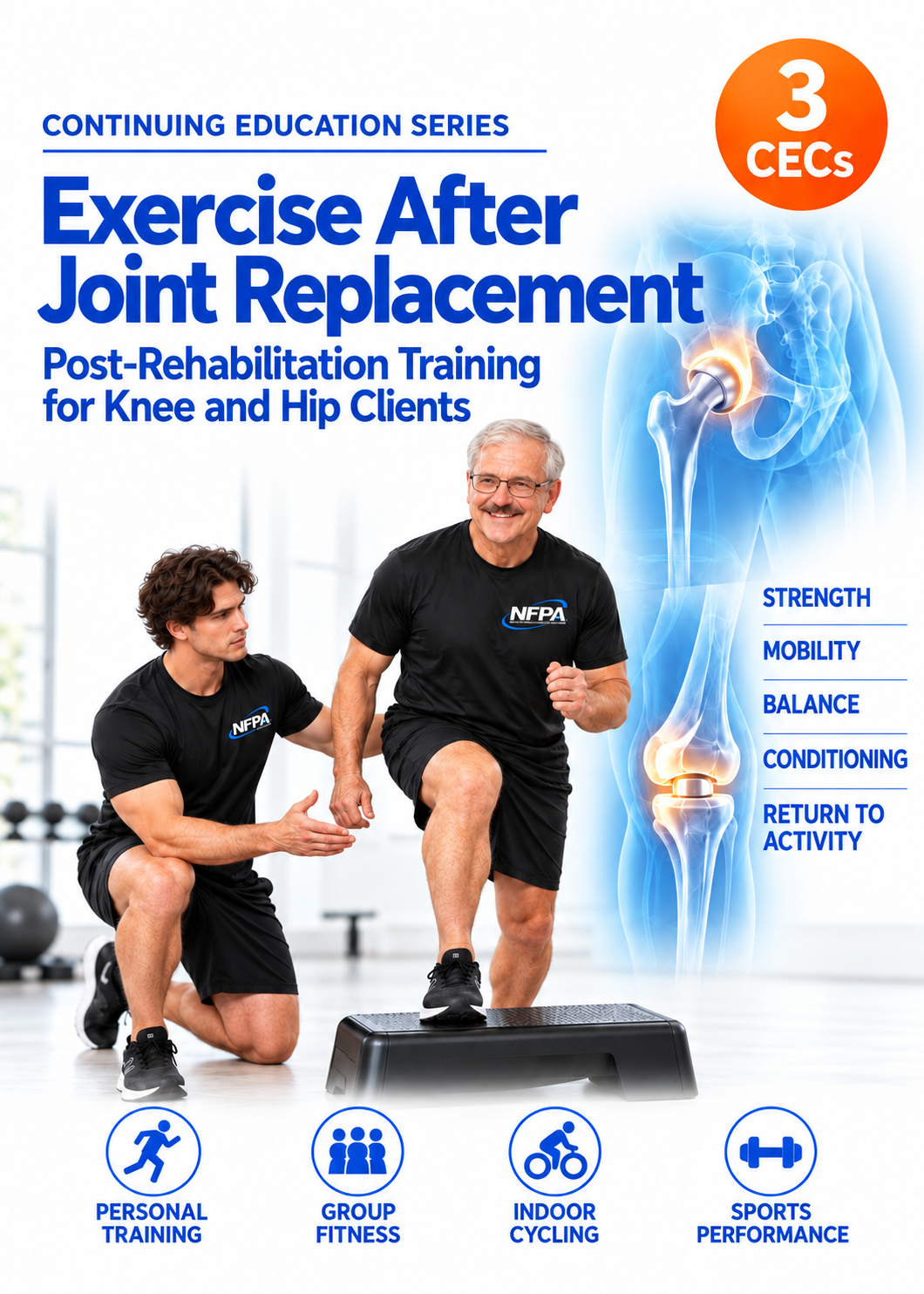
Post-Rehabilitation Training for Knee and Hip Clients
Learn how to help clients rebuild strength, mobility, balance, cardiovascular fitness, and confidence after total knee or hip replacement—while respecting medical restrictions and professional scope of practice.
Exercise After Joint Replacement is a practical 3-CEC continuing education course exploring evidence-informed fitness programming for individuals who have completed appropriate postoperative rehabilitation and have been released to participate in general exercise.
The course examines why successful joint replacement does not automatically restore muscular strength, functional capacity, or physical confidence. Fitness professionals will learn how to identify common post-rehabilitation limitations, select appropriate exercises, implement progressive resistance training, and help clients return to meaningful everyday activities.
Special attention is given to quadriceps strength after knee replacement; hip-abductor and hip-extensor strength after hip replacement; balance, gait, and stair capacity; and the distinction between medical clearance and physical readiness.
The course emphasizes safe progression, symptom monitoring, surgeon-directed restrictions, and recognizing when clients need additional healthcare or rehabilitation evaluation.
Topics Include:
Understanding total knee and total hip replacement
The transition from postoperative rehabilitation to fitness training
Medical clearance, surgeon restrictions, and professional boundaries
Common strength and mobility limitations after joint replacement
Quadriceps weakness and functional recovery after knee replacement
Hip-abductor and hip-extensor strength after hip replacement
Functional fitness screening and assessment
Sit-to-stand, gait, stepping, balance, and strength assessment
Recognizing complications and medical referral warning signs
Progressive resistance training after joint replacement
Squat and sit-to-stand exercise progressions
Hip-hinge and deadlift movement patterns
Step-ups, step-downs, and stair training
Balance, gait confidence, and single-leg capacity
Range of motion and functional mobility
Walking, cycling, aquatic exercise, and aerobic conditioning
Introducing muscular power without unnecessary impact
Managing exercise-related pain, swelling, and training load
Returning to golf, hiking, travel, recreation, and other activities
Understanding medical clearance versus physical readiness
Programming for clients with multiple joint replacements
Osteoporosis, obesity, cardiovascular disease, and diabetes considerations
Sample post-rehabilitation knee and hip training programs
Practical client coaching scenarios
The NFPA Post-Joint-Replacement Fitness Process
Course Includes:
3 NFPA Continuing Education Credits
Self-paced PDF continuing education course
15-question Practice Knowledge Check with answer key and explanations
10 practical coaching cases involving knee and hip replacement clients
Sample strength, balance, aerobic, and functional exercise programs
Respect the replacement—train the person.
Post-Rehabilitation Training for Knee and Hip Clients
Learn how to help clients rebuild strength, mobility, balance, cardiovascular fitness, and confidence after total knee or hip replacement—while respecting medical restrictions and professional scope of practice.
Exercise After Joint Replacement is a practical 3-CEC continuing education course exploring evidence-informed fitness programming for individuals who have completed appropriate postoperative rehabilitation and have been released to participate in general exercise.
The course examines why successful joint replacement does not automatically restore muscular strength, functional capacity, or physical confidence. Fitness professionals will learn how to identify common post-rehabilitation limitations, select appropriate exercises, implement progressive resistance training, and help clients return to meaningful everyday activities.
Special attention is given to quadriceps strength after knee replacement; hip-abductor and hip-extensor strength after hip replacement; balance, gait, and stair capacity; and the distinction between medical clearance and physical readiness.
The course emphasizes safe progression, symptom monitoring, surgeon-directed restrictions, and recognizing when clients need additional healthcare or rehabilitation evaluation.
Topics Include:
Understanding total knee and total hip replacement
The transition from postoperative rehabilitation to fitness training
Medical clearance, surgeon restrictions, and professional boundaries
Common strength and mobility limitations after joint replacement
Quadriceps weakness and functional recovery after knee replacement
Hip-abductor and hip-extensor strength after hip replacement
Functional fitness screening and assessment
Sit-to-stand, gait, stepping, balance, and strength assessment
Recognizing complications and medical referral warning signs
Progressive resistance training after joint replacement
Squat and sit-to-stand exercise progressions
Hip-hinge and deadlift movement patterns
Step-ups, step-downs, and stair training
Balance, gait confidence, and single-leg capacity
Range of motion and functional mobility
Walking, cycling, aquatic exercise, and aerobic conditioning
Introducing muscular power without unnecessary impact
Managing exercise-related pain, swelling, and training load
Returning to golf, hiking, travel, recreation, and other activities
Understanding medical clearance versus physical readiness
Programming for clients with multiple joint replacements
Osteoporosis, obesity, cardiovascular disease, and diabetes considerations
Sample post-rehabilitation knee and hip training programs
Practical client coaching scenarios
The NFPA Post-Joint-Replacement Fitness Process
Course Includes:
3 NFPA Continuing Education Credits
Self-paced PDF continuing education course
15-question Practice Knowledge Check with answer key and explanations
10 practical coaching cases involving knee and hip replacement clients
Sample strength, balance, aerobic, and functional exercise programs
Respect the replacement—train the person.