 Image 1 of 1
Strength, Mobility, Power, and Independence
Learn how to design safe, progressive exercise programs that help older adults improve strength, mobility, balance, muscular power, and the physical capacity needed for everyday independence.
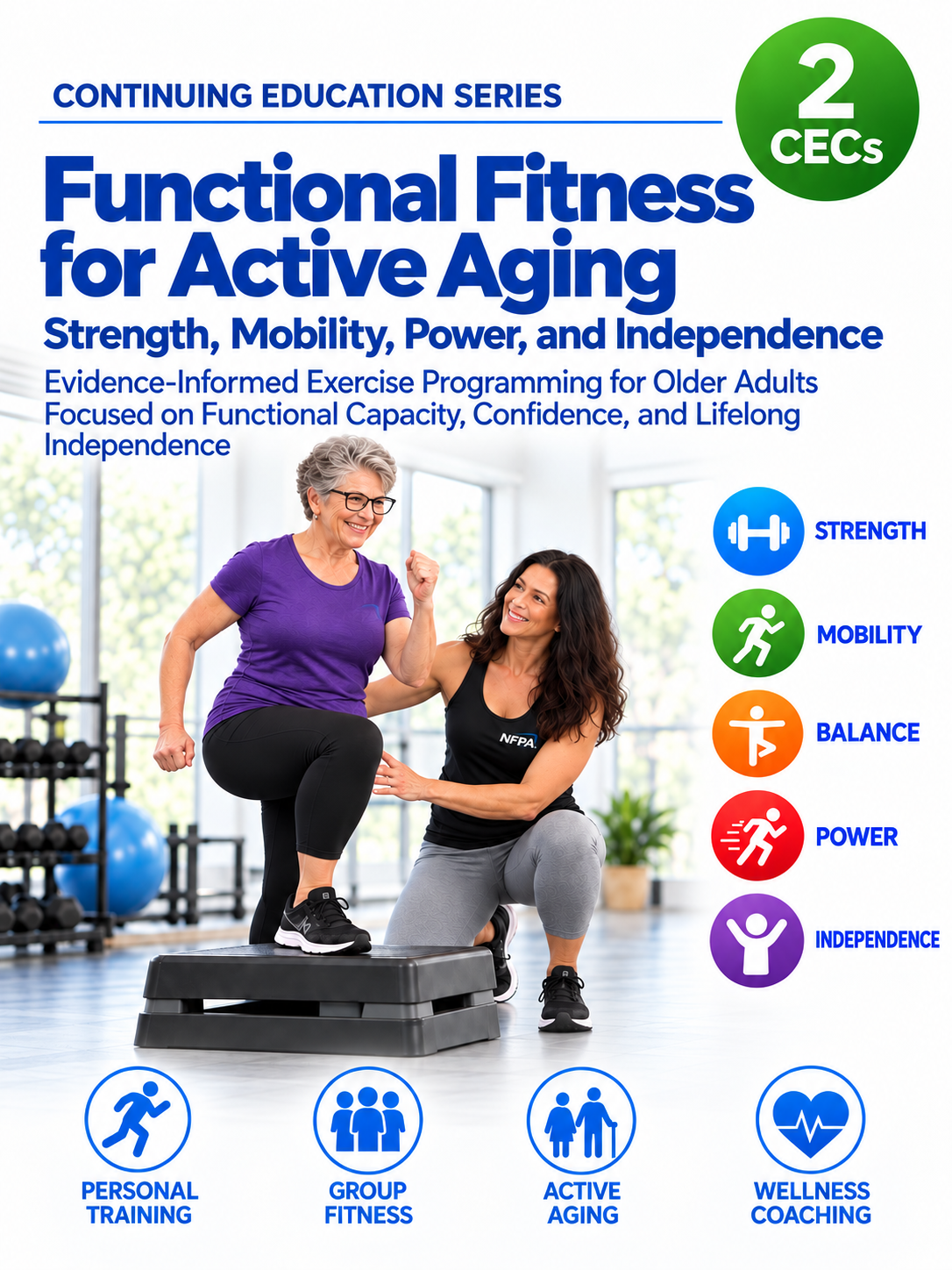
Functional Fitness for Active Aging is a practical 2-CEC continuing education course exploring evidence-informed exercise programming for older adults, with an emphasis on functional capacity, confidence, and lifelong independence.
The course examines how age-related changes influence physical performance, why chronological age alone should not determine exercise selection, and how progressive resistance training can improve the physical reserve needed for everyday activities.
Fitness professionals will learn how to integrate strength, power, balance, mobility, and aerobic training into individualized programs for older adults of different abilities—from beginning exercisers to experienced, active seniors.
Special emphasis is placed on safe exercise progressions, functional assessment, fall-related confidence, medical considerations, and professional scope of practice.
Topics Include:
Understanding functional fitness and active aging
Chronological age versus functional capacity
Building functional reserve for everyday independence
Progressive resistance training for older adults
Strength, sarcopenia, and physical performance
Muscular power and age-related changes
Safe introductory power-training exercises
Static, dynamic, and reactive balance training
Fall-related confidence and movement progression
Mobility, flexibility, and functional movement
Walking, aerobic fitness, and activity tolerance
Sit-to-stand, gait speed, and functional assessments
Combining strength, power, balance, mobility, and aerobic exercise
Designing a multicomponent active-aging training week
Progressing sit-to-stand, step-ups, carries, and floor transfers
Exercise considerations for frail and pre-frail clients
Osteoporosis, arthritis, joint replacement, and chronic health conditions
Safety, symptoms, professional boundaries, and appropriate referral
Practical active-aging coaching scenarios
The NFPA Active Aging Programming Process
Course Includes:
2 NFPA Continuing Education Credits
Self-paced PDF continuing education course
10-question Practice Knowledge Check with answer key and explanations
Practical exercise progressions, programming examples, and applied coaching scenarios
Course Code: CEC-FAA-201
Train for the life the client wants to keep living.
Strength, Mobility, Power, and Independence
Learn how to design safe, progressive exercise programs that help older adults improve strength, mobility, balance, muscular power, and the physical capacity needed for everyday independence.
Functional Fitness for Active Aging is a practical 2-CEC continuing education course exploring evidence-informed exercise programming for older adults, with an emphasis on functional capacity, confidence, and lifelong independence.
The course examines how age-related changes influence physical performance, why chronological age alone should not determine exercise selection, and how progressive resistance training can improve the physical reserve needed for everyday activities.
Fitness professionals will learn how to integrate strength, power, balance, mobility, and aerobic training into individualized programs for older adults of different abilities—from beginning exercisers to experienced, active seniors.
Special emphasis is placed on safe exercise progressions, functional assessment, fall-related confidence, medical considerations, and professional scope of practice.
Topics Include:
Understanding functional fitness and active aging
Chronological age versus functional capacity
Building functional reserve for everyday independence
Progressive resistance training for older adults
Strength, sarcopenia, and physical performance
Muscular power and age-related changes
Safe introductory power-training exercises
Static, dynamic, and reactive balance training
Fall-related confidence and movement progression
Mobility, flexibility, and functional movement
Walking, aerobic fitness, and activity tolerance
Sit-to-stand, gait speed, and functional assessments
Combining strength, power, balance, mobility, and aerobic exercise
Designing a multicomponent active-aging training week
Progressing sit-to-stand, step-ups, carries, and floor transfers
Exercise considerations for frail and pre-frail clients
Osteoporosis, arthritis, joint replacement, and chronic health conditions
Safety, symptoms, professional boundaries, and appropriate referral
Practical active-aging coaching scenarios
The NFPA Active Aging Programming Process
Course Includes:
2 NFPA Continuing Education Credits
Self-paced PDF continuing education course
10-question Practice Knowledge Check with answer key and explanations
Practical exercise progressions, programming examples, and applied coaching scenarios
Course Code: CEC-FAA-201
Train for the life the client wants to keep living.