 Image 1 of 1
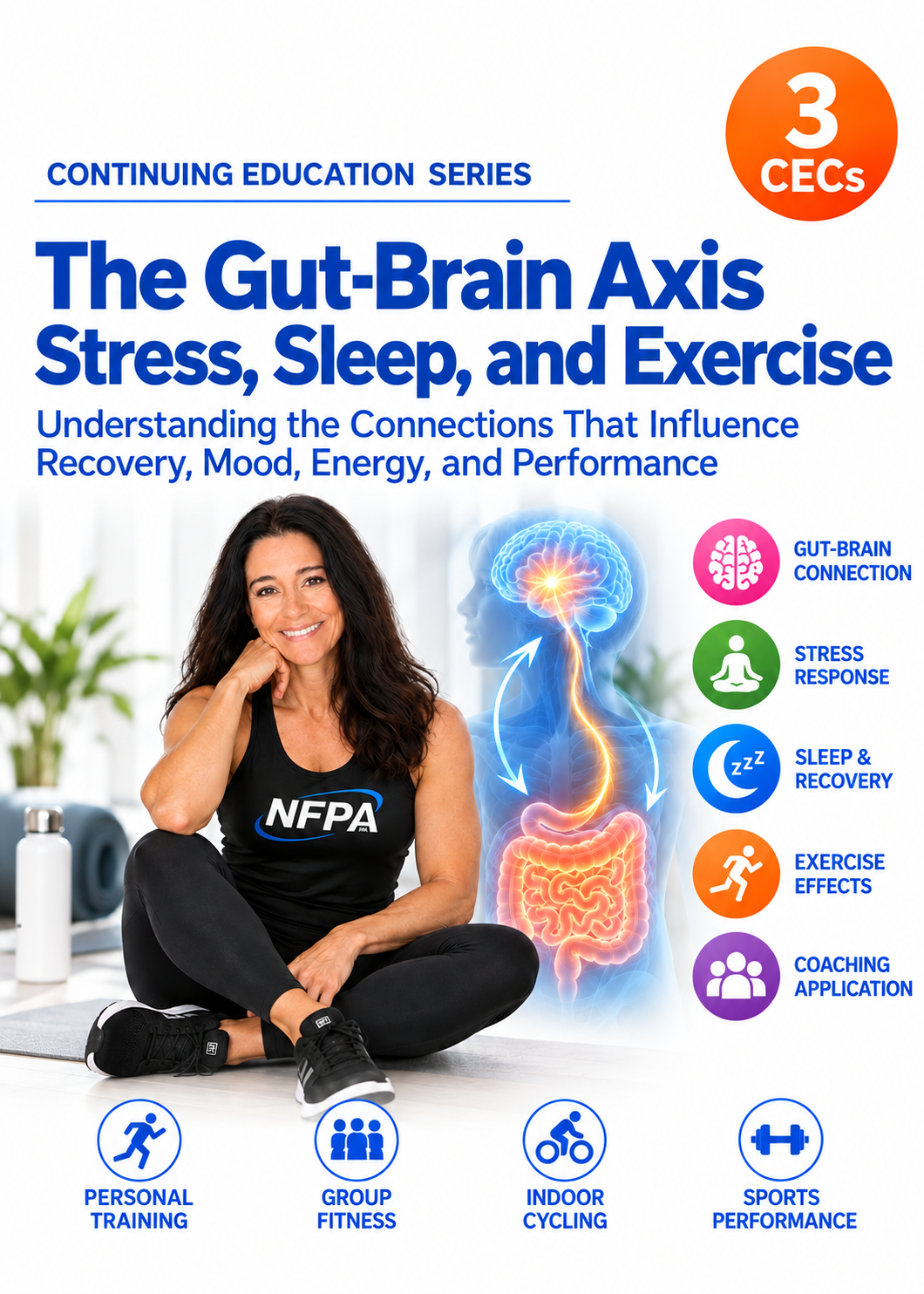
The Gut-Brain Axis: Stress, Sleep, and Exercise
Understanding the Connections That Influence Recovery, Mood, Energy, and Performance
Learn how communication between the gut and brain interacts with stress, sleep, physical activity, nutrition, and recovery—and how to apply this emerging science responsibly in fitness coaching.
The Gut-Brain Axis, Stress, Sleep, and Exercise is a practical 3-CEC continuing education course exploring evidence-informed relationships among the gastrointestinal system, nervous system, gut microbiome, stress physiology, sleep, exercise performance, and overall health.
The course examines how the gut and brain communicate through neural, endocrine, immune, and metabolic pathways. Fitness professionals will learn why this relationship is bidirectional and how psychological stress, disrupted sleep, dietary patterns, and exercise may influence gastrointestinal function and recovery.
Special attention is given to understanding the difference between established health recommendations and emerging microbiome research. The course addresses common misconceptions involving probiotics, serotonin, cortisol, leaky gut, commercial microbiome testing, and claims that specific foods or supplements can treat mental-health conditions.
Fitness professionals will learn to integrate practical strategies involving appropriate exercise intensity, sleep-supportive habits, balanced nutrition, stress management, and recovery monitoring without diagnosing medical conditions or exceeding professional scope.
Topics Include:
Understanding the microbiota-gut-brain axis
Gut microbiota versus the gut microbiome
Bidirectional communication between the brain and digestive system
The enteric nervous system and vagus nerve
Neural, endocrine, immune, and metabolic communication pathways
The hypothalamic-pituitary-adrenal (HPA) axis
Cortisol, stress physiology, and gastrointestinal function
Acute versus chronic stress responses
Stress-related digestive symptoms and gut-brain feedback loops
Short-chain fatty acids and microbial metabolites
Serotonin, tryptophan metabolism, and common misconceptions
Sleep duration, quality, and circadian rhythms
Sleep deprivation and emerging microbiome research
Exercise effects on gut-microbiome characteristics
Aerobic exercise, resistance training, and gastrointestinal tolerance
Strenuous endurance exercise and digestive discomfort
Hydration, fueling, heat exposure, and exercise intensity
Dietary fiber, fermentable carbohydrates, and food diversity
Prebiotics, probiotics, fermented foods, and synbiotics
Psychobiotics and supplement-related claims
Limitations of commercial microbiome testing
Anxiety, depression, and professional referral boundaries
Exercise, sleep, stress, nutrition, and recovery integration
Adjusting exercise programming when recovery is reduced
Recognizing gastrointestinal and mental-health warning signs
Practical coaching strategies for athletes and general fitness clients
The NFPA Gut-Brain Coaching Process
Course Includes:
3 NFPA Continuing Education Credits
Self-paced PDF continuing education course
15-question Practice Knowledge Check with answer key and explanations
12 practical coaching cases involving stress, gastrointestinal symptoms, exercise tolerance, sleep, nutrition, and professional referral
Evidence-informed strategies for integrating exercise, stress management, sleep, and recovery
Course Code: CEC-GB-301
Support the foundations—do not diagnose the microbiome.
Understanding the Connections That Influence Recovery, Mood, Energy, and Performance
Learn how communication between the gut and brain interacts with stress, sleep, physical activity, nutrition, and recovery—and how to apply this emerging science responsibly in fitness coaching.
The Gut-Brain Axis, Stress, Sleep, and Exercise is a practical 3-CEC continuing education course exploring evidence-informed relationships among the gastrointestinal system, nervous system, gut microbiome, stress physiology, sleep, exercise performance, and overall health.
The course examines how the gut and brain communicate through neural, endocrine, immune, and metabolic pathways. Fitness professionals will learn why this relationship is bidirectional and how psychological stress, disrupted sleep, dietary patterns, and exercise may influence gastrointestinal function and recovery.
Special attention is given to understanding the difference between established health recommendations and emerging microbiome research. The course addresses common misconceptions involving probiotics, serotonin, cortisol, leaky gut, commercial microbiome testing, and claims that specific foods or supplements can treat mental-health conditions.
Fitness professionals will learn to integrate practical strategies involving appropriate exercise intensity, sleep-supportive habits, balanced nutrition, stress management, and recovery monitoring without diagnosing medical conditions or exceeding professional scope.
Topics Include:
Understanding the microbiota-gut-brain axis
Gut microbiota versus the gut microbiome
Bidirectional communication between the brain and digestive system
The enteric nervous system and vagus nerve
Neural, endocrine, immune, and metabolic communication pathways
The hypothalamic-pituitary-adrenal (HPA) axis
Cortisol, stress physiology, and gastrointestinal function
Acute versus chronic stress responses
Stress-related digestive symptoms and gut-brain feedback loops
Short-chain fatty acids and microbial metabolites
Serotonin, tryptophan metabolism, and common misconceptions
Sleep duration, quality, and circadian rhythms
Sleep deprivation and emerging microbiome research
Exercise effects on gut-microbiome characteristics
Aerobic exercise, resistance training, and gastrointestinal tolerance
Strenuous endurance exercise and digestive discomfort
Hydration, fueling, heat exposure, and exercise intensity
Dietary fiber, fermentable carbohydrates, and food diversity
Prebiotics, probiotics, fermented foods, and synbiotics
Psychobiotics and supplement-related claims
Limitations of commercial microbiome testing
Anxiety, depression, and professional referral boundaries
Exercise, sleep, stress, nutrition, and recovery integration
Adjusting exercise programming when recovery is reduced
Recognizing gastrointestinal and mental-health warning signs
Practical coaching strategies for athletes and general fitness clients
The NFPA Gut-Brain Coaching Process
Course Includes:
3 NFPA Continuing Education Credits
Self-paced PDF continuing education course
15-question Practice Knowledge Check with answer key and explanations
12 practical coaching cases involving stress, gastrointestinal symptoms, exercise tolerance, sleep, nutrition, and professional referral
Evidence-informed strategies for integrating exercise, stress management, sleep, and recovery
Course Code: CEC-GB-301
Support the foundations—do not diagnose the microbiome.