 Image 1 of 1
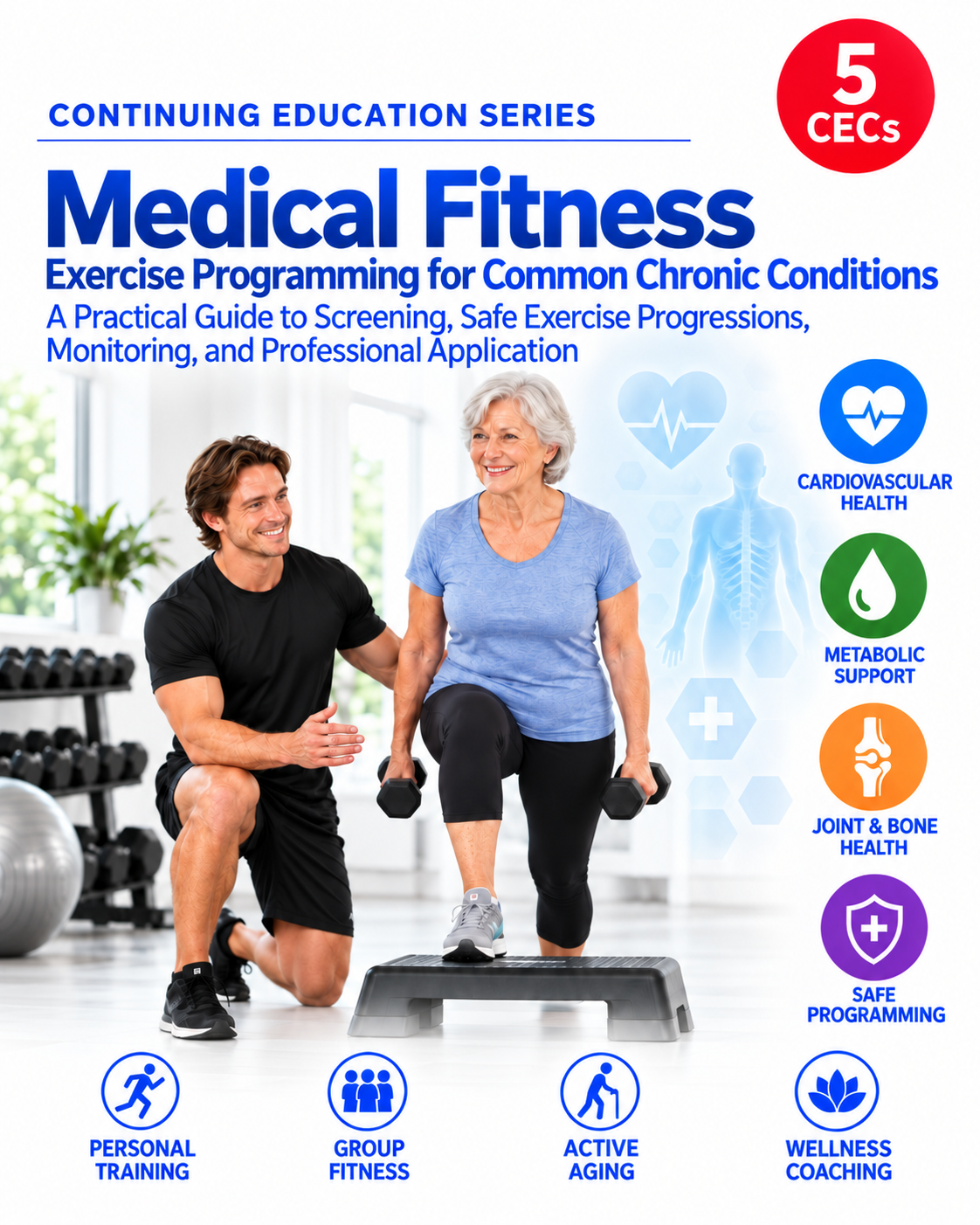
Medical Fitness: Common Chronic Conditions
Exercise Programming for Common Chronic Conditions
Learn how to design safe, effective, and individualized exercise programs for medically appropriate clients living with common chronic health conditions.
Medical Fitness: Exercise Programming for Common Chronic Conditions is a comprehensive 5-CEC continuing education course exploring evidence-informed exercise screening, program modifications, monitoring, progression, and professional referral for clients with cardiovascular, metabolic, musculoskeletal, and pulmonary conditions.
The course examines why a chronic disease diagnosis does not automatically prevent someone from exercising. Fitness professionals will learn how current medical stability, symptoms, medications, functional limitations, healthcare guidance, and individual exercise responses influence programming decisions.
Special attention is given to understanding the professional boundary between fitness training and medical treatment. Participants will learn how to recognize when exercise is appropriate, when additional clarification or medical clearance may be needed, and when symptoms require exercise to stop.
The course provides practical programming strategies for six common health conditions: hypertension, stable cardiovascular disease, type 2 diabetes, osteoarthritis, osteoporosis, and chronic obstructive pulmonary disease (COPD).
Fitness professionals will learn how to modify exercise intensity, loading, range of motion, impact, exercise selection, rest periods, and progression while preserving meaningful strength, cardiovascular fitness, mobility, and physical function.
The course also addresses medication-related considerations, including beta-blockers, blood-pressure medications, insulin and insulin secretagogues, and prescribed pulmonary medications.
Participants will gain practical strategies for communicating with healthcare providers, managing clients with multiple chronic conditions, and developing progressive programs that respect both medical restrictions and individual fitness goals.
Topics Include:
Understanding the role of medical fitness in professional exercise programming
Fitness training versus clinical rehabilitation
Medical stability, screening, clearance, and referral
Recognizing exercise-related medical warning signs
The NFPA Medical Fitness Traffic-Light Screen
Reviewing health history and medication changes
Beta-blockers and altered heart-rate responses
Using RPE and the Talk Test to monitor exercise intensity
Blood-pressure medication and postexercise dizziness
Insulin, glucose monitoring, and hypoglycemia risk
Integrating aerobic and resistance exercise for chronic conditions
Hypertension and long-term blood-pressure management
Appropriate resistance training and controlled breathing
Severe blood-pressure readings and emergency warning signs
Stable cardiovascular disease and exercise programming
Fitness training versus medically supervised cardiac rehabilitation
Exercise intensity and symptom monitoring for cardiac clients
Type 2 diabetes and exercise-related glucose responses
Before-, during-, and after-exercise glucose considerations
Delayed hypoglycemia and established diabetes-care plans
Diabetes-related complications and exercise modifications
Osteoarthritis and individualized joint-loading strategies
Modifying exercise load, range, impact, and volume
Strength training for joint function and mobility
Osteoporosis, weight-bearing exercise, and bone health
Progressive resistance training and fall-risk reduction
Spine-safe exercise considerations for clients at higher fracture risk
COPD and appropriate aerobic and resistance exercise
Interval training and breathlessness management
Monitoring dyspnea, recovery, and exercise tolerance
Respecting prescribed oxygen and pulmonary medication plans
Programming for clients with multiple chronic conditions
Adjusting exercise according to symptoms and medical guidance
Progressing beyond beginner-level exercise when appropriate
Communicating with healthcare professionals
Applied medical-fitness coaching scenarios
The NFPA Medical Fitness Programming Process
Course Includes:
5 NFPA Continuing Education Credits
Self-paced PDF continuing education course
25-question Practice Knowledge Check with answer key and explanations
4 applied coaching cases addressing hypertension and beta-blockers, type 2 diabetes and exercise-related glucose concerns, osteoporosis with knee osteoarthritis, and COPD-related exercise tolerance
Practical screening, exercise-modification, monitoring, and referral frameworks
Condition-specific aerobic, resistance-training, mobility, balance, and exercise-progression recommendations
Evidence-informed guidance for integrating multiple chronic health conditions into individualized exercise programming
Course Code: CEC-MF-501
Exercise the person. Respect the condition. Monitor the response. Know when to refer.
Exercise Programming for Common Chronic Conditions
Learn how to design safe, effective, and individualized exercise programs for medically appropriate clients living with common chronic health conditions.
Medical Fitness: Exercise Programming for Common Chronic Conditions is a comprehensive 5-CEC continuing education course exploring evidence-informed exercise screening, program modifications, monitoring, progression, and professional referral for clients with cardiovascular, metabolic, musculoskeletal, and pulmonary conditions.
The course examines why a chronic disease diagnosis does not automatically prevent someone from exercising. Fitness professionals will learn how current medical stability, symptoms, medications, functional limitations, healthcare guidance, and individual exercise responses influence programming decisions.
Special attention is given to understanding the professional boundary between fitness training and medical treatment. Participants will learn how to recognize when exercise is appropriate, when additional clarification or medical clearance may be needed, and when symptoms require exercise to stop.
The course provides practical programming strategies for six common health conditions: hypertension, stable cardiovascular disease, type 2 diabetes, osteoarthritis, osteoporosis, and chronic obstructive pulmonary disease (COPD).
Fitness professionals will learn how to modify exercise intensity, loading, range of motion, impact, exercise selection, rest periods, and progression while preserving meaningful strength, cardiovascular fitness, mobility, and physical function.
The course also addresses medication-related considerations, including beta-blockers, blood-pressure medications, insulin and insulin secretagogues, and prescribed pulmonary medications.
Participants will gain practical strategies for communicating with healthcare providers, managing clients with multiple chronic conditions, and developing progressive programs that respect both medical restrictions and individual fitness goals.
Topics Include:
Understanding the role of medical fitness in professional exercise programming
Fitness training versus clinical rehabilitation
Medical stability, screening, clearance, and referral
Recognizing exercise-related medical warning signs
The NFPA Medical Fitness Traffic-Light Screen
Reviewing health history and medication changes
Beta-blockers and altered heart-rate responses
Using RPE and the Talk Test to monitor exercise intensity
Blood-pressure medication and postexercise dizziness
Insulin, glucose monitoring, and hypoglycemia risk
Integrating aerobic and resistance exercise for chronic conditions
Hypertension and long-term blood-pressure management
Appropriate resistance training and controlled breathing
Severe blood-pressure readings and emergency warning signs
Stable cardiovascular disease and exercise programming
Fitness training versus medically supervised cardiac rehabilitation
Exercise intensity and symptom monitoring for cardiac clients
Type 2 diabetes and exercise-related glucose responses
Before-, during-, and after-exercise glucose considerations
Delayed hypoglycemia and established diabetes-care plans
Diabetes-related complications and exercise modifications
Osteoarthritis and individualized joint-loading strategies
Modifying exercise load, range, impact, and volume
Strength training for joint function and mobility
Osteoporosis, weight-bearing exercise, and bone health
Progressive resistance training and fall-risk reduction
Spine-safe exercise considerations for clients at higher fracture risk
COPD and appropriate aerobic and resistance exercise
Interval training and breathlessness management
Monitoring dyspnea, recovery, and exercise tolerance
Respecting prescribed oxygen and pulmonary medication plans
Programming for clients with multiple chronic conditions
Adjusting exercise according to symptoms and medical guidance
Progressing beyond beginner-level exercise when appropriate
Communicating with healthcare professionals
Applied medical-fitness coaching scenarios
The NFPA Medical Fitness Programming Process
Course Includes:
5 NFPA Continuing Education Credits
Self-paced PDF continuing education course
25-question Practice Knowledge Check with answer key and explanations
4 applied coaching cases addressing hypertension and beta-blockers, type 2 diabetes and exercise-related glucose concerns, osteoporosis with knee osteoarthritis, and COPD-related exercise tolerance
Practical screening, exercise-modification, monitoring, and referral frameworks
Condition-specific aerobic, resistance-training, mobility, balance, and exercise-progression recommendations
Evidence-informed guidance for integrating multiple chronic health conditions into individualized exercise programming
Course Code: CEC-MF-501
Exercise the person. Respect the condition. Monitor the response. Know when to refer.