 Image 1 of 1
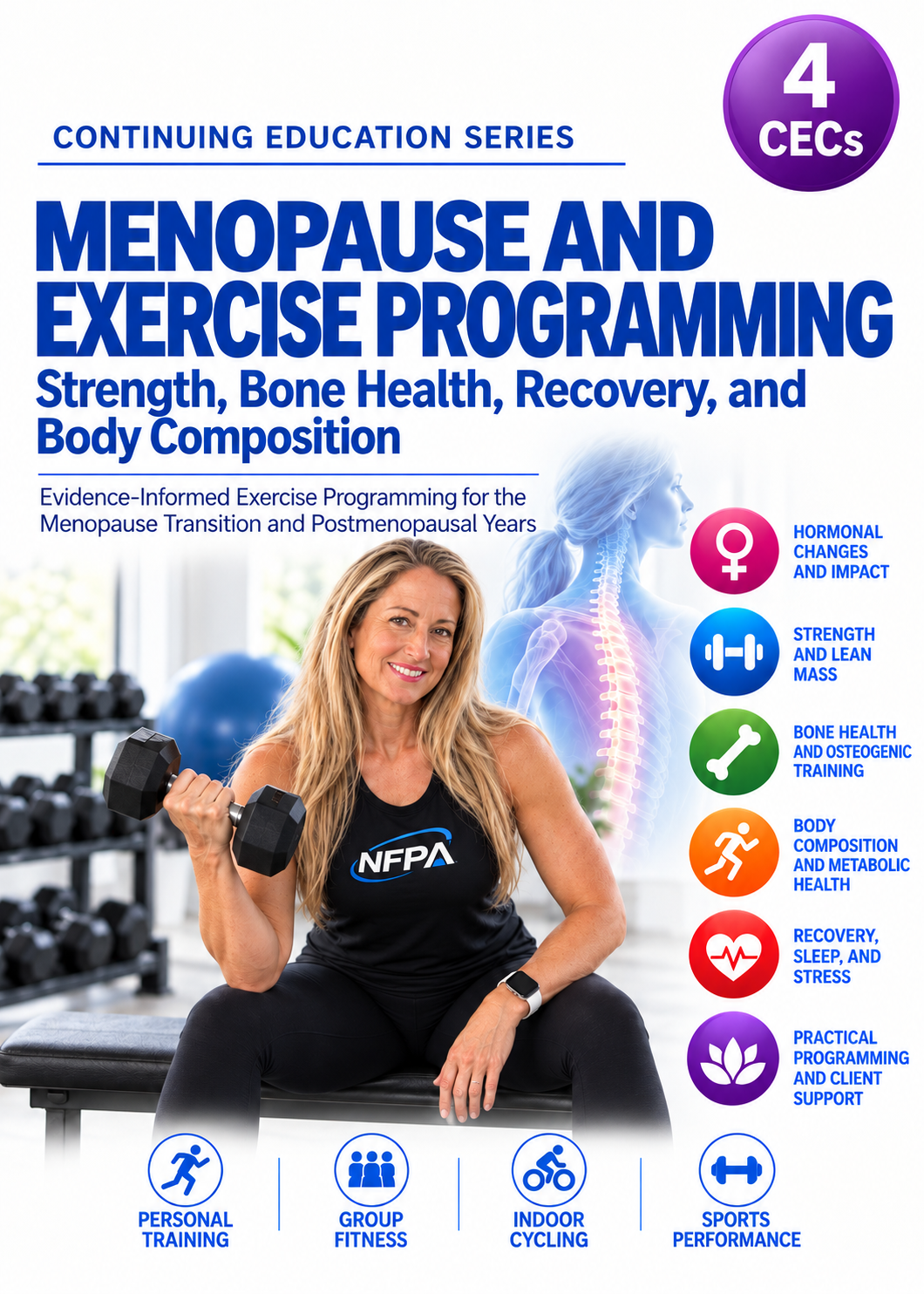
Menopause and Exercise Programming
Strength, Bone Health, Recovery, and Body Composition
Learn how to design safe, effective, evidence-informed exercise programs that support muscular strength, bone health, cardiovascular fitness, body composition, recovery, and long-term physical function during the menopause transition and postmenopausal years.
Menopause and Exercise Programming is a practical 4-CEC continuing education course exploring the physiological changes associated with menopause and their implications for individualized fitness programming.
The course examines how hormonal changes, aging, lifestyle, sleep disruption, and health status can influence exercise participation and recovery. Fitness professionals will learn to distinguish established exercise-science principles from misleading claims about menopause, cortisol, metabolism, and specialized hormone-balancing workouts.
Special attention is given to resistance training for preserving muscular strength and lean mass, appropriate skeletal loading for bone health, and combining aerobic exercise with progressive strength training to support cardiometabolic health and physical independence.
Fitness professionals will learn how to adjust training volume, exercise intensity, movement selection, impact exposure, and recovery according to the client's symptoms, experience, health history, and goals.
The course also addresses osteoporosis, pelvic-floor concerns, sleep disruption, fatigue, vasomotor symptoms, cardiovascular risk, and the importance of respecting professional boundaries involving hormone therapy, nutrition, and medical treatment.
Participants will learn practical strategies for developing comprehensive exercise programs that support women throughout midlife and beyond without assuming that menopause makes them physically fragile or requires an entirely different approach to exercise.
Topics Include:
Understanding perimenopause, menopause, and postmenopause
Natural, surgical, and medically induced menopause
Hormonal changes and their effects on physical health
Distinguishing menopause-related changes from normal aging
Vasomotor symptoms, hot flashes, and night sweats
Understanding the evidence for exercise and menopause symptoms
Menopause, muscular strength, and lean mass
Progressive resistance training for midlife women
Strength-training intensity, volume, frequency, and recovery
Muscular hypertrophy and long-term functional independence
Power development and functional movement capacity
Bone remodeling and postmenopausal bone loss
Osteopenia, osteoporosis, and fracture-risk considerations
Weight-bearing exercise and skeletal loading
Resistance training for bone health
Safe impact-training progressions
Balance training and fall-risk reduction
Body composition and fat distribution across menopause
Lean-mass preservation and central adiposity
Weight-neutral exercise goals and client communication
Aerobic exercise and cardiovascular fitness
HIIT, moderate-intensity training, and individualized conditioning
Blood pressure, metabolic health, and cardiovascular considerations
Sleep disruption, fatigue, stress, and exercise recovery
Readiness-based exercise modifications
Training deloads and recovery management
Nutrition considerations for muscle and bone support
Protein, calcium, vitamin D, and general nutrition education
Pelvic-floor symptoms and exercise modifications
Genitourinary health and appropriate referral
Hormone therapy and professional scope of practice
Recognizing medical warning signs during exercise
Individualized programming for novice and experienced clients
Exercise considerations for women with low bone mass
Integrating strength, aerobic exercise, balance, impact, and mobility
Practical menopause-related fitness coaching scenarios
The NFPA Menopause Exercise Programming Process
Course Includes:
4 NFPA Continuing Education Credits
Self-paced PDF continuing education course
20-question Practice Knowledge Check with answer key and explanations
15 practical coaching cases covering menopause symptoms, bone health, body composition, recovery, strength training, and professional referral
Practical resistance-training, cardiovascular, bone-loading, and recovery-programming strategies
Evidence-informed guidance for individualized exercise programming during and after menopause
Course Code: CEC-MEN-401
Preserve muscle. Load bone. Build capacity. Protect recovery. Train the woman in front of you.
Strength, Bone Health, Recovery, and Body Composition
Learn how to design safe, effective, evidence-informed exercise programs that support muscular strength, bone health, cardiovascular fitness, body composition, recovery, and long-term physical function during the menopause transition and postmenopausal years.
Menopause and Exercise Programming is a practical 4-CEC continuing education course exploring the physiological changes associated with menopause and their implications for individualized fitness programming.
The course examines how hormonal changes, aging, lifestyle, sleep disruption, and health status can influence exercise participation and recovery. Fitness professionals will learn to distinguish established exercise-science principles from misleading claims about menopause, cortisol, metabolism, and specialized hormone-balancing workouts.
Special attention is given to resistance training for preserving muscular strength and lean mass, appropriate skeletal loading for bone health, and combining aerobic exercise with progressive strength training to support cardiometabolic health and physical independence.
Fitness professionals will learn how to adjust training volume, exercise intensity, movement selection, impact exposure, and recovery according to the client's symptoms, experience, health history, and goals.
The course also addresses osteoporosis, pelvic-floor concerns, sleep disruption, fatigue, vasomotor symptoms, cardiovascular risk, and the importance of respecting professional boundaries involving hormone therapy, nutrition, and medical treatment.
Participants will learn practical strategies for developing comprehensive exercise programs that support women throughout midlife and beyond without assuming that menopause makes them physically fragile or requires an entirely different approach to exercise.
Topics Include:
Understanding perimenopause, menopause, and postmenopause
Natural, surgical, and medically induced menopause
Hormonal changes and their effects on physical health
Distinguishing menopause-related changes from normal aging
Vasomotor symptoms, hot flashes, and night sweats
Understanding the evidence for exercise and menopause symptoms
Menopause, muscular strength, and lean mass
Progressive resistance training for midlife women
Strength-training intensity, volume, frequency, and recovery
Muscular hypertrophy and long-term functional independence
Power development and functional movement capacity
Bone remodeling and postmenopausal bone loss
Osteopenia, osteoporosis, and fracture-risk considerations
Weight-bearing exercise and skeletal loading
Resistance training for bone health
Safe impact-training progressions
Balance training and fall-risk reduction
Body composition and fat distribution across menopause
Lean-mass preservation and central adiposity
Weight-neutral exercise goals and client communication
Aerobic exercise and cardiovascular fitness
HIIT, moderate-intensity training, and individualized conditioning
Blood pressure, metabolic health, and cardiovascular considerations
Sleep disruption, fatigue, stress, and exercise recovery
Readiness-based exercise modifications
Training deloads and recovery management
Nutrition considerations for muscle and bone support
Protein, calcium, vitamin D, and general nutrition education
Pelvic-floor symptoms and exercise modifications
Genitourinary health and appropriate referral
Hormone therapy and professional scope of practice
Recognizing medical warning signs during exercise
Individualized programming for novice and experienced clients
Exercise considerations for women with low bone mass
Integrating strength, aerobic exercise, balance, impact, and mobility
Practical menopause-related fitness coaching scenarios
The NFPA Menopause Exercise Programming Process
Course Includes:
4 NFPA Continuing Education Credits
Self-paced PDF continuing education course
20-question Practice Knowledge Check with answer key and explanations
15 practical coaching cases covering menopause symptoms, bone health, body composition, recovery, strength training, and professional referral
Practical resistance-training, cardiovascular, bone-loading, and recovery-programming strategies
Evidence-informed guidance for individualized exercise programming during and after menopause
Course Code: CEC-MEN-401
Preserve muscle. Load bone. Build capacity. Protect recovery. Train the woman in front of you.