 Image 1 of 1
Nutrition and Inflammation for Recovery
Dietary Patterns, Exercise, Recovery, and Scope of Practice
Learn how nutrition, physical activity, and recovery influence inflammatory processes while separating evidence-based guidance from common nutrition myths.
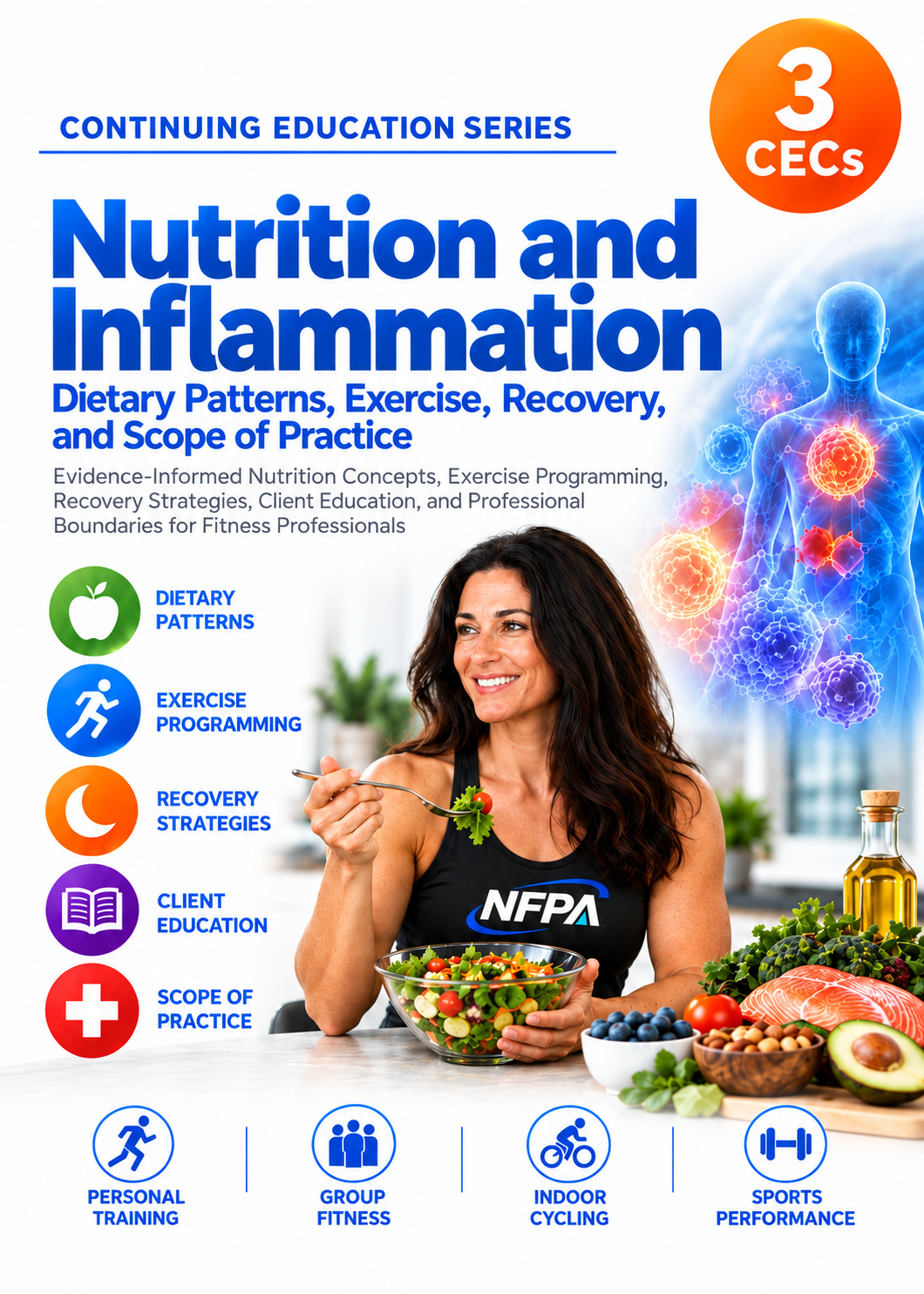
Nutrition and Inflammation is a practical 3-CEC continuing education course exploring evidence-informed nutrition concepts, exercise programming, recovery strategies, client education, and professional boundaries for fitness professionals.
The course examines the difference between normal acute inflammation and chronic inflammatory dysregulation, why inflammation is essential for tissue repair and exercise adaptation, and how overall dietary patterns influence long-term metabolic and cardiovascular health.
Fitness professionals will learn how to evaluate common claims surrounding sugar, carbohydrates, gluten, dairy, seed oils, omega-3 fatty acids, and ultra-processed foods without creating unnecessary food fear.
Special emphasis is placed on Mediterranean-style dietary patterns, adequate nutrition to support training recovery, the relationship between exercise and inflammatory markers, and the importance of staying within professional scope.
The course also explains when clients should be referred to qualified healthcare or nutrition professionals for medical evaluation, therapeutic diets, or disease-specific treatment.
Topics Include:
Understanding acute and chronic inflammation
Inflammation, immune defense, and tissue repair
Exercise-induced inflammatory signaling and adaptation
Chronic low-grade inflammation and metabolic health
C-reactive protein, cytokines, and inflammatory biomarkers
Oxidative stress and exercise recovery
Dietary patterns versus individual food ingredients
Mediterranean-style eating and inflammation research
Plant-forward and DASH dietary patterns
Carbohydrates, added sugars, and inflammatory claims
Dietary fiber, whole grains, and gut-related health
Gluten, carbohydrate restriction, and common misconceptions
Dietary fat quality and saturated-fat considerations
Omega-3 and omega-6 fatty acids
Seed oils and inflammation myths
Protein, meat, dairy, and plant-based foods
Ultra-processed foods and interpretation of research
Aerobic exercise, resistance training, and long-term inflammatory health
Muscle soreness, recovery, and training adaptation
Adequate energy, protein, carbohydrate, and hydration
Sleep, recovery, and overall lifestyle patterns
Antioxidant and anti-inflammatory supplement claims
Turmeric, curcumin, fish oil, and supplement safety
Client communication without food fear or stigma
Professional scope of practice and medical nutrition therapy
Recognizing situations requiring medical or dietitian referral
Practical nutrition and exercise coaching scenarios
The NFPA Nutrition-and-Inflammation Coaching Process
Course Includes:
3 NFPA Continuing Education Credits
Self-paced PDF continuing education course
15-question Practice Knowledge Check with answer key and explanations
12 practical coaching cases involving nutrition misconceptions, exercise recovery, inflammatory conditions, and professional boundaries
Evidence-informed nutrition education and practical exercise-programming applications
Course Code: CEC-NI-301
Build the pattern—do not chase a single “anti-inflammatory” food.
Dietary Patterns, Exercise, Recovery, and Scope of Practice
Learn how nutrition, physical activity, and recovery influence inflammatory processes while separating evidence-based guidance from common nutrition myths.
Nutrition and Inflammation is a practical 3-CEC continuing education course exploring evidence-informed nutrition concepts, exercise programming, recovery strategies, client education, and professional boundaries for fitness professionals.
The course examines the difference between normal acute inflammation and chronic inflammatory dysregulation, why inflammation is essential for tissue repair and exercise adaptation, and how overall dietary patterns influence long-term metabolic and cardiovascular health.
Fitness professionals will learn how to evaluate common claims surrounding sugar, carbohydrates, gluten, dairy, seed oils, omega-3 fatty acids, and ultra-processed foods without creating unnecessary food fear.
Special emphasis is placed on Mediterranean-style dietary patterns, adequate nutrition to support training recovery, the relationship between exercise and inflammatory markers, and the importance of staying within professional scope.
The course also explains when clients should be referred to qualified healthcare or nutrition professionals for medical evaluation, therapeutic diets, or disease-specific treatment.
Topics Include:
Understanding acute and chronic inflammation
Inflammation, immune defense, and tissue repair
Exercise-induced inflammatory signaling and adaptation
Chronic low-grade inflammation and metabolic health
C-reactive protein, cytokines, and inflammatory biomarkers
Oxidative stress and exercise recovery
Dietary patterns versus individual food ingredients
Mediterranean-style eating and inflammation research
Plant-forward and DASH dietary patterns
Carbohydrates, added sugars, and inflammatory claims
Dietary fiber, whole grains, and gut-related health
Gluten, carbohydrate restriction, and common misconceptions
Dietary fat quality and saturated-fat considerations
Omega-3 and omega-6 fatty acids
Seed oils and inflammation myths
Protein, meat, dairy, and plant-based foods
Ultra-processed foods and interpretation of research
Aerobic exercise, resistance training, and long-term inflammatory health
Muscle soreness, recovery, and training adaptation
Adequate energy, protein, carbohydrate, and hydration
Sleep, recovery, and overall lifestyle patterns
Antioxidant and anti-inflammatory supplement claims
Turmeric, curcumin, fish oil, and supplement safety
Client communication without food fear or stigma
Professional scope of practice and medical nutrition therapy
Recognizing situations requiring medical or dietitian referral
Practical nutrition and exercise coaching scenarios
The NFPA Nutrition-and-Inflammation Coaching Process
Course Includes:
3 NFPA Continuing Education Credits
Self-paced PDF continuing education course
15-question Practice Knowledge Check with answer key and explanations
12 practical coaching cases involving nutrition misconceptions, exercise recovery, inflammatory conditions, and professional boundaries
Evidence-informed nutrition education and practical exercise-programming applications
Course Code: CEC-NI-301
Build the pattern—do not chase a single “anti-inflammatory” food.