 Image 1 of 1
Foot-Ankle Function, Load Management, and Referral
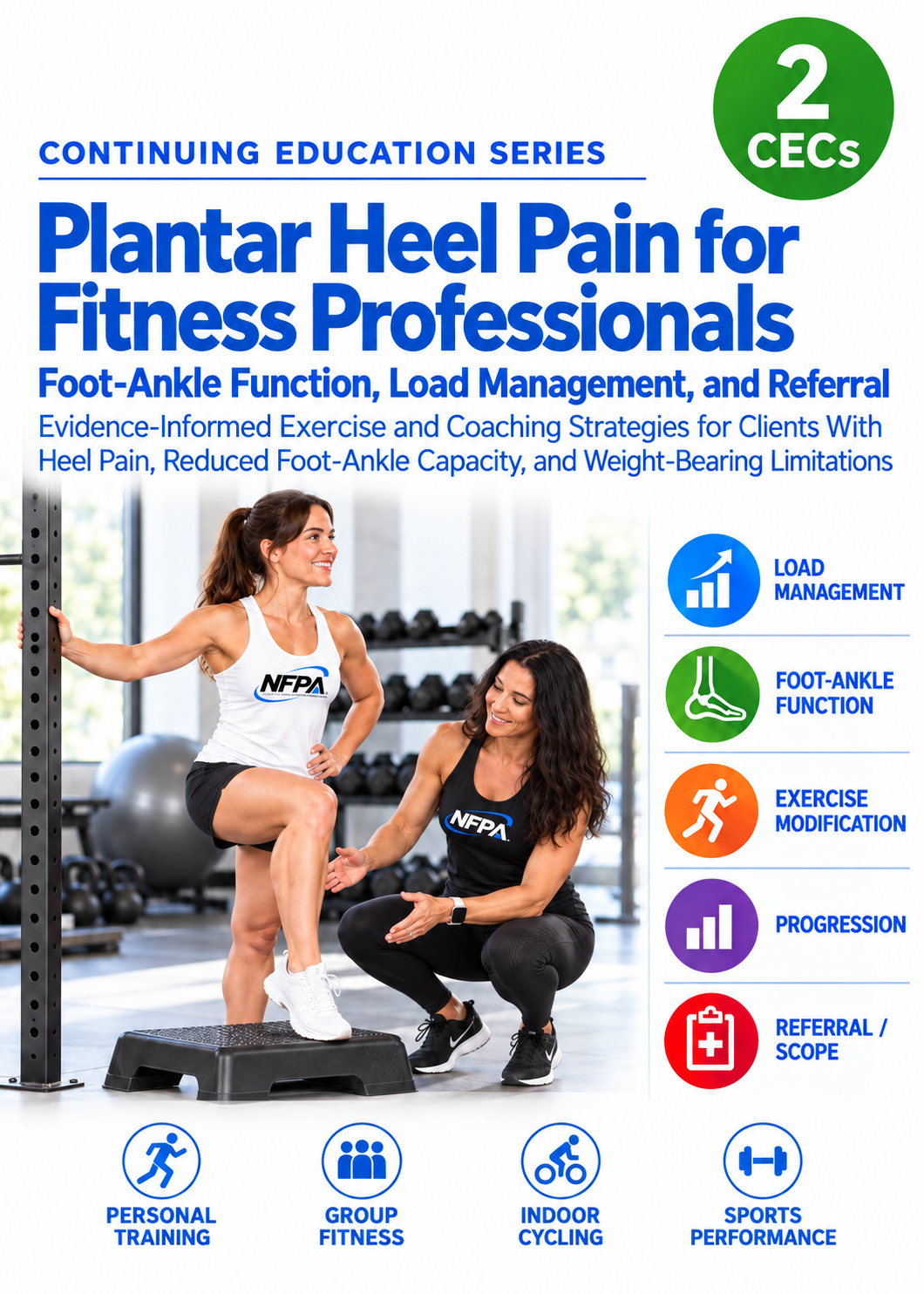
Learn how to help clients experiencing plantar heel pain maintain physical activity, manage exercise demands, and progressively rebuild foot-ankle capacity while respecting professional scope of practice.
Plantar Heel Pain for Fitness Professionals is a practical 2-CEC continuing education course exploring evidence-informed exercise and coaching strategies for clients experiencing heel pain, reduced foot-ankle capacity, and weight-bearing limitations.
The course examines the difference between plantar heel pain and a clinical diagnosis of plantar fasciitis, how walking, running, occupational standing, and resistance training contribute to cumulative loading, and why managing the relationship between physical demand and current capacity is essential.
Fitness professionals will learn how to modify exercise during symptomatic periods, introduce progressive foot and calf strengthening, monitor symptom responses, and gradually restore walking, running, and training tolerance.
Special emphasis is placed on recognizing warning signs, understanding when referral is appropriate, and avoiding diagnosis or clinical treatment outside the fitness professional's scope.
Topics Include:
Understanding plantar heel pain and common symptom patterns
Plantar fasciitis versus other potential causes of heel pain
Plantar fascia function and foot-ankle biomechanics
Gastrocnemius, soleus, Achilles tendon, and intrinsic foot muscles
Ankle dorsiflexion and functional movement
Load management and the relationship between demand and capacity
Walking, running, prolonged standing, and occupational loading
Monitoring symptoms during, after, and the morning following exercise
Avoiding the boom-and-bust cycle of activity and rest
Plantar fascia stretching and calf mobility
Progressive calf and foot-strengthening exercises
Seated, double-leg, single-leg, and loaded calf-raise progressions
Footwear, barefoot activity, taping, orthoses, and night splints
Common myths about plantar heel pain and heel spurs
Modifying squats, lunges, deadlifts, and conditioning exercises
Gradual return-to-walking and return-to-running programs
Recognizing neurological symptoms, suspected stress injuries, and other referral indicators
Professional scope and coordination with healthcare providers
Practical client coaching scenarios
The NFPA Plantar Heel Pain Coaching Process
Course Includes:
2 NFPA Continuing Education Credits
Self-paced PDF continuing education course
10-question Practice Knowledge Check with answer key and explanations
Practical foot-ankle loading progressions, exercise modifications, and applied coaching scenarios
Course Code: CEC-PHP-201
Manage the load—then build the capacity.
Foot-Ankle Function, Load Management, and Referral
Learn how to help clients experiencing plantar heel pain maintain physical activity, manage exercise demands, and progressively rebuild foot-ankle capacity while respecting professional scope of practice.
Plantar Heel Pain for Fitness Professionals is a practical 2-CEC continuing education course exploring evidence-informed exercise and coaching strategies for clients experiencing heel pain, reduced foot-ankle capacity, and weight-bearing limitations.
The course examines the difference between plantar heel pain and a clinical diagnosis of plantar fasciitis, how walking, running, occupational standing, and resistance training contribute to cumulative loading, and why managing the relationship between physical demand and current capacity is essential.
Fitness professionals will learn how to modify exercise during symptomatic periods, introduce progressive foot and calf strengthening, monitor symptom responses, and gradually restore walking, running, and training tolerance.
Special emphasis is placed on recognizing warning signs, understanding when referral is appropriate, and avoiding diagnosis or clinical treatment outside the fitness professional's scope.
Topics Include:
Understanding plantar heel pain and common symptom patterns
Plantar fasciitis versus other potential causes of heel pain
Plantar fascia function and foot-ankle biomechanics
Gastrocnemius, soleus, Achilles tendon, and intrinsic foot muscles
Ankle dorsiflexion and functional movement
Load management and the relationship between demand and capacity
Walking, running, prolonged standing, and occupational loading
Monitoring symptoms during, after, and the morning following exercise
Avoiding the boom-and-bust cycle of activity and rest
Plantar fascia stretching and calf mobility
Progressive calf and foot-strengthening exercises
Seated, double-leg, single-leg, and loaded calf-raise progressions
Footwear, barefoot activity, taping, orthoses, and night splints
Common myths about plantar heel pain and heel spurs
Modifying squats, lunges, deadlifts, and conditioning exercises
Gradual return-to-walking and return-to-running programs
Recognizing neurological symptoms, suspected stress injuries, and other referral indicators
Professional scope and coordination with healthcare providers
Practical client coaching scenarios
The NFPA Plantar Heel Pain Coaching Process
Course Includes:
2 NFPA Continuing Education Credits
Self-paced PDF continuing education course
10-question Practice Knowledge Check with answer key and explanations
Practical foot-ankle loading progressions, exercise modifications, and applied coaching scenarios
Course Code: CEC-PHP-201
Manage the load—then build the capacity.