 Image 1 of 1
Pregnancy and Postpartum Fitness Programming
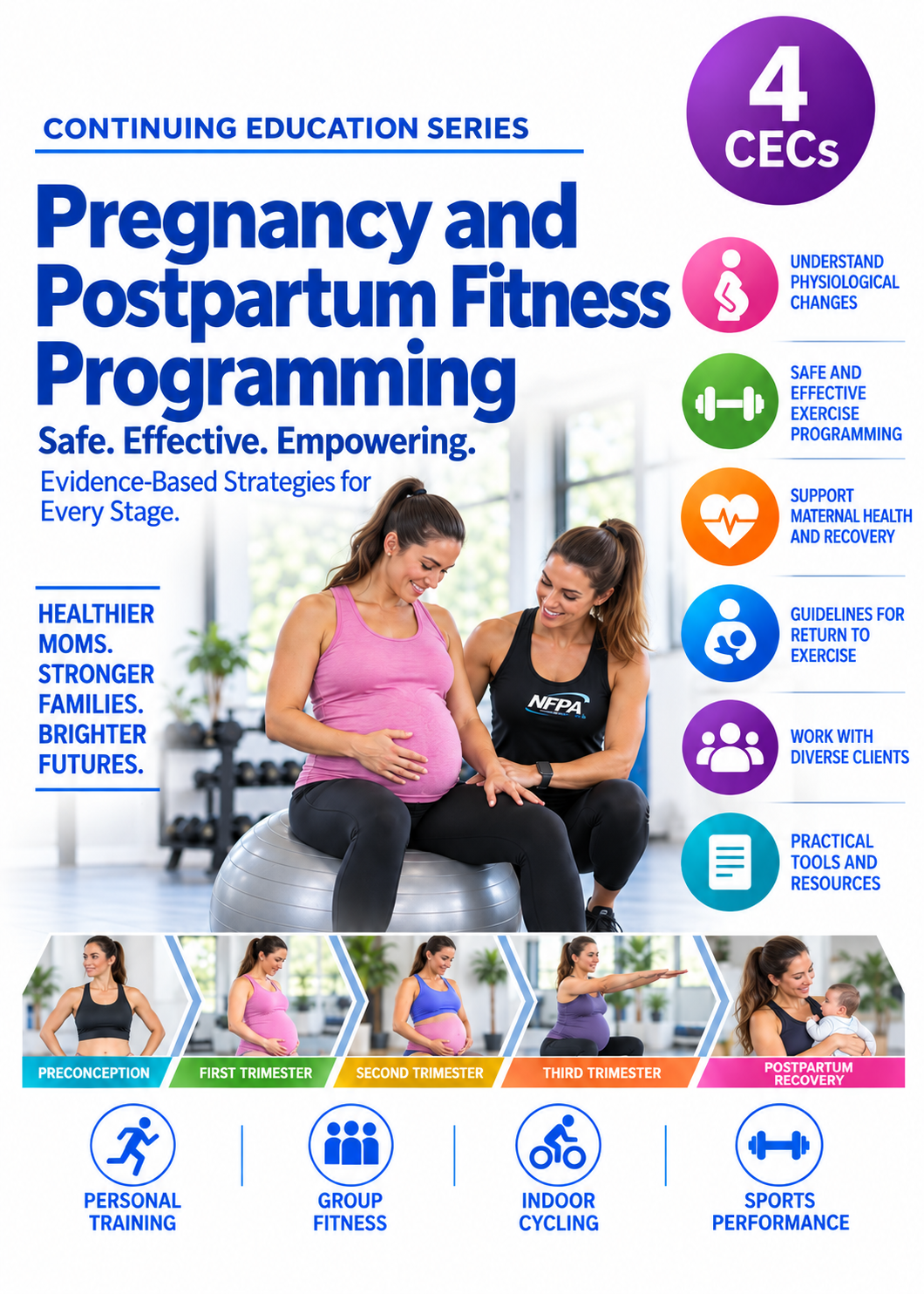
Safe. Effective. Empowering. Evidence-Based Strategies for Every Stage.
Learn how to design safe, effective, and individualized fitness programs for pregnant and postpartum clients while supporting strength, cardiovascular fitness, recovery, functional capacity, and a progressive return to activity.
Pregnancy and Postpartum Fitness Programming is a practical 4-CEC continuing education course exploring evidence-informed prenatal exercise, postpartum recovery, strength and cardiorespiratory training, core and pelvic-floor considerations, exercise modifications, and professional coaching responsibilities.
The course examines why pregnancy is a physiological state rather than an injury. Fitness professionals will learn how appropriately prescribed exercise can support healthy individuals with uncomplicated pregnancies while recognizing the importance of medical status, training history, symptoms, and individual tolerance.
Special attention is given to pregnancy-related cardiovascular and respiratory adaptations, changes in body mechanics and balance, exercise intensity, positional modifications, heat and hydration precautions, and appropriate resistance-training progressions.
Participants will learn how to maintain meaningful strength and aerobic exercise through pregnancy while adapting movement patterns, loading, stability demands, and recovery to the individual.
The course also explores postpartum physical recovery, pelvic-floor function, abdominal-wall changes, cesarean and vaginal delivery considerations, and readiness-based progression toward strength training, cardiovascular conditioning, impact exercise, running, and sport.
Fitness professionals will learn how to recognize warning signs, modify programming appropriately, communicate without fear-based messaging, and collaborate with obstetric providers, pelvic-health physical therapists, and other healthcare professionals.
Topics Include:
Pregnancy as a normal physiological state rather than an injury
Physical activity recommendations during pregnancy and postpartum
Cardiovascular and respiratory adaptations during pregnancy
Changes in body mass, center of gravity, and balance
Exercise intensity using RPE and the Talk Test
Why universal pregnancy heart-rate ceilings are inappropriate
Aerobic exercise and cardiovascular fitness during pregnancy
Resistance training during uncomplicated pregnancy
Strength-training intensity, volume, and exercise selection
Squat, hinge, push, pull, carry, and unilateral exercise modifications
Positional modifications and prolonged supine exercise
Heat exposure, hydration, and environmental considerations
High-risk activities and appropriate exercise avoidance
Core strength, breathing, and pressure management
Pelvic-floor function, coordination, and common misconceptions
Recognizing pelvic-floor symptoms requiring referral
Abdominal-wall changes and diastasis recti
Understanding doming, coning, and functional abdominal training
First-, second-, and third-trimester programming considerations
Training experienced athletes during pregnancy
Prenatal running and resistance-training modifications
Warning signs requiring exercise cessation and medical communication
Recovery following vaginal and cesarean delivery
Early postpartum movement and gradual activity progression
Why medical clearance does not automatically restore fitness capacity
Postpartum aerobic and resistance-training progressions
Rebuilding abdominal strength and functional trunk capacity
Pelvic-floor rehabilitation referral considerations
Return-to-running readiness and walk-run progressions
Progressive return to jumping, impact, and athletic performance
Lactation, hydration, nutrition, and exercise considerations
Sleep disruption, fatigue, and postpartum recovery
Perinatal mental-health concerns and professional referral
Supporting clients without postpartum body-image pressure
Practical prenatal and postpartum exercise programs
Applied pregnancy and postpartum coaching cases
The NFPA Pregnancy and Postpartum Fitness Process
Course Includes:
4 NFPA Continuing Education Credits
Self-paced PDF continuing education course
20-question Practice Knowledge Check with answer key and explanations
4 applied client cases covering experienced prenatal resistance training, pregnant beginners, postpartum return to running, and recovery following cesarean delivery
Practical prenatal and postpartum resistance-training and cardiovascular exercise programs
Evidence-informed exercise modifications, recovery strategies, and professional referral guidelines
Course Code: CEC-PPP-401
During pregnancy, preserve fitness while adapting to change. Postpartum, restore capacity before restoring performance.
Safe. Effective. Empowering. Evidence-Based Strategies for Every Stage.
Learn how to design safe, effective, and individualized fitness programs for pregnant and postpartum clients while supporting strength, cardiovascular fitness, recovery, functional capacity, and a progressive return to activity.
Pregnancy and Postpartum Fitness Programming is a practical 4-CEC continuing education course exploring evidence-informed prenatal exercise, postpartum recovery, strength and cardiorespiratory training, core and pelvic-floor considerations, exercise modifications, and professional coaching responsibilities.
The course examines why pregnancy is a physiological state rather than an injury. Fitness professionals will learn how appropriately prescribed exercise can support healthy individuals with uncomplicated pregnancies while recognizing the importance of medical status, training history, symptoms, and individual tolerance.
Special attention is given to pregnancy-related cardiovascular and respiratory adaptations, changes in body mechanics and balance, exercise intensity, positional modifications, heat and hydration precautions, and appropriate resistance-training progressions.
Participants will learn how to maintain meaningful strength and aerobic exercise through pregnancy while adapting movement patterns, loading, stability demands, and recovery to the individual.
The course also explores postpartum physical recovery, pelvic-floor function, abdominal-wall changes, cesarean and vaginal delivery considerations, and readiness-based progression toward strength training, cardiovascular conditioning, impact exercise, running, and sport.
Fitness professionals will learn how to recognize warning signs, modify programming appropriately, communicate without fear-based messaging, and collaborate with obstetric providers, pelvic-health physical therapists, and other healthcare professionals.
Topics Include:
Pregnancy as a normal physiological state rather than an injury
Physical activity recommendations during pregnancy and postpartum
Cardiovascular and respiratory adaptations during pregnancy
Changes in body mass, center of gravity, and balance
Exercise intensity using RPE and the Talk Test
Why universal pregnancy heart-rate ceilings are inappropriate
Aerobic exercise and cardiovascular fitness during pregnancy
Resistance training during uncomplicated pregnancy
Strength-training intensity, volume, and exercise selection
Squat, hinge, push, pull, carry, and unilateral exercise modifications
Positional modifications and prolonged supine exercise
Heat exposure, hydration, and environmental considerations
High-risk activities and appropriate exercise avoidance
Core strength, breathing, and pressure management
Pelvic-floor function, coordination, and common misconceptions
Recognizing pelvic-floor symptoms requiring referral
Abdominal-wall changes and diastasis recti
Understanding doming, coning, and functional abdominal training
First-, second-, and third-trimester programming considerations
Training experienced athletes during pregnancy
Prenatal running and resistance-training modifications
Warning signs requiring exercise cessation and medical communication
Recovery following vaginal and cesarean delivery
Early postpartum movement and gradual activity progression
Why medical clearance does not automatically restore fitness capacity
Postpartum aerobic and resistance-training progressions
Rebuilding abdominal strength and functional trunk capacity
Pelvic-floor rehabilitation referral considerations
Return-to-running readiness and walk-run progressions
Progressive return to jumping, impact, and athletic performance
Lactation, hydration, nutrition, and exercise considerations
Sleep disruption, fatigue, and postpartum recovery
Perinatal mental-health concerns and professional referral
Supporting clients without postpartum body-image pressure
Practical prenatal and postpartum exercise programs
Applied pregnancy and postpartum coaching cases
The NFPA Pregnancy and Postpartum Fitness Process
Course Includes:
4 NFPA Continuing Education Credits
Self-paced PDF continuing education course
20-question Practice Knowledge Check with answer key and explanations
4 applied client cases covering experienced prenatal resistance training, pregnant beginners, postpartum return to running, and recovery following cesarean delivery
Practical prenatal and postpartum resistance-training and cardiovascular exercise programs
Evidence-informed exercise modifications, recovery strategies, and professional referral guidelines
Course Code: CEC-PPP-401
During pregnancy, preserve fitness while adapting to change. Postpartum, restore capacity before restoring performance.