 Image 1 of 1
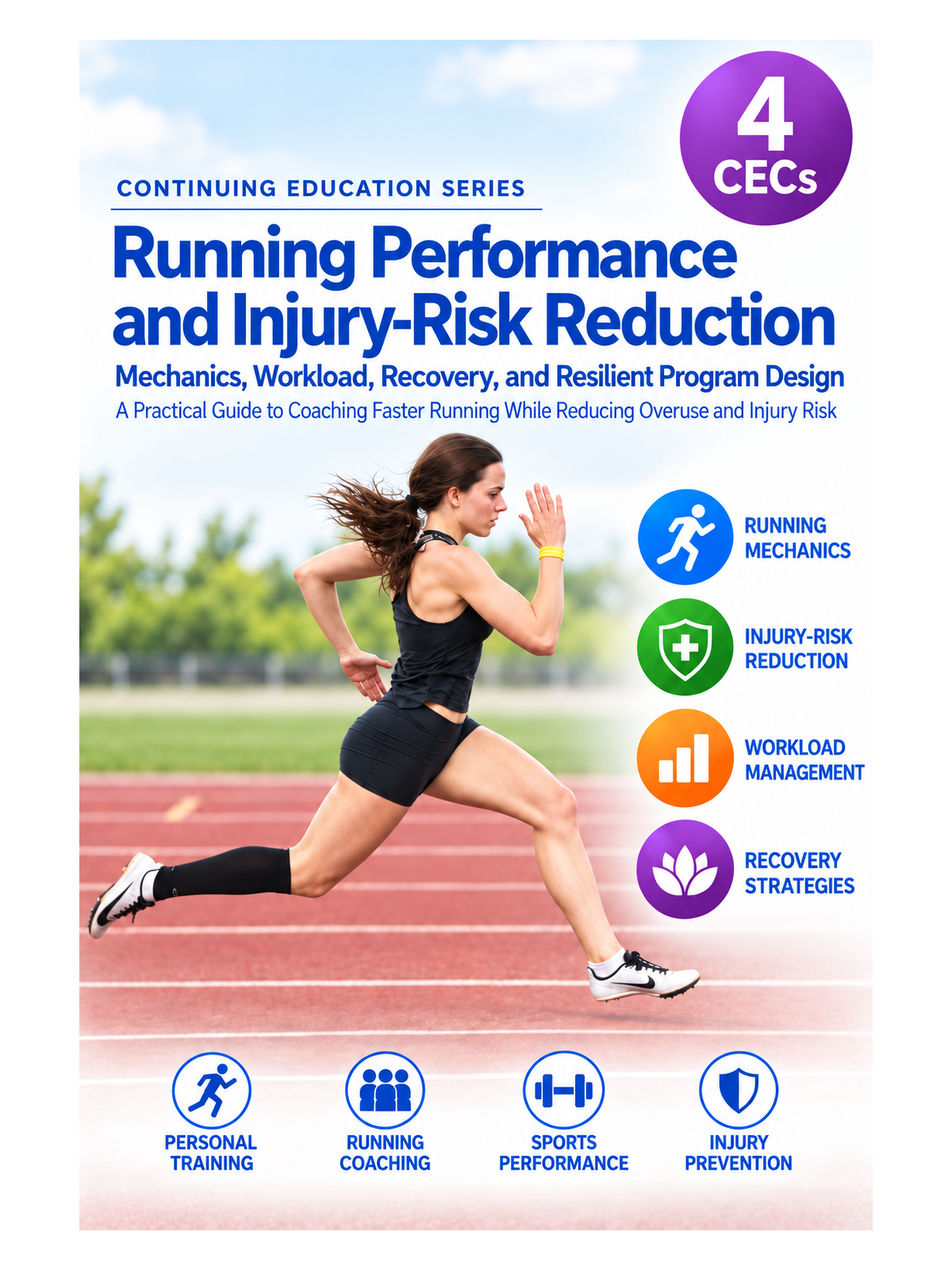
Running Performance and Injury-Risk Reduction
Mechanics, Training Load, Strength, Recovery, and Sustainable Running Programming
A Practical Guide to Improving Running Performance While Managing Training Stress and Reducing Avoidable Injury Risk *
Then paste this full description underneath:
Build faster, stronger, and more durable runners by managing the entire training system—not just mileage.
Running Performance and Injury-Risk Reduction is a comprehensive 4-CEC continuing education course designed to help fitness professionals and running coaches understand the physiological, mechanical, and programming factors that influence running performance and long-term training tolerance.
The course moves beyond simplistic running rules and one-factor explanations for injury. Running performance depends on the interaction of aerobic capacity, threshold, running economy, speed, strength, power, tissue tolerance, recovery, nutrition, mechanics, and training history. Running-related injury is also multifactorial, which means no single cadence, foot strike, shoe type, mileage rule, or exercise can guarantee injury prevention.
The NFPA approach emphasizes six connected principles: build the runner rather than merely accumulating mileage, match training load to current capacity, avoid forcing every runner into one “perfect” form, include meaningful strength training, treat recovery as part of the program, and coach the individual runner rather than the category.
Topics include:
Major determinants of running performance
VO₂max and aerobic capacity
Threshold-related performance
Running economy
Speed reserve and durability
Event-specific running demands
Multifactorial running-injury risk
Capacity versus training demand
Previous injury and training history
Building the runner profile
Running load beyond weekly mileage
Distance, duration, frequency, speed, hills, and surface
Session RPE and training-load context
The limitations of the 10% rule
Running mechanics and individual variation
Cadence and step-rate modification
Step length and overstriding
Vertical oscillation
Trunk position
Hip and knee motion
Pronation
Rearfoot, midfoot, and forefoot striking
Footwear selection and footwear transitions
Treadmill, road, trail, track, uphill, and downhill running
Easy running
Long-run programming
Threshold training
Interval training
Strides and hill training
Running-specific warm-up design
Strength training for runners
Squat, hinge, and unilateral strength patterns
Calf and soleus development
Hamstring, quadriceps, hip, and trunk training
Coordinating running and resistance training
Plyometric training for runners
Recovery, sleep, hydration, and energy availability
Common running symptoms and professional referral
Return-to-running progression
Programming for different types of runners
The NFPA Running Performance Process
Course Includes:
4 NFPA Continuing Education Credits
Self-paced PDF course
Running mechanics and workload education
Practical running-program design
Strength and plyometric programming for runners
Recovery and injury-risk reduction strategies
Return-to-running guidance
Applied coaching examples
Practice Knowledge Check with answer key
Course Code: CEC-RUN-401
Build the runner, not just the mileage. Match training demand to physical capacity and recovery.
Mechanics, Training Load, Strength, Recovery, and Sustainable Running Programming
A Practical Guide to Improving Running Performance While Managing Training Stress and Reducing Avoidable Injury Risk *
Then paste this full description underneath:
Build faster, stronger, and more durable runners by managing the entire training system—not just mileage.
Running Performance and Injury-Risk Reduction is a comprehensive 4-CEC continuing education course designed to help fitness professionals and running coaches understand the physiological, mechanical, and programming factors that influence running performance and long-term training tolerance.
The course moves beyond simplistic running rules and one-factor explanations for injury. Running performance depends on the interaction of aerobic capacity, threshold, running economy, speed, strength, power, tissue tolerance, recovery, nutrition, mechanics, and training history. Running-related injury is also multifactorial, which means no single cadence, foot strike, shoe type, mileage rule, or exercise can guarantee injury prevention.
The NFPA approach emphasizes six connected principles: build the runner rather than merely accumulating mileage, match training load to current capacity, avoid forcing every runner into one “perfect” form, include meaningful strength training, treat recovery as part of the program, and coach the individual runner rather than the category.
Topics include:
Major determinants of running performance
VO₂max and aerobic capacity
Threshold-related performance
Running economy
Speed reserve and durability
Event-specific running demands
Multifactorial running-injury risk
Capacity versus training demand
Previous injury and training history
Building the runner profile
Running load beyond weekly mileage
Distance, duration, frequency, speed, hills, and surface
Session RPE and training-load context
The limitations of the 10% rule
Running mechanics and individual variation
Cadence and step-rate modification
Step length and overstriding
Vertical oscillation
Trunk position
Hip and knee motion
Pronation
Rearfoot, midfoot, and forefoot striking
Footwear selection and footwear transitions
Treadmill, road, trail, track, uphill, and downhill running
Easy running
Long-run programming
Threshold training
Interval training
Strides and hill training
Running-specific warm-up design
Strength training for runners
Squat, hinge, and unilateral strength patterns
Calf and soleus development
Hamstring, quadriceps, hip, and trunk training
Coordinating running and resistance training
Plyometric training for runners
Recovery, sleep, hydration, and energy availability
Common running symptoms and professional referral
Return-to-running progression
Programming for different types of runners
The NFPA Running Performance Process
Course Includes:
4 NFPA Continuing Education Credits
Self-paced PDF course
Running mechanics and workload education
Practical running-program design
Strength and plyometric programming for runners
Recovery and injury-risk reduction strategies
Return-to-running guidance
Applied coaching examples
Practice Knowledge Check with answer key
Course Code: CEC-RUN-401
Build the runner, not just the mileage. Match training demand to physical capacity and recovery.