 Image 1 of 1
Shoulder Health: Mechanics and Programming
Scapular Mechanics, Rotator Cuff Function, and Exercise Programming
Learn how to develop shoulder strength, mobility, stability, and functional capacity through evidence-informed exercise programming, progressive resistance training, and appropriate coaching strategies.
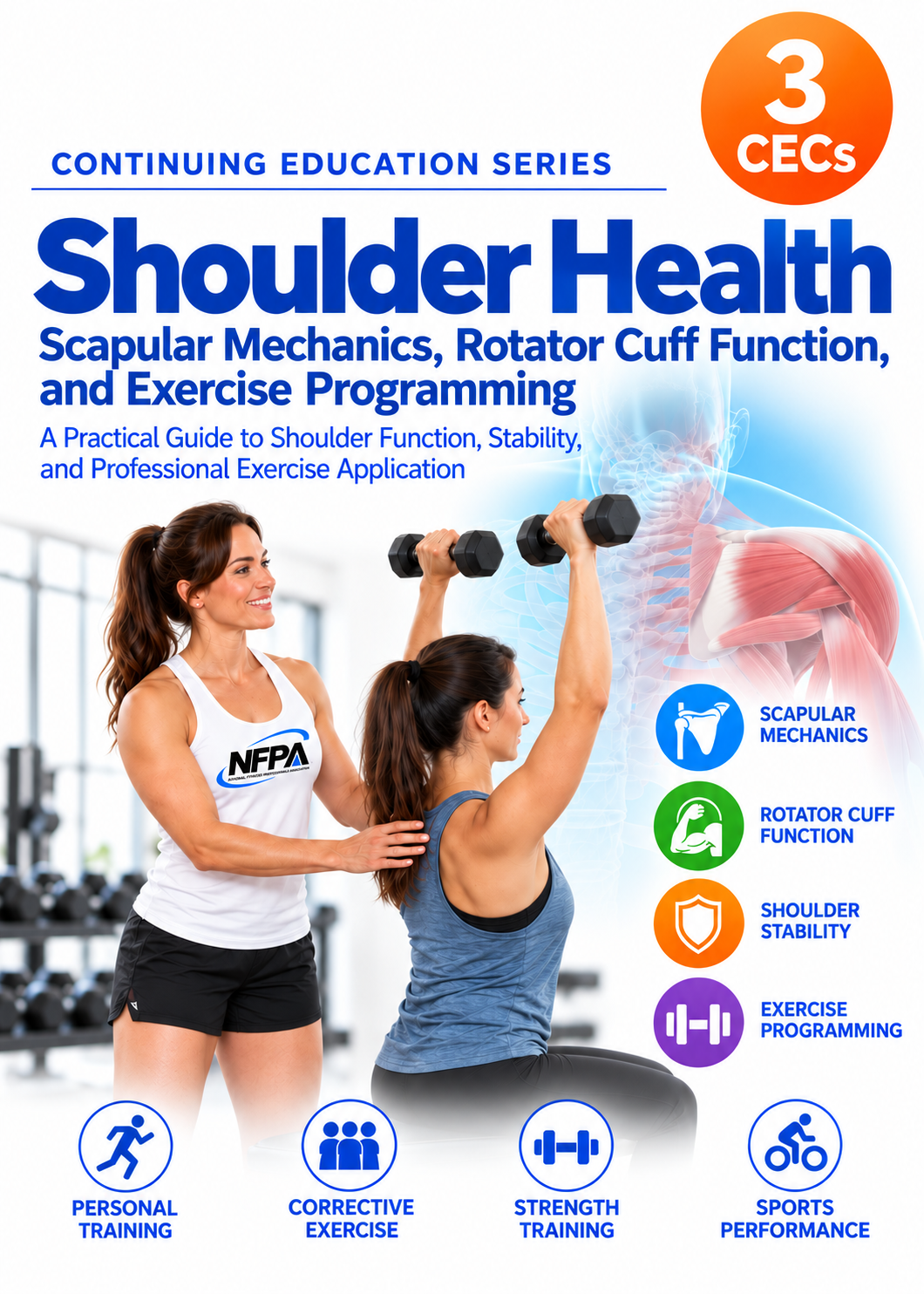
Shoulder Health: Scapular Mechanics, Rotator Cuff Function, and Exercise Programming is a practical 3-CEC continuing education course exploring shoulder anatomy, coordinated movement, rotator cuff training, load management, and individualized exercise progression.
The course examines why the shoulder should be understood as an integrated system involving the glenohumeral joint, scapula, clavicle, thoracic region, rotator cuff, and surrounding musculature.
Fitness professionals will learn how the rotator cuff contributes to rotation and humeral-head control, how scapular muscles coordinate during reaching and overhead movement, and why there is no single perfect shoulder position or movement pattern for every client.
Special attention is given to developing shoulder capacity rather than unnecessarily restricting movement. The course explains how to modify training variables such as load, range of motion, volume, grip, angle, and speed to accommodate client needs while maintaining useful exercise stimulus.
Participants will learn to design progressive pressing, pulling, rotator cuff, mobility, and loaded-carry programs for general fitness clients, older adults, and recreational athletes.
The course also addresses shoulder symptoms, warning signs, postoperative considerations, appropriate referral, and the important distinction between fitness coaching and medical diagnosis.
Topics Include:
Understanding the shoulder as an integrated movement system
Glenohumeral, acromioclavicular, and sternoclavicular joint function
Scapulothoracic movement and shoulder coordination
The four rotator cuff muscles and their functions
Supraspinatus, infraspinatus, teres minor, and subscapularis
Rotator cuff contributions to rotation and humeral-head control
Serratus anterior and trapezius muscle function
Scapular upward rotation and overhead movement
Scapulohumeral rhythm and individual movement variation
Understanding scapular dyskinesis without overdiagnosis
Shoulder pain, imaging findings, and exercise tolerance
Recognizing shoulder red flags and referral concerns
Managing the relationship between training load and capacity
Modifying exercise through load, range, volume, angle, grip, and speed
Shoulder mobility and strength through usable range of motion
Push-ups, push-up plus, and scapular movement
Horizontal pressing and bench-press modifications
Incline, landmine, and overhead pressing progressions
Rows, pulldowns, and pull-up variations
Progressive external- and internal-rotation training
Scapular-focused strengthening and movement control
Farmer, suitcase, rack, and overhead carries
Designing effective shoulder warm-ups
Strength, mobility, and shoulder programming for older adults
Training considerations for overhead athletes and throwers
Whole-body force transfer and athletic shoulder performance
Returning to general fitness after formal rehabilitation
Progressive shoulder strength and conditioning programs
The NFPA Shoulder Capacity Model
Practical shoulder-health coaching scenarios
The NFPA Shoulder Health Coaching Process
Course Includes:
3 NFPA Continuing Education Credits
Self-paced PDF continuing education course
15-question Practice Knowledge Check with answer key and explanations
14 practical coaching cases addressing shoulder symptoms, exercise modifications, rotator cuff training, overhead activity, and professional referral
Sample shoulder-strengthening programs and progressive exercise strategies
Course Code: CEC-SH-301
Build shoulder capacity rather than chasing perfect shoulder mechanics.
Scapular Mechanics, Rotator Cuff Function, and Exercise Programming
Learn how to develop shoulder strength, mobility, stability, and functional capacity through evidence-informed exercise programming, progressive resistance training, and appropriate coaching strategies.
Shoulder Health: Scapular Mechanics, Rotator Cuff Function, and Exercise Programming is a practical 3-CEC continuing education course exploring shoulder anatomy, coordinated movement, rotator cuff training, load management, and individualized exercise progression.
The course examines why the shoulder should be understood as an integrated system involving the glenohumeral joint, scapula, clavicle, thoracic region, rotator cuff, and surrounding musculature.
Fitness professionals will learn how the rotator cuff contributes to rotation and humeral-head control, how scapular muscles coordinate during reaching and overhead movement, and why there is no single perfect shoulder position or movement pattern for every client.
Special attention is given to developing shoulder capacity rather than unnecessarily restricting movement. The course explains how to modify training variables such as load, range of motion, volume, grip, angle, and speed to accommodate client needs while maintaining useful exercise stimulus.
Participants will learn to design progressive pressing, pulling, rotator cuff, mobility, and loaded-carry programs for general fitness clients, older adults, and recreational athletes.
The course also addresses shoulder symptoms, warning signs, postoperative considerations, appropriate referral, and the important distinction between fitness coaching and medical diagnosis.
Topics Include:
Understanding the shoulder as an integrated movement system
Glenohumeral, acromioclavicular, and sternoclavicular joint function
Scapulothoracic movement and shoulder coordination
The four rotator cuff muscles and their functions
Supraspinatus, infraspinatus, teres minor, and subscapularis
Rotator cuff contributions to rotation and humeral-head control
Serratus anterior and trapezius muscle function
Scapular upward rotation and overhead movement
Scapulohumeral rhythm and individual movement variation
Understanding scapular dyskinesis without overdiagnosis
Shoulder pain, imaging findings, and exercise tolerance
Recognizing shoulder red flags and referral concerns
Managing the relationship between training load and capacity
Modifying exercise through load, range, volume, angle, grip, and speed
Shoulder mobility and strength through usable range of motion
Push-ups, push-up plus, and scapular movement
Horizontal pressing and bench-press modifications
Incline, landmine, and overhead pressing progressions
Rows, pulldowns, and pull-up variations
Progressive external- and internal-rotation training
Scapular-focused strengthening and movement control
Farmer, suitcase, rack, and overhead carries
Designing effective shoulder warm-ups
Strength, mobility, and shoulder programming for older adults
Training considerations for overhead athletes and throwers
Whole-body force transfer and athletic shoulder performance
Returning to general fitness after formal rehabilitation
Progressive shoulder strength and conditioning programs
The NFPA Shoulder Capacity Model
Practical shoulder-health coaching scenarios
The NFPA Shoulder Health Coaching Process
Course Includes:
3 NFPA Continuing Education Credits
Self-paced PDF continuing education course
15-question Practice Knowledge Check with answer key and explanations
14 practical coaching cases addressing shoulder symptoms, exercise modifications, rotator cuff training, overhead activity, and professional referral
Sample shoulder-strengthening programs and progressive exercise strategies
Course Code: CEC-SH-301
Build shoulder capacity rather than chasing perfect shoulder mechanics.