 Image 1 of 1
Small Group Training: Design and Coaching
Program Design, Coaching, Class Flow, and Client Experience
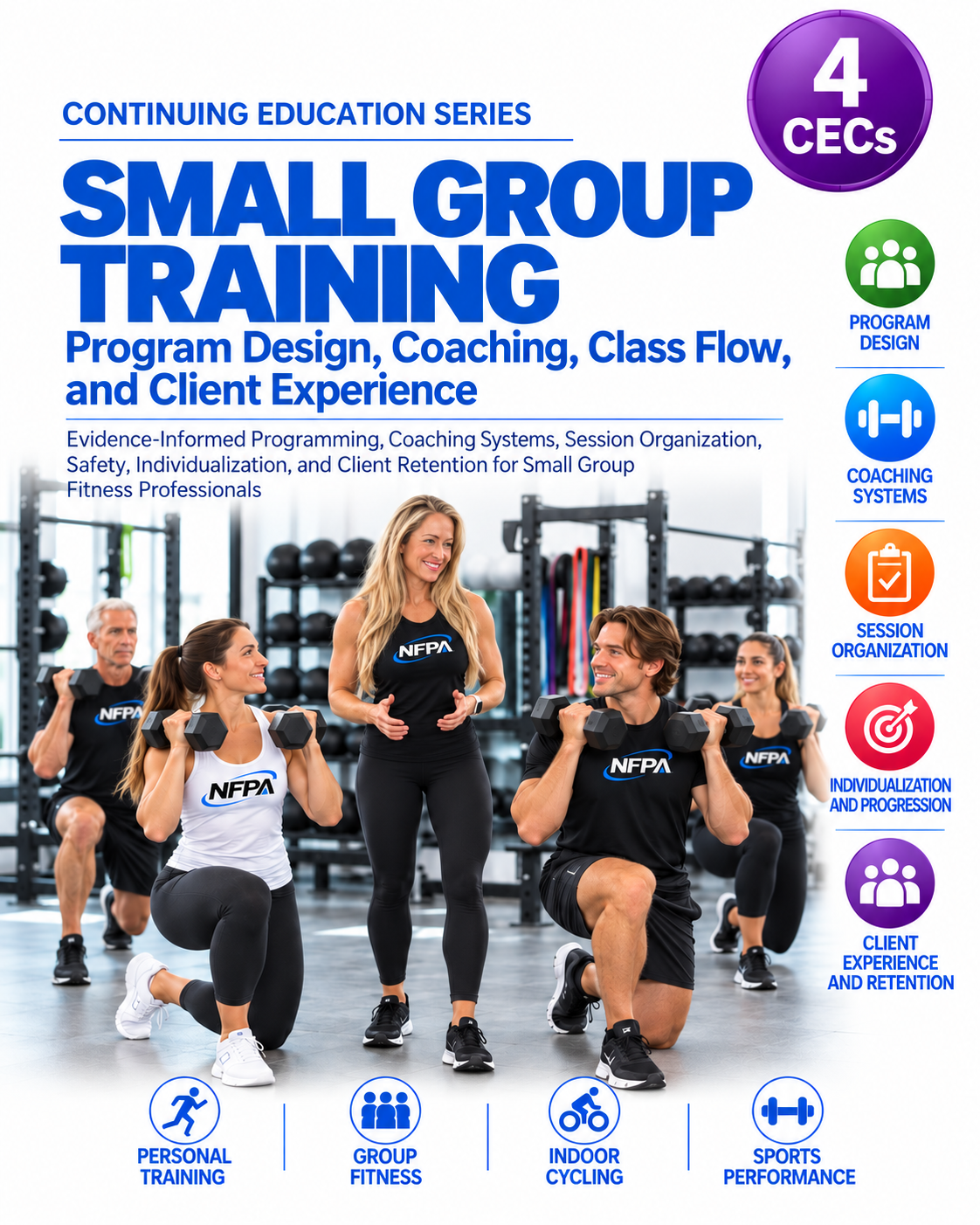
Learn how to design, organize, and coach effective small group training programs that combine individualized exercise prescriptions with the motivation, accountability, and energy of a shared training environment.
Small Group Training is a practical 4-CEC continuing education course exploring evidence-informed exercise programming, professional coaching systems, session organization, client safety, and retention strategies for fitness professionals.
The course examines how small group training differs from both one-on-one personal training and traditional group fitness. Fitness professionals will learn why delivering the same workout to several people does not automatically constitute individualized small group training.
Special attention is given to creating shared training objectives while modifying exercise selection, resistance, repetitions, volume, range of motion, tempo, rest, and progression according to individual client needs.
Participants will learn how to screen and place clients appropriately, develop scalable training programs, manage equipment and exercise stations, and maintain effective supervision while coaching multiple people simultaneously.
The course also explores different session structures, trainer positioning, coaching priorities, group dynamics, communication, accountability, and professional client-retention strategies.
Fitness professionals will learn to build organized, progressive, and inclusive small group training experiences that preserve individual attention without sacrificing safety, exercise quality, or meaningful training results.
Topics Include:
Understanding the small group training model
Small group training versus personal training and group fitness
Individualized programming within a shared session
Determining appropriate trainer-to-client ratios
Client screening, intake, and group placement
Evaluating training experience and exercise independence
Goal setting and client readiness
Recognizing clients who require one-on-one training
Designing shared training objectives
Strength, hypertrophy, power, endurance, and conditioning programs
Movement families and exercise progressions
Squat, hinge, push, pull, carry, and trunk training
Individualizing load, repetitions, sets, range, tempo, and rest
Using RPE and repetitions in reserve
Exercise regressions and substitutions
Double progression and structured training blocks
Designing effective 30-, 45-, and 60-minute sessions
Straight sets, supersets, paired sets, circuits, and stations
Equipment management and station organization
Preventing equipment bottlenecks
Safe floor layouts, traffic patterns, and trainer sight lines
Managing transitions and training density
Teaching and demonstrating exercises efficiently
Verbal, visual, and appropriate tactile coaching
Prioritizing safety-critical coaching corrections
Managing fatigue and exercise technique
Coaching multiple participants simultaneously
Emergency response and professional safety considerations
Training beginners and experienced clients together
Small group programming for older adults
Special-population modifications and professional referral
Client motivation, confidence, and self-efficacy
Developing an inclusive group culture
Managing competition, group dynamics, and social interaction
Client accountability and communication
Integrating new participants into established groups
Tracking individual progress and reassessment
Designing four-, eight-, and twelve-week training programs
Small group business organization and client retention
Practical small group training case studies
The NFPA Small Group Training Process
Course Includes:
4 NFPA Continuing Education Credits
Self-paced PDF continuing education course
20-question Practice Knowledge Check with answer key and explanations
15 applied case studies covering individualization, class organization, safety, coaching challenges, group dynamics, and professional practice
Practical introductory, strength, conditioning, and progressive small group programming examples
Evidence-informed strategies for improving client experience, accountability, and retention
Course Code: CEC-SGT-401
Individualize the person. Organize the group. Coach the room.
Program Design, Coaching, Class Flow, and Client Experience
Learn how to design, organize, and coach effective small group training programs that combine individualized exercise prescriptions with the motivation, accountability, and energy of a shared training environment.
Small Group Training is a practical 4-CEC continuing education course exploring evidence-informed exercise programming, professional coaching systems, session organization, client safety, and retention strategies for fitness professionals.
The course examines how small group training differs from both one-on-one personal training and traditional group fitness. Fitness professionals will learn why delivering the same workout to several people does not automatically constitute individualized small group training.
Special attention is given to creating shared training objectives while modifying exercise selection, resistance, repetitions, volume, range of motion, tempo, rest, and progression according to individual client needs.
Participants will learn how to screen and place clients appropriately, develop scalable training programs, manage equipment and exercise stations, and maintain effective supervision while coaching multiple people simultaneously.
The course also explores different session structures, trainer positioning, coaching priorities, group dynamics, communication, accountability, and professional client-retention strategies.
Fitness professionals will learn to build organized, progressive, and inclusive small group training experiences that preserve individual attention without sacrificing safety, exercise quality, or meaningful training results.
Topics Include:
Understanding the small group training model
Small group training versus personal training and group fitness
Individualized programming within a shared session
Determining appropriate trainer-to-client ratios
Client screening, intake, and group placement
Evaluating training experience and exercise independence
Goal setting and client readiness
Recognizing clients who require one-on-one training
Designing shared training objectives
Strength, hypertrophy, power, endurance, and conditioning programs
Movement families and exercise progressions
Squat, hinge, push, pull, carry, and trunk training
Individualizing load, repetitions, sets, range, tempo, and rest
Using RPE and repetitions in reserve
Exercise regressions and substitutions
Double progression and structured training blocks
Designing effective 30-, 45-, and 60-minute sessions
Straight sets, supersets, paired sets, circuits, and stations
Equipment management and station organization
Preventing equipment bottlenecks
Safe floor layouts, traffic patterns, and trainer sight lines
Managing transitions and training density
Teaching and demonstrating exercises efficiently
Verbal, visual, and appropriate tactile coaching
Prioritizing safety-critical coaching corrections
Managing fatigue and exercise technique
Coaching multiple participants simultaneously
Emergency response and professional safety considerations
Training beginners and experienced clients together
Small group programming for older adults
Special-population modifications and professional referral
Client motivation, confidence, and self-efficacy
Developing an inclusive group culture
Managing competition, group dynamics, and social interaction
Client accountability and communication
Integrating new participants into established groups
Tracking individual progress and reassessment
Designing four-, eight-, and twelve-week training programs
Small group business organization and client retention
Practical small group training case studies
The NFPA Small Group Training Process
Course Includes:
4 NFPA Continuing Education Credits
Self-paced PDF continuing education course
20-question Practice Knowledge Check with answer key and explanations
15 applied case studies covering individualization, class organization, safety, coaching challenges, group dynamics, and professional practice
Practical introductory, strength, conditioning, and progressive small group programming examples
Evidence-informed strategies for improving client experience, accountability, and retention
Course Code: CEC-SGT-401
Individualize the person. Organize the group. Coach the room.