 Image 1 of 1
Tactical Fitness: Military and First Responders
Strength, Power, Work Capacity, Load Carriage, Recovery, and Occupational Readiness
Evidence-Based Physical Preparation for Firefighters, Law-Enforcement Officers, EMS Professionals, and Military Personnel
Then paste this full description underneath:
Build the physical qualities that support the job—not just workouts that look tactical.
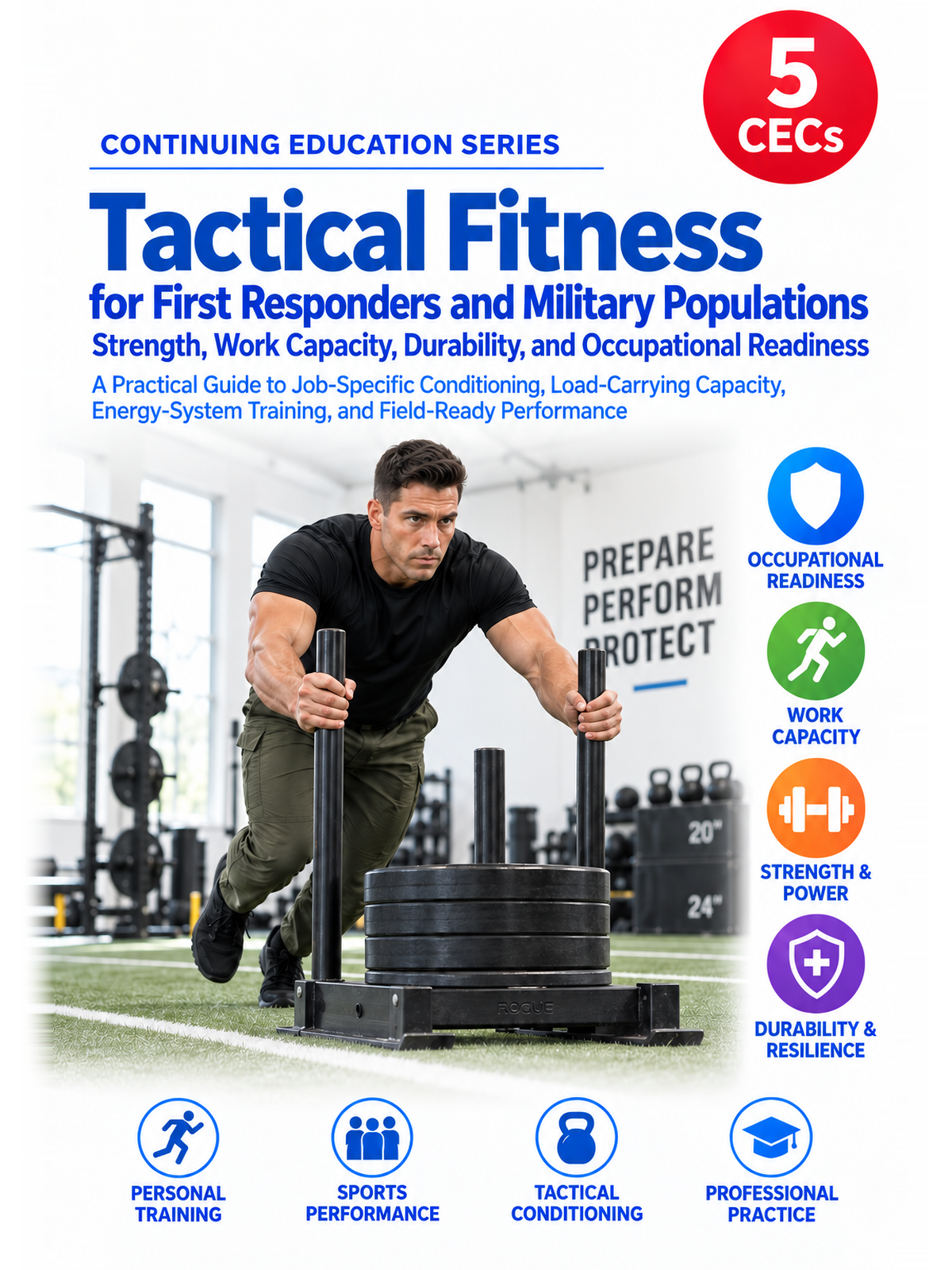
Tactical Fitness for First Responders and Military Populations is a comprehensive 5-CEC continuing education course designed to help fitness professionals build practical, evidence-informed programs for firefighters, law-enforcement officers, EMS professionals, military personnel, and other occupational populations with demanding physical requirements.
Tactical fitness is different from conventional sport preparation because occupational demands are not always predictable. First responders and military personnel may be required to lift, carry, drag, climb, sprint, move under load, work in protective equipment, perform repeated high-intensity efforts, and sustain physical work for extended periods—often while managing disrupted sleep, environmental stress, and limited recovery.
The course therefore emphasizes operational readiness rather than simply training someone like a competitive athlete. The starting point is the occupation itself: identify the tasks, determine the physical qualities that support those tasks, assess the individual, and then select training methods that build useful capacity.
The central NFPA principle is:
Train for the occupation, not for the label.
Topics include:
Tactical fitness versus conventional sport performance
Occupational needs analysis
General fitness versus job-specific readiness
Firefighter physical demands
Law-enforcement physical demands
EMS physical demands
Military physical demands
Fitness-test preparation versus long-term occupational capability
Absolute and relative strength
Squat, hinge, push, pull, carry, drag, and trunk training
Grip strength and occupational performance
Strength programming for tactical professionals
Power and rapid force production
Jumps, medicine-ball throws, and explosive resistance training
Acceleration and short-sprint development
Aerobic fitness for occupational readiness
Anaerobic capacity
Repeated-effort conditioning
Concurrent strength and endurance training
Work-capacity development
Load carriage and external-load demands
Progressive load-carriage training
Strength and aerobic preparation for loaded movement
Load, distance, speed, terrain, and environmental progression
Durability and injury-risk reduction
Lower-body and upper-body capacity
EMS lifting and patient-handling considerations
Heat stress and protective equipment
Heat acclimatization
Hydration and environmental stress
Heat-illness warning signs
Shift work and disrupted sleep
Readiness-based training modification
Green, yellow, and red readiness days
Tactical fitness testing
General fitness testing and occupational-performance testing
Periodization for tactical populations
General preparation
Specific preparation
High-demand operational periods
Maintenance training
Programming around fire-service schedules
Programming around law-enforcement shifts
Programming around EMS workload
Programming around military field training
Firefighter general-readiness programming
Law-enforcement readiness programming
Military and load-carriage preparation
EMS occupational preparation
Professional scope and referral
The NFPA Tactical Fitness Programming Process
Course Includes:
5 NFPA Continuing Education Credits
Self-paced PDF course
Occupational-needs analysis framework
Strength and power programming
Aerobic and repeated-effort conditioning
Load-carriage programming
Heat, hydration, and PPE considerations
Shift-work and readiness strategies
Practical firefighter, law-enforcement, EMS, and military programming examples
Practice Knowledge Check with answer key
Course Code: CEC-TAC-501
Train the job demands. Monitor the human being.
Strength, Power, Work Capacity, Load Carriage, Recovery, and Occupational Readiness
Evidence-Based Physical Preparation for Firefighters, Law-Enforcement Officers, EMS Professionals, and Military Personnel
Then paste this full description underneath:
Build the physical qualities that support the job—not just workouts that look tactical.
Tactical Fitness for First Responders and Military Populations is a comprehensive 5-CEC continuing education course designed to help fitness professionals build practical, evidence-informed programs for firefighters, law-enforcement officers, EMS professionals, military personnel, and other occupational populations with demanding physical requirements.
Tactical fitness is different from conventional sport preparation because occupational demands are not always predictable. First responders and military personnel may be required to lift, carry, drag, climb, sprint, move under load, work in protective equipment, perform repeated high-intensity efforts, and sustain physical work for extended periods—often while managing disrupted sleep, environmental stress, and limited recovery.
The course therefore emphasizes operational readiness rather than simply training someone like a competitive athlete. The starting point is the occupation itself: identify the tasks, determine the physical qualities that support those tasks, assess the individual, and then select training methods that build useful capacity.
The central NFPA principle is:
Train for the occupation, not for the label.
Topics include:
Tactical fitness versus conventional sport performance
Occupational needs analysis
General fitness versus job-specific readiness
Firefighter physical demands
Law-enforcement physical demands
EMS physical demands
Military physical demands
Fitness-test preparation versus long-term occupational capability
Absolute and relative strength
Squat, hinge, push, pull, carry, drag, and trunk training
Grip strength and occupational performance
Strength programming for tactical professionals
Power and rapid force production
Jumps, medicine-ball throws, and explosive resistance training
Acceleration and short-sprint development
Aerobic fitness for occupational readiness
Anaerobic capacity
Repeated-effort conditioning
Concurrent strength and endurance training
Work-capacity development
Load carriage and external-load demands
Progressive load-carriage training
Strength and aerobic preparation for loaded movement
Load, distance, speed, terrain, and environmental progression
Durability and injury-risk reduction
Lower-body and upper-body capacity
EMS lifting and patient-handling considerations
Heat stress and protective equipment
Heat acclimatization
Hydration and environmental stress
Heat-illness warning signs
Shift work and disrupted sleep
Readiness-based training modification
Green, yellow, and red readiness days
Tactical fitness testing
General fitness testing and occupational-performance testing
Periodization for tactical populations
General preparation
Specific preparation
High-demand operational periods
Maintenance training
Programming around fire-service schedules
Programming around law-enforcement shifts
Programming around EMS workload
Programming around military field training
Firefighter general-readiness programming
Law-enforcement readiness programming
Military and load-carriage preparation
EMS occupational preparation
Professional scope and referral
The NFPA Tactical Fitness Programming Process
Course Includes:
5 NFPA Continuing Education Credits
Self-paced PDF course
Occupational-needs analysis framework
Strength and power programming
Aerobic and repeated-effort conditioning
Load-carriage programming
Heat, hydration, and PPE considerations
Shift-work and readiness strategies
Practical firefighter, law-enforcement, EMS, and military programming examples
Practice Knowledge Check with answer key
Course Code: CEC-TAC-501
Train the job demands. Monitor the human being.