 Image 1 of 1
Programming, Cueing, Technology, and Client Engagement
Learn how to deliver safe, effective, and professional fitness coaching through live virtual sessions, remote programming, exercise applications, and hybrid training models.
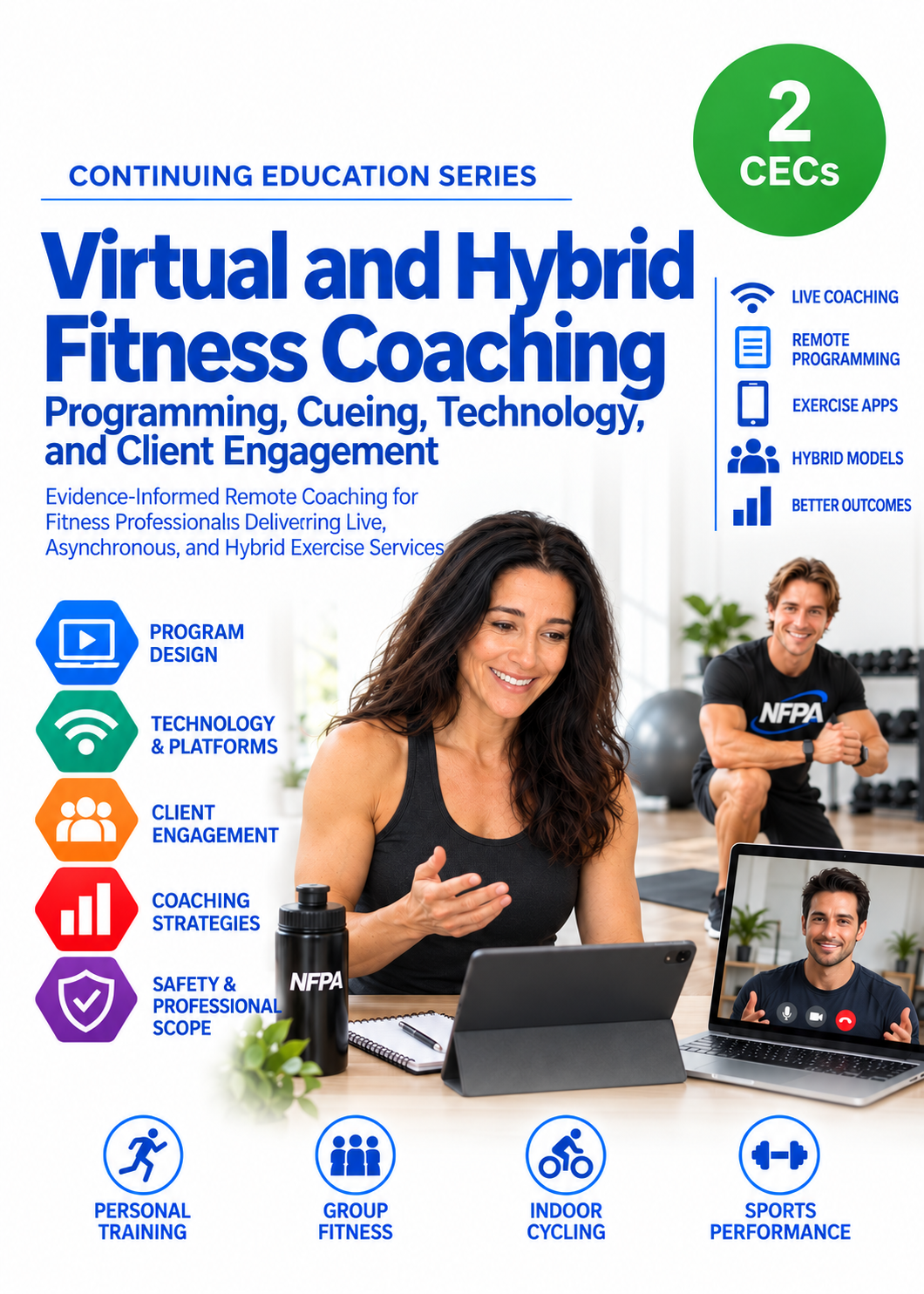
Virtual and Hybrid Fitness Coaching is a practical 2-CEC continuing education course exploring evidence-informed strategies for delivering fitness services when the trainer and client are not always in the same location.
The course examines how digital coaching changes exercise supervision, program design, communication, client safety, and professional responsibilities. Fitness professionals will learn how to adapt exercise selection, provide effective virtual instruction, manage limited equipment, and structure programs that clients can follow independently.
Special emphasis is placed on camera positioning, concise coaching cues, appropriate use of technology, digital privacy, emergency planning, client engagement, and designing hybrid training systems that combine the strengths of in-person and remote coaching.
Topics Include:
Understanding virtual, asynchronous, and hybrid fitness coaching
Live video coaching versus independent remote programming
Advantages and limitations of digital fitness services
Evaluating client suitability for remote exercise
Preparticipation screening and remote client safety
Assessing home exercise environments and equipment
Establishing emergency procedures for virtual sessions
Exercise selection based on supervision and movement complexity
Progressive overload with limited exercise equipment
Writing effective asynchronous exercise programs
Providing exercise substitutions and clear instructions
Camera positioning for movement observation
Front, side, and angled exercise views
Effective virtual cueing and exercise demonstrations
Managing internet interruptions and connection failures
Reviewing client exercise videos efficiently
Digital privacy, informed consent, and secure client information
Using fitness applications and wearable technology
Interpreting readiness scores and exercise-monitoring data
Client accountability, adherence, and communication boundaries
Building effective hybrid training schedules
Remote group fitness and professional scope considerations
Artificial intelligence and automated coaching tools
Practical remote and hybrid coaching scenarios
The NFPA Virtual and Hybrid Coaching Process
Course Includes:
2 NFPA Continuing Education Credits
Self-paced PDF continuing education course
10-question Practice Knowledge Check with answer key and explanations
Seven practical coaching cases covering remote programming, technology, communication, safety, and professional application
Coach the person—not the platform.
Programming, Cueing, Technology, and Client Engagement
Learn how to deliver safe, effective, and professional fitness coaching through live virtual sessions, remote programming, exercise applications, and hybrid training models.
Virtual and Hybrid Fitness Coaching is a practical 2-CEC continuing education course exploring evidence-informed strategies for delivering fitness services when the trainer and client are not always in the same location.
The course examines how digital coaching changes exercise supervision, program design, communication, client safety, and professional responsibilities. Fitness professionals will learn how to adapt exercise selection, provide effective virtual instruction, manage limited equipment, and structure programs that clients can follow independently.
Special emphasis is placed on camera positioning, concise coaching cues, appropriate use of technology, digital privacy, emergency planning, client engagement, and designing hybrid training systems that combine the strengths of in-person and remote coaching.
Topics Include:
Understanding virtual, asynchronous, and hybrid fitness coaching
Live video coaching versus independent remote programming
Advantages and limitations of digital fitness services
Evaluating client suitability for remote exercise
Preparticipation screening and remote client safety
Assessing home exercise environments and equipment
Establishing emergency procedures for virtual sessions
Exercise selection based on supervision and movement complexity
Progressive overload with limited exercise equipment
Writing effective asynchronous exercise programs
Providing exercise substitutions and clear instructions
Camera positioning for movement observation
Front, side, and angled exercise views
Effective virtual cueing and exercise demonstrations
Managing internet interruptions and connection failures
Reviewing client exercise videos efficiently
Digital privacy, informed consent, and secure client information
Using fitness applications and wearable technology
Interpreting readiness scores and exercise-monitoring data
Client accountability, adherence, and communication boundaries
Building effective hybrid training schedules
Remote group fitness and professional scope considerations
Artificial intelligence and automated coaching tools
Practical remote and hybrid coaching scenarios
The NFPA Virtual and Hybrid Coaching Process
Course Includes:
2 NFPA Continuing Education Credits
Self-paced PDF continuing education course
10-question Practice Knowledge Check with answer key and explanations
Seven practical coaching cases covering remote programming, technology, communication, safety, and professional application
Coach the person—not the platform.