 Image 1 of 1
Intensity, Progression, and Programming
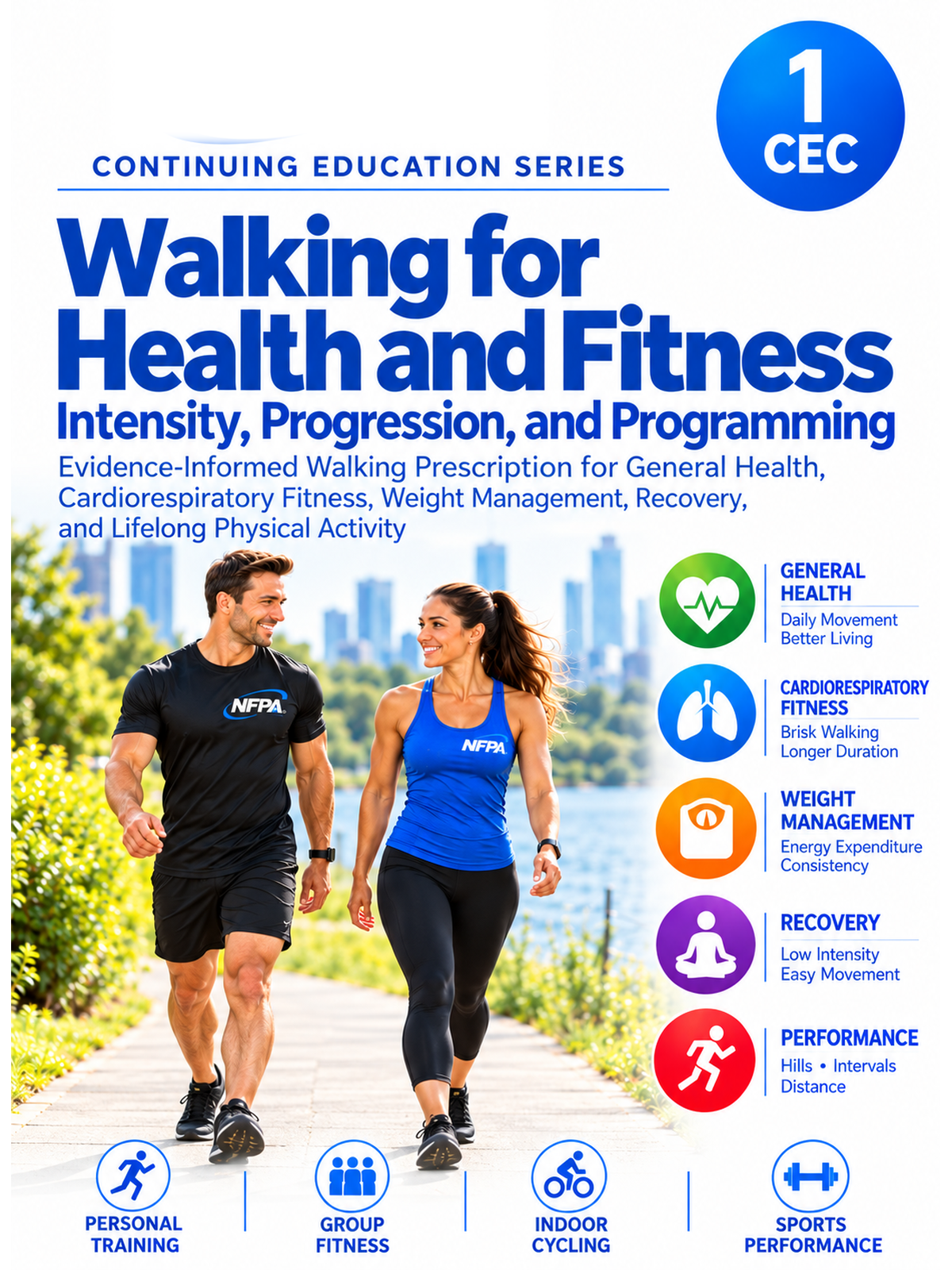
Learn how to transform walking from everyday physical activity into purposeful, individualized exercise programming that supports cardiovascular fitness, general health, weight management, recovery, and lifelong movement.
Walking for Health and Fitness is a practical 1-CEC continuing education course covering evidence-informed walking prescription, exercise intensity, progressive programming, and client safety.
The course explores why walking intensity depends on the individual rather than speed alone, how to use the Talk Test and Rating of Perceived Exertion (RPE), and how to build progressive walking programs using duration, frequency, pace, terrain, and intervals.
Fitness professionals will also learn how to interpret daily step counts, address the 10,000-step misconception, integrate walking with resistance training, and recognize when symptoms or excessive training demands require modification or referral.
Topics Include:
Walking for general health and cardiovascular fitness
Light, moderate, and higher-intensity walking
Using the Talk Test and RPE to guide intensity
Physical activity recommendations and weekly walking goals
Daily step counts and the 10,000-step misconception
Establishing a client's baseline walking capacity
Programming frequency, duration, pace, and intensity
Progressive walking programs for beginners
Brisk walking, hills, and interval training
Treadmill versus outdoor walking
Walking for weight management and recovery
Walking considerations for older adults
Integrating walking with strength, balance, and mobility training
Monitoring pain, fatigue, footwear, and environmental conditions
Practical client programming examples
The NFPA Walking Programming Process
Course Includes:
1 NFPA Continuing Education Credit
Self-paced PDF course
5-question Practice Knowledge Check with answer key and explanations
Practical walking-program examples and client coaching applications
Course Code: CEC-WAL-101
Walking becomes training when the dose matches the goal.
Intensity, Progression, and Programming
Learn how to transform walking from everyday physical activity into purposeful, individualized exercise programming that supports cardiovascular fitness, general health, weight management, recovery, and lifelong movement.
Walking for Health and Fitness is a practical 1-CEC continuing education course covering evidence-informed walking prescription, exercise intensity, progressive programming, and client safety.
The course explores why walking intensity depends on the individual rather than speed alone, how to use the Talk Test and Rating of Perceived Exertion (RPE), and how to build progressive walking programs using duration, frequency, pace, terrain, and intervals.
Fitness professionals will also learn how to interpret daily step counts, address the 10,000-step misconception, integrate walking with resistance training, and recognize when symptoms or excessive training demands require modification or referral.
Topics Include:
Walking for general health and cardiovascular fitness
Light, moderate, and higher-intensity walking
Using the Talk Test and RPE to guide intensity
Physical activity recommendations and weekly walking goals
Daily step counts and the 10,000-step misconception
Establishing a client's baseline walking capacity
Programming frequency, duration, pace, and intensity
Progressive walking programs for beginners
Brisk walking, hills, and interval training
Treadmill versus outdoor walking
Walking for weight management and recovery
Walking considerations for older adults
Integrating walking with strength, balance, and mobility training
Monitoring pain, fatigue, footwear, and environmental conditions
Practical client programming examples
The NFPA Walking Programming Process
Course Includes:
1 NFPA Continuing Education Credit
Self-paced PDF course
5-question Practice Knowledge Check with answer key and explanations
Practical walking-program examples and client coaching applications
Course Code: CEC-WAL-101
Walking becomes training when the dose matches the goal.