 Image 1 of 1
Youth Resistance Training and Growth
Strength Development, Maturation, and Safe Exercise Progression
Learn how to develop safe, effective, and progressive resistance-training programs for children and adolescents while accounting for physical growth, biological maturation, movement competency, and long-term athletic development.
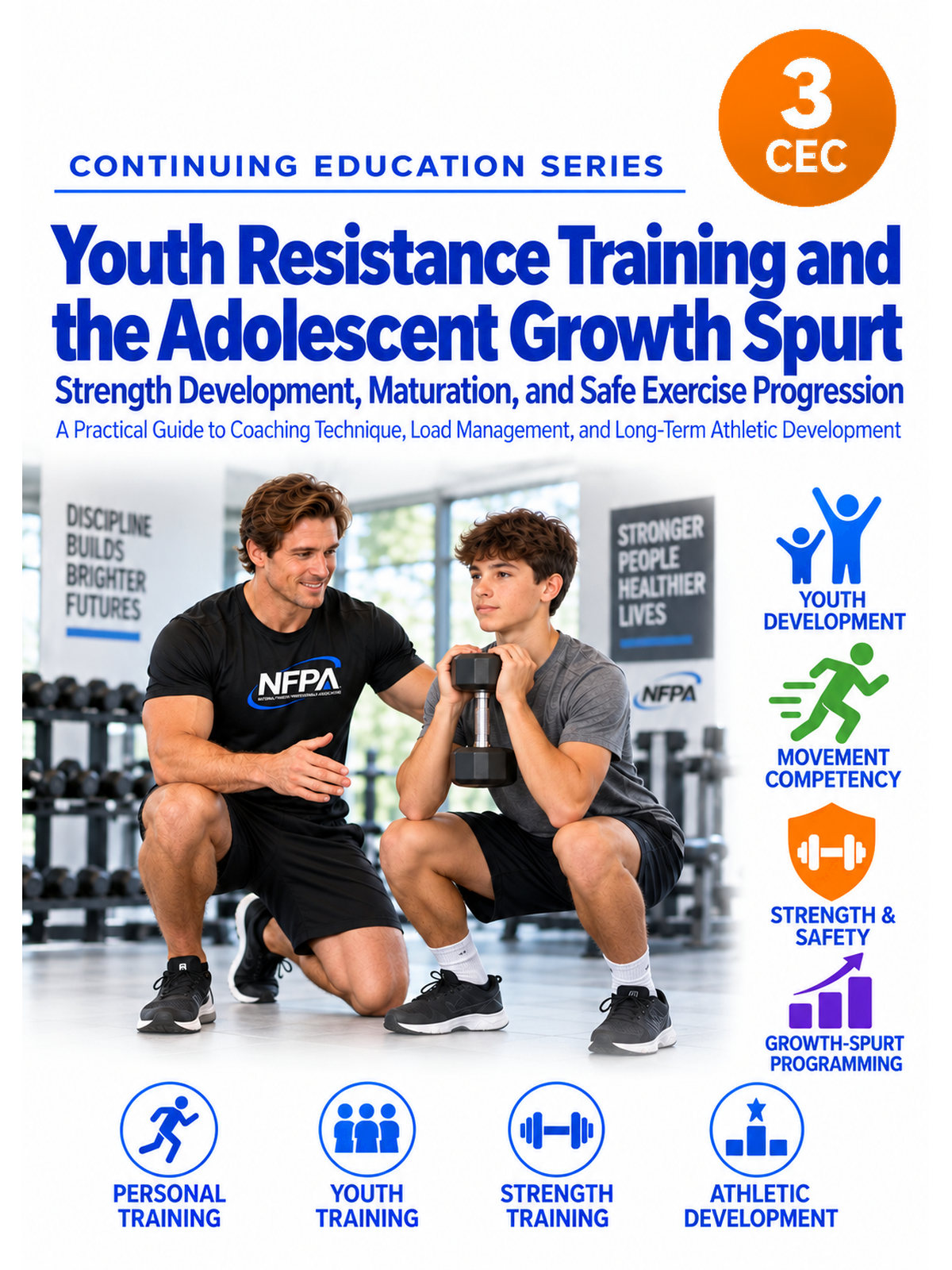
Youth Resistance Training and the Adolescent Growth Spurt is a practical 3-CEC continuing education course exploring evidence-informed strength training, movement development, exercise technique, load management, and professional coaching strategies for young athletes.
The course examines why properly supervised resistance training can be both safe and beneficial for children and adolescents. Fitness professionals will learn why well-designed strength training does not stunt growth and why young athletes should not simply follow adult training programs.
Special attention is given to the adolescent growth spurt and peak height velocity (PHV), when changes in height, body mass, limb length, leverage, and coordination may affect exercise performance and movement quality.
Fitness professionals will learn to distinguish chronological age from biological maturity and training experience, allowing them to individualize exercise selection, loading, progression, and supervision.
The course also explores growth-related pain, developing growth plates and tendon attachment sites, strength and power development across maturation, and the importance of integrating resistance training with school sports, private coaching, competition, and adequate recovery.
Participants will learn practical strategies for coaching technique, progressing resistance appropriately, communicating with parents and guardians, recognizing medical referral concerns, and supporting healthy long-term athletic development.
Topics Include:
Understanding youth resistance training and its benefits
Common misconceptions about children lifting weights
Why properly designed strength training does not stunt growth
Readiness, supervision, and appropriate training environments
Growth plates, apophyses, and developing skeletal structures
Recognizing growth-related pain and referral concerns
Chronological age versus biological maturity
Training age, developmental readiness, and individual differences
Peak height velocity and the adolescent growth spurt
How rapid growth changes movement mechanics and coordination
Early- and late-maturing athletes
Strength development before, during, and after puberty
Neuromuscular adaptation and movement competency
Strength and power development across maturation
Resistance training for female youth athletes
Technique instruction and effective coaching cues
Safe exercise selection and equipment considerations
Squat, hinge, push, pull, carry, and other foundational patterns
Bodyweight, resistance bands, free weights, and machines
Progressive resistance and appropriate training intensity
Understanding maximal strength testing in youth
Sets, repetitions, frequency, recovery, and training progression
Load management during rapid growth
Integrating strength training with team practice and competition
Managing total weekly athletic workload
In-season and off-season resistance-training priorities
Sleep, hydration, nutrition, and recovery considerations
Avoiding unnecessary early specialization
Recognizing under-fueling and unhealthy body-image pressures
Coaching minors and communicating with parents and guardians
Professional scope of practice and healthcare referral
Applied youth strength-training coaching scenarios
The NFPA Youth Resistance Training Coaching Process
Course Includes:
3 NFPA Continuing Education Credits
Self-paced PDF continuing education course
15-question Practice Knowledge Check with answer key and explanations
Applied coaching examples involving growth, maturation, exercise progression, training workload, and athlete safety
Practical resistance-training guidelines, developmental frameworks, and youth exercise-programming strategies
Course Code: CEC-YRT-301
Develop strength through proper coaching, progressive loading, and long-term athletic development—not chronological age alone.
Strength Development, Maturation, and Safe Exercise Progression
Learn how to develop safe, effective, and progressive resistance-training programs for children and adolescents while accounting for physical growth, biological maturation, movement competency, and long-term athletic development.
Youth Resistance Training and the Adolescent Growth Spurt is a practical 3-CEC continuing education course exploring evidence-informed strength training, movement development, exercise technique, load management, and professional coaching strategies for young athletes.
The course examines why properly supervised resistance training can be both safe and beneficial for children and adolescents. Fitness professionals will learn why well-designed strength training does not stunt growth and why young athletes should not simply follow adult training programs.
Special attention is given to the adolescent growth spurt and peak height velocity (PHV), when changes in height, body mass, limb length, leverage, and coordination may affect exercise performance and movement quality.
Fitness professionals will learn to distinguish chronological age from biological maturity and training experience, allowing them to individualize exercise selection, loading, progression, and supervision.
The course also explores growth-related pain, developing growth plates and tendon attachment sites, strength and power development across maturation, and the importance of integrating resistance training with school sports, private coaching, competition, and adequate recovery.
Participants will learn practical strategies for coaching technique, progressing resistance appropriately, communicating with parents and guardians, recognizing medical referral concerns, and supporting healthy long-term athletic development.
Topics Include:
Understanding youth resistance training and its benefits
Common misconceptions about children lifting weights
Why properly designed strength training does not stunt growth
Readiness, supervision, and appropriate training environments
Growth plates, apophyses, and developing skeletal structures
Recognizing growth-related pain and referral concerns
Chronological age versus biological maturity
Training age, developmental readiness, and individual differences
Peak height velocity and the adolescent growth spurt
How rapid growth changes movement mechanics and coordination
Early- and late-maturing athletes
Strength development before, during, and after puberty
Neuromuscular adaptation and movement competency
Strength and power development across maturation
Resistance training for female youth athletes
Technique instruction and effective coaching cues
Safe exercise selection and equipment considerations
Squat, hinge, push, pull, carry, and other foundational patterns
Bodyweight, resistance bands, free weights, and machines
Progressive resistance and appropriate training intensity
Understanding maximal strength testing in youth
Sets, repetitions, frequency, recovery, and training progression
Load management during rapid growth
Integrating strength training with team practice and competition
Managing total weekly athletic workload
In-season and off-season resistance-training priorities
Sleep, hydration, nutrition, and recovery considerations
Avoiding unnecessary early specialization
Recognizing under-fueling and unhealthy body-image pressures
Coaching minors and communicating with parents and guardians
Professional scope of practice and healthcare referral
Applied youth strength-training coaching scenarios
The NFPA Youth Resistance Training Coaching Process
Course Includes:
3 NFPA Continuing Education Credits
Self-paced PDF continuing education course
15-question Practice Knowledge Check with answer key and explanations
Applied coaching examples involving growth, maturation, exercise progression, training workload, and athlete safety
Practical resistance-training guidelines, developmental frameworks, and youth exercise-programming strategies
Course Code: CEC-YRT-301
Develop strength through proper coaching, progressive loading, and long-term athletic development—not chronological age alone.