1 CEC
Continuing Education Courses

Focused Education. Practical Application. Professional Growth.
Expand your professional knowledge with focused NFPA continuing education courses designed for practical application. Each course below provides 1 NFPA Continuing Education Credit and is delivered as a self-paced digital course you can study on your schedule.
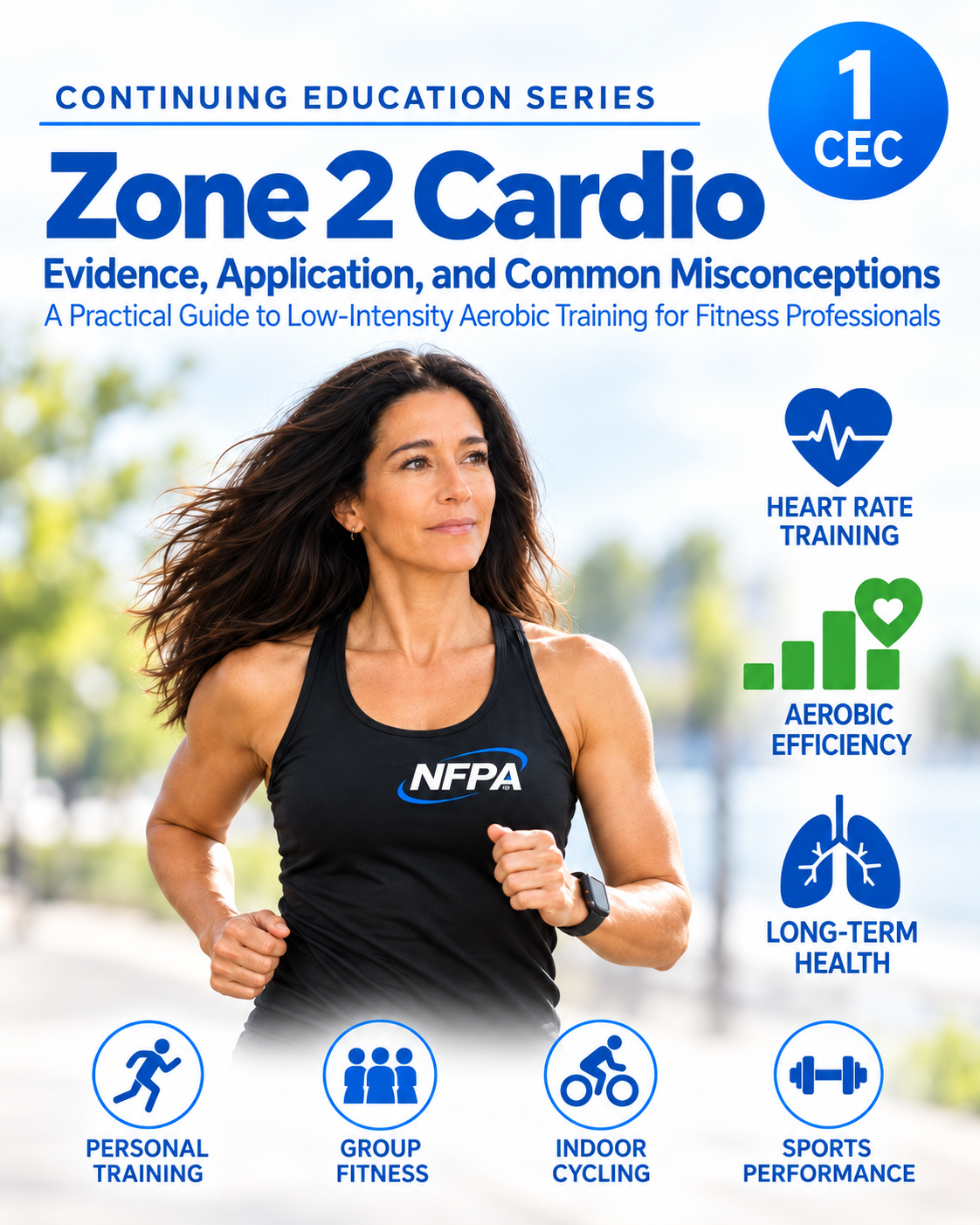
Understand what Zone 2 training actually is, how to identify it, and how to use it effectively without treating one heart-rate number as a universal rule.
Zone 2 Cardio is a 1-CEC continuing education course designed to help fitness professionals understand low-intensity aerobic training, practical intensity identification, cardiorespiratory adaptation, programming, client monitoring, and common misconceptions surrounding Zone 2.
The course explains why Zone 2 is better understood as a sustainable aerobic intensity domain than as one exact pace, heart rate, or wearable-device color. It also shows how fitness level, exercise mode, heat, fatigue, medication, hydration, and individual physiology can affect interpretation.
Topics include:
What Zone 2 training is
Aerobic physiology and adaptation
Heart rate, RPE, breathing, and the Talk Test
Why Zone 2 is not one universal number
Heart-rate drift and environmental effects
Building a Zone 2 session
Duration, frequency, and progression
Cardiorespiratory programming
Wearable-device limitations
Common Zone 2 misconceptions
Client monitoring and professional judgment
Safety, contraindications, and scope of practice
The NFPA Zone 2 Coaching Process
Course Includes:
1 NFPA Continuing Education Credit
Self-paced PDF course
Practical Zone 2 programming guidance
Intensity-monitoring strategies
Practice Knowledge Check with answer key
The finished Zone 2 course uses a 5-question Practice Knowledge Check and is not pass/fail.
Select the topic that best matches your professional interests, client needs, or continuing education goals.
Choose Your 1 CEC Course
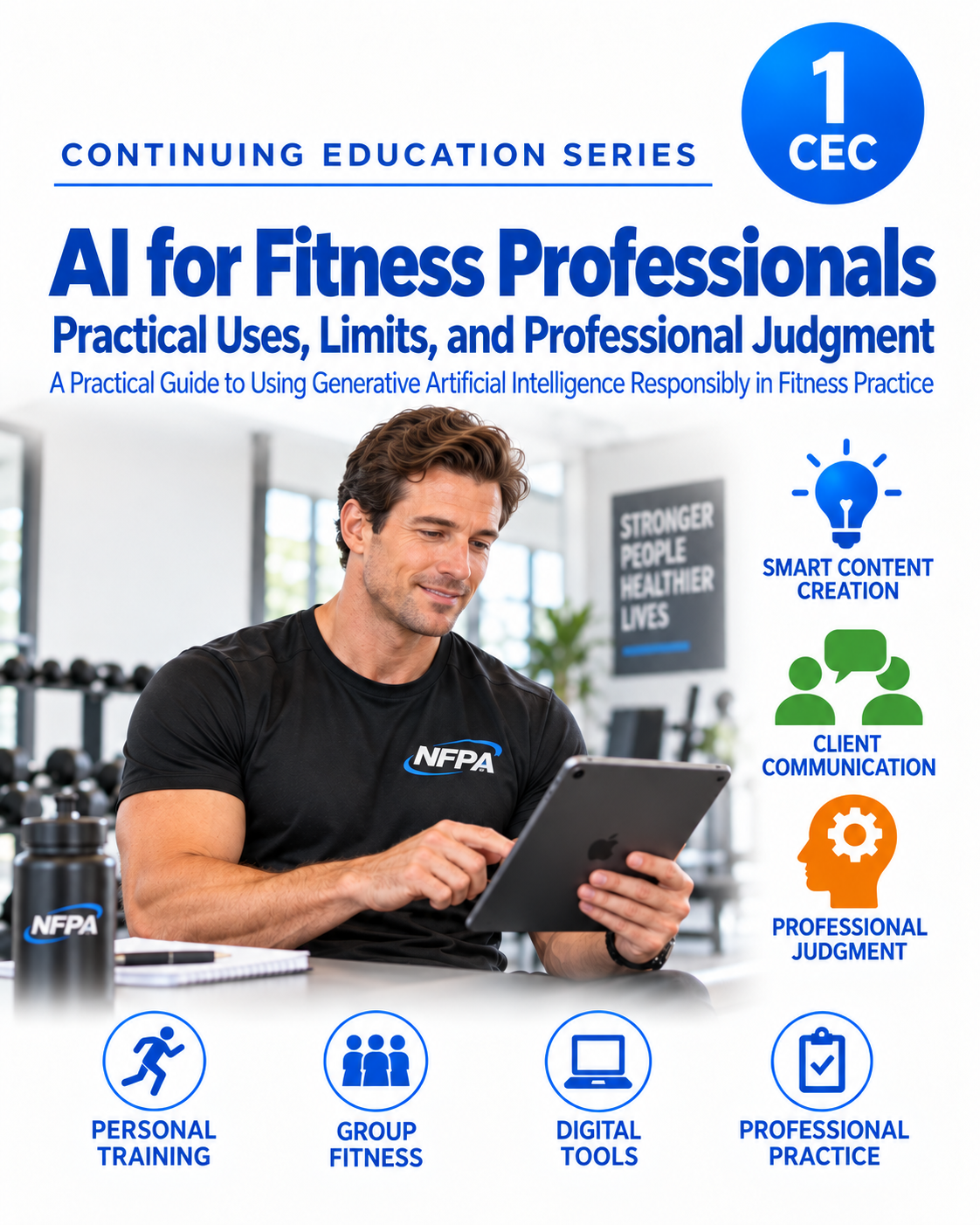
Practical Uses, Limits, and Professional Judgment
Learn how to use generative artificial intelligence as a professional tool—without allowing technology to replace professional judgment.
AI for Fitness Professionals is a practical 1-CEC continuing education course that explores responsible uses of AI for fitness programming support, client communication, education, business administration, marketing, content development, and professional organization.
The course also addresses the limitations and risks of AI, including inaccurate information, missing client context, privacy concerns, fabricated sources, bias, inappropriate delegation of professional decisions, and scope-of-practice concerns.
Topics include:
• Practical uses of generative AI in fitness
• Better prompting and the NFPA Five-Part AI Prompt
• AI-assisted exercise-program development
• Client privacy and sensitive information
• Verification of AI-generated information
• AI for communication, education, business, and marketing
• Automation bias and common AI mistakes
• The NFPA Responsible AI Workflow
• Professional scope and human oversight
Course Includes:
1 NFPA Continuing Education Credit
Self-paced PDF course
Practice Knowledge Check with answer key
Professional application examples and coaching scenarios
Course Code: CEC-AI-101
AI can assist the fitness professional. It should not replace the fitness professional’s judgment.
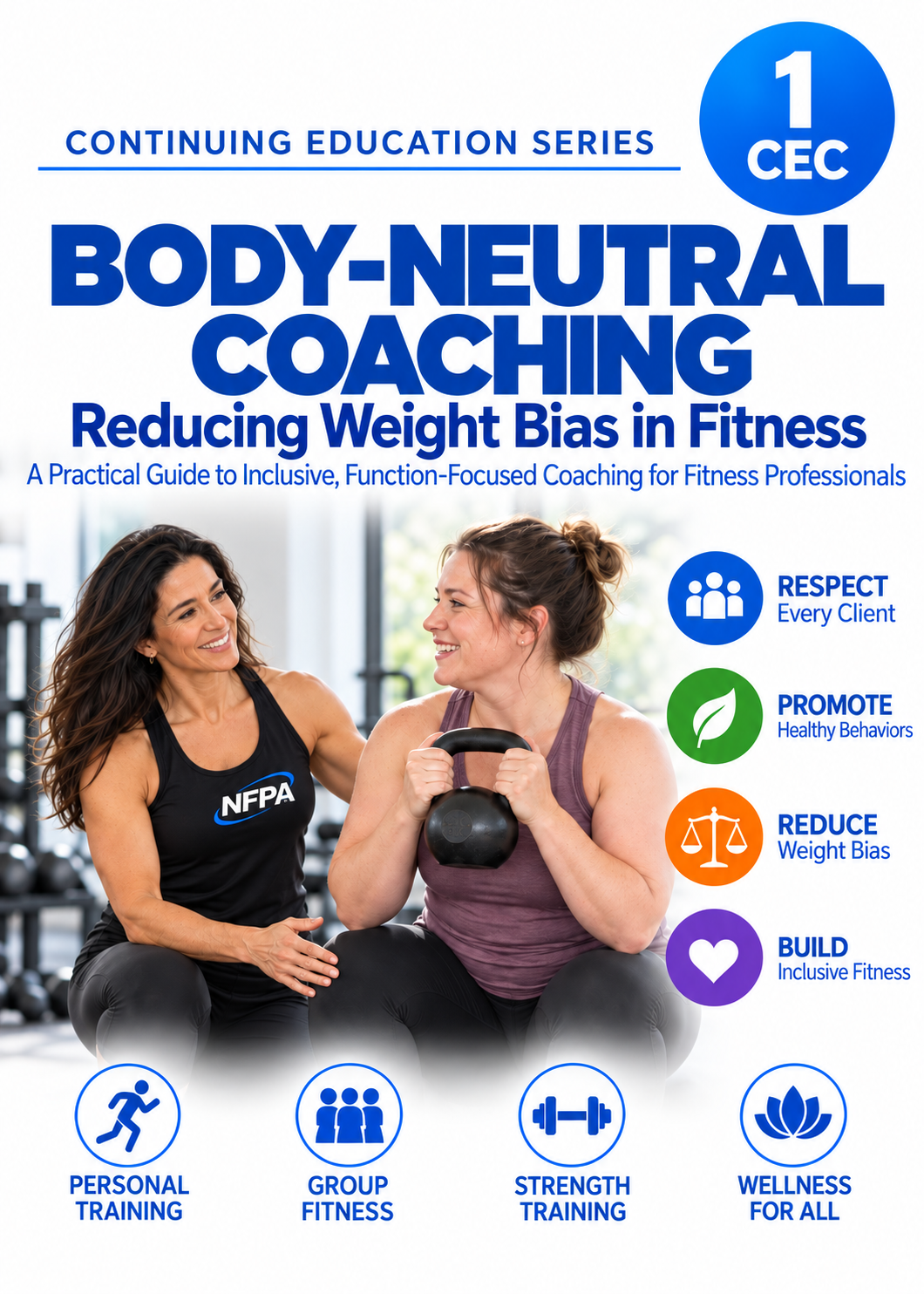
A Practical Guide to Inclusive, Function-Focused Coaching for Fitness Professionals
Learn how to create more inclusive fitness environments, reduce weight bias, and help clients build strength, confidence, and healthier exercise habits without making appearance the primary measure of success.
Body-Neutral Coaching: Reducing Weight Bias in Fitness is a practical 1-CEC continuing education course exploring weight stigma, respectful client communication, individualized exercise programming, and function-focused coaching.
The course explains how fitness professionals can recognize weight-based assumptions, support client-selected goals, measure progress beyond body weight, and maintain appropriate professional boundaries.
Topics Include:
Understanding weight bias, stigma, and discrimination
Body neutrality and function-focused coaching
Respectful, client-centered communication
Behavior-based goals and meaningful progress measures
Supporting client-selected weight-management goals
Inclusive exercise programming and modifications
Body measurements, privacy, and client consent
Body image, referral, and professional boundaries
The NFPA Body-Neutral Coaching Process
Practical client scenarios and coaching applications
Course Includes:
1 NFPA Continuing Education Credit
Self-paced PDF course
5-question Practice Knowledge Check
Practical coaching examples and client scenarios
Course Code: CEC-BN-101
Coach the person—not assumptions about their body size.
Electrolytes, Sodium, Carbohydrate, and Exercise
Learn how to make informed hydration decisions for exercise, understand the role of electrolytes and sodium, and recognize when carbohydrate-containing beverages may support fitness and endurance performance.
Hydration Beyond Water is a practical 1-CEC continuing education course exploring fluid balance, sweat loss, electrolyte replacement, carbohydrate availability, and individualized hydration strategies.
The course explains when plain water may be sufficient, when sports drinks may be useful, and why excessive fluid consumption can be as concerning as inadequate hydration. Fitness professionals will learn to evaluate exercise duration, intensity, environmental conditions, sweat losses, and individual client needs while respecting professional boundaries.
Topics Include:
Water and exercise physiology
Dehydration and exercise performance
Electrolytes and sodium replacement
When plain water is sufficient
When electrolyte beverages may be beneficial
Carbohydrates and exercise fueling
Sports drinks versus energy drinks
Hydration before, during, and after exercise
Practical sweat-rate estimation
Heat, humidity, and environmental considerations
Overhydration and exercise-associated hyponatremia
Common hydration misconceptions
The NFPA Hydration Decision System
Practical client scenarios, safety, and professional scope
Course Includes:
1 NFPA Continuing Education Credit
Self-paced PDF course
5-question Practice Knowledge Check with answer key and explanations
Practical hydration examples and coaching applications
Course Code: CEC-HYD-101
Match the hydration strategy to the person, the exercise, and the environment—not the marketing claim.
Practical Tools for Attention, Stress Regulation, Movement Awareness, and Client Self-Monitoring
Learn how to incorporate mindfulness, breathing strategies, and body awareness into everyday fitness coaching to support client focus, movement quality, self-monitoring, and confidence—without exaggerating their benefits or stepping outside professional scope.
Mindfulness, Breathing, and Body Awareness in Fitness Coaching is a practical 1-CEC continuing education course that explores evidence-informed mind-body strategies for fitness professionals.
The course examines how attention influences exercise experiences, why breathing patterns should match physical demands, and how clients can use body awareness to better recognize effort, fatigue, and movement sensations. It also addresses the limitations of mindfulness research, the risks of excessive internal monitoring, and appropriate referral boundaries.
Topics Include:
Understanding mindfulness in fitness coaching
Mindfulness versus relaxation
Internal and external attention strategies
Research-supported benefits and limitations
Breathing for recovery and stress regulation
Breathing during cardiovascular and resistance exercise
Trunk stabilization and appropriate bracing
Body awareness and interoception
Rating of Perceived Exertion (RPE) and the Talk Test
Recognizing normal effort versus concerning symptoms
Avoiding hypervigilance and fear-based coaching
Integrating awareness into warm-ups, work sets, and cooldowns
Professional scope, safety, and referral
Practical coaching scenarios
The NFPA Mindful Fitness Coaching Process
Course Includes:
1 NFPA Continuing Education Credit
Self-paced PDF course
5-question Practice Knowledge Check with answer key and explanations
Practical coaching examples and real-world client applications
Course Code: CEC-MBB-101
Notice the signal. Understand the context. Choose the response.
What Fitness Professionals Need to Know
Learn how sleep, recovery habits, training stress, and individual readiness influence exercise performance—and how to make better programming decisions without relying on a single wearable score or an isolated night of poor sleep.
Sleep, Recovery, and Training Readiness is a practical 1-CEC continuing education course that explores evidence-informed sleep education, recovery monitoring, wearable technology, exercise modification, and professional scope.
The course examines the difference between sleep duration and sleep quality, how accumulating recovery stress can affect performance, and why client feedback and warm-up responses are valuable readiness indicators. Fitness professionals will learn practical strategies for adjusting training demands, supporting healthy sleep behaviors, and recognizing when referral to a qualified healthcare professional is appropriate.
Topics Include:
Sleep physiology and its role in exercise recovery
Sleep duration, quality, continuity, timing, and regularity
General sleep recommendations and individual differences
Sleep restriction and exercise performance
Cognitive function, coordination, and perceived exertion
Identifying recovery patterns versus one poor night
Practical client readiness assessments
Using warm-ups to evaluate training readiness
Wearable sleep tracking and recovery scores
Resting heart rate and heart-rate variability (HRV)
Adjusting training load, volume, intensity, and complexity
Sleep-supportive habits, caffeine timing, naps, and sleep extension
Recognizing possible sleep disorders and referral boundaries
Applied client coaching scenarios
The NFPA Sleep and Training Readiness Process
Course Includes:
1 NFPA Continuing Education Credit
Self-paced PDF course
5-question Practice Knowledge Check with answer key and explanations
Practical training-readiness and recovery coaching scenarios
Course Code: CEC-SRT-101
Readiness is a pattern—not a single number.
Preparing Clients to Move, Perform, and Train Safely
Learn how to design effective, efficient warm-ups that prepare clients for the physical and technical demands of exercise without creating unnecessary fatigue or wasting valuable training time.
Warm-Up Design is a practical 1-CEC continuing education course exploring the science and application of warm-up programming for fitness professionals. The course examines how general movement, dynamic mobility, activation, and movement rehearsal can be combined into individualized preparation strategies.
Fitness professionals will learn how to progress from general preparation to exercise-specific demands, appropriately incorporate static and dynamic stretching, use progressive resistance-training warm-up sets, and adapt preparation to different client populations and training goals.
Topics Include:
The physiological purpose of exercise warm-ups
Body temperature, circulation, and movement readiness
General versus exercise-specific preparation
Mobility, flexibility, and dynamic movement
Static stretching before exercise
Activation exercises and avoiding unnecessary fatigue
Movement rehearsal and progressive warm-up sets
Warm-up duration and time efficiency
The NFPA five-stage warm-up preparation system
Warm-ups for beginning fitness clients
Warm-ups for resistance and strength training
Warm-ups for runners and sports performance
Warm-ups for indoor cycling
Warm-up considerations for older adults
Common warm-up programming mistakes
Safety, pain, and professional scope of practice
Course Includes:
1 NFPA Continuing Education Credit
Self-paced PDF course
5-question Practice Knowledge Check with answer key and explanations
Practical warm-up examples for different clients and exercise sessions
Course Code: CEC-WU-101
Prepare the client for the demands that come next—not for a workout before the workout.

Protein, Micronutrients, and Performance
Learn how plant-based eating can support strength, endurance, recovery, and athletic performance when energy and nutrient needs are met.
Plant-Based Nutrition for Fitness Professionals is a practical 1-CEC continuing education course exploring plant-based dietary patterns, protein quality and distribution, exercise fueling, micronutrient considerations, and evidence-informed nutrition education.
The course examines how vegan, vegetarian, and plant-forward diets differ, why adequate calorie intake matters, and how fitness professionals can support clients' nutritional choices without making exaggerated claims or exceeding their professional scope.
Topics Include:
Vegan, vegetarian, flexitarian, and plant-forward eating patterns
Energy intake and the risks of underfueling
Plant protein quantity, quality, and distribution
Practical protein sources and complementary protein myths
Carbohydrates, fiber, and athletic performance
Vitamin B12, iron, calcium, and vitamin D
Zinc, iodine, and omega-3 fatty acids
Strength, hypertrophy, and endurance nutrition
Plant-based protein powders, creatine, and supplement considerations
Common plant-based nutrition misconceptions
Professional scope, safety, and appropriate referral
Applied nutrition and fitness coaching scenarios
The NFPA Plant-Based Nutrition Coaching Process
Course Includes:
1 NFPA Continuing Education Credit
Self-paced PDF course
5-question Practice Knowledge Check with answer key and explanations
Practical nutrition education and client coaching examples
Course Code: CEC-PBN-101
Plant-based performance depends on the whole diet—not the label.
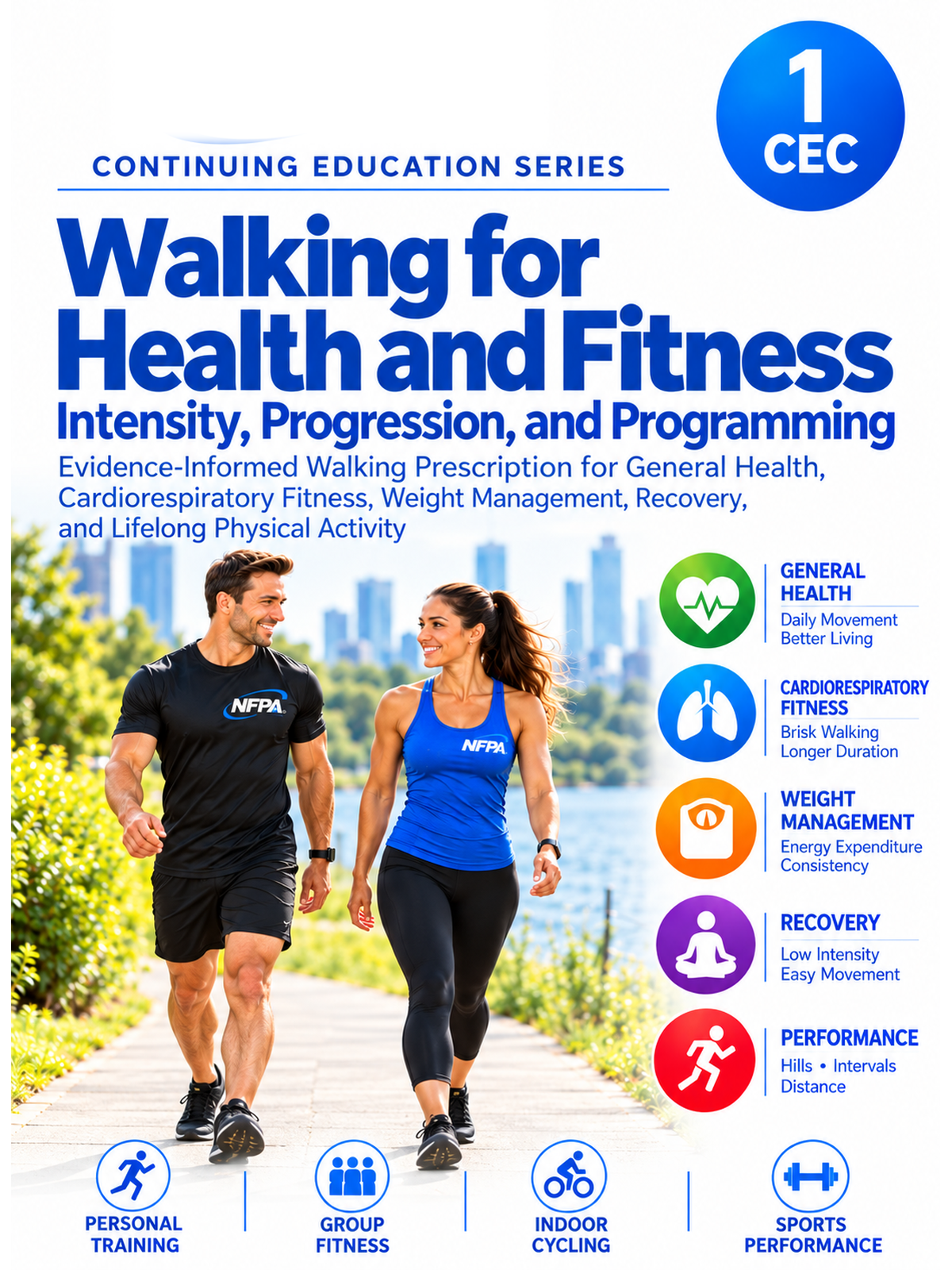
Intensity, Progression, and Programming
Learn how to transform walking from everyday physical activity into purposeful, individualized exercise programming that supports cardiovascular fitness, general health, weight management, recovery, and lifelong movement.
Walking for Health and Fitness is a practical 1-CEC continuing education course covering evidence-informed walking prescription, exercise intensity, progressive programming, and client safety.
The course explores why walking intensity depends on the individual rather than speed alone, how to use the Talk Test and Rating of Perceived Exertion (RPE), and how to build progressive walking programs using duration, frequency, pace, terrain, and intervals.
Fitness professionals will also learn how to interpret daily step counts, address the 10,000-step misconception, integrate walking with resistance training, and recognize when symptoms or excessive training demands require modification or referral.
Topics Include:
Walking for general health and cardiovascular fitness
Light, moderate, and higher-intensity walking
Using the Talk Test and RPE to guide intensity
Physical activity recommendations and weekly walking goals
Daily step counts and the 10,000-step misconception
Establishing a client's baseline walking capacity
Programming frequency, duration, pace, and intensity
Progressive walking programs for beginners
Brisk walking, hills, and interval training
Treadmill versus outdoor walking
Walking for weight management and recovery
Walking considerations for older adults
Integrating walking with strength, balance, and mobility training
Monitoring pain, fatigue, footwear, and environmental conditions
Practical client programming examples
The NFPA Walking Programming Process
Course Includes:
1 NFPA Continuing Education Credit
Self-paced PDF course
5-question Practice Knowledge Check with answer key and explanations
Practical walking-program examples and client coaching applications
Course Code: CEC-WAL-101
Walking becomes training when the dose matches the goal.
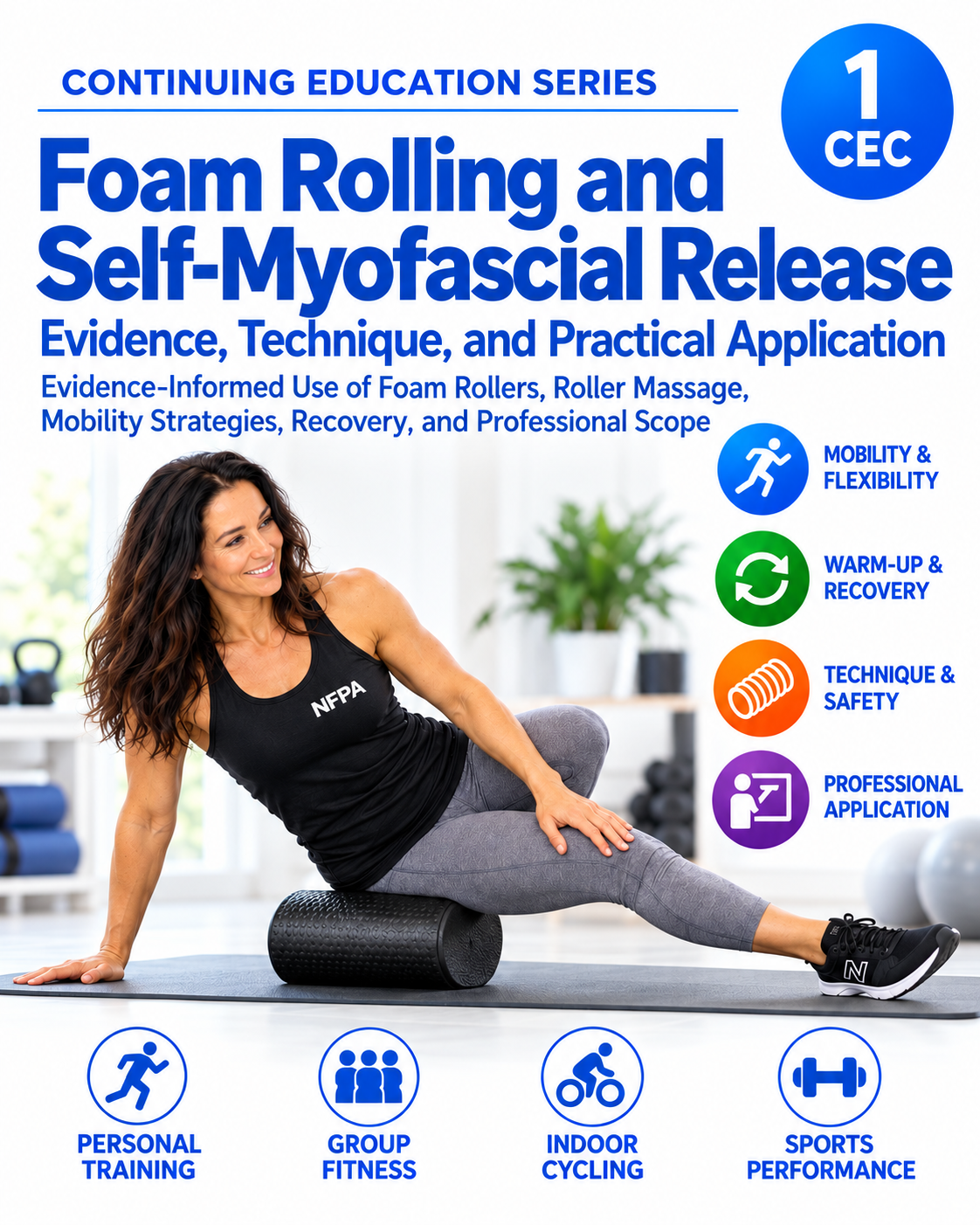
Evidence, Technique, and Practical Application
Learn how to use foam rolling and self-myofascial release (SMR) effectively, safely, and in accordance with current research—without relying on exaggerated claims about fascia, muscle knots, or tissue release.
Foam Rolling and Self-Myofascial Release is a practical 1-CEC continuing education course that explores evidence-informed techniques for improving range of motion, supporting warm-ups, managing perceived muscle soreness, and integrating foam rolling into fitness programming.
The course examines appropriate pressure, duration, body positioning, muscle selection, safety considerations, and professional boundaries. Fitness professionals will learn when foam rolling may be beneficial, when other mobility strategies may be more appropriate, and how to evaluate client responses.
Topics Include:
Understanding foam rolling and self-myofascial release
Research-supported benefits and common misconceptions
Acute range-of-motion improvements and flexibility
Foam rolling as part of an effective warm-up
Appropriate pressure, duration, and technique
Practical applications for calves, quadriceps, hamstrings, glutes, and upper back
Iliotibial band myths and vulnerable anatomical structures
Post-exercise soreness and recovery considerations
Foam rolling versus stretching
Contraindications, safety, and professional referral
Applied client scenarios and coaching strategies
The NFPA Foam Rolling Process
Course Includes:
1 NFPA Continuing Education Credit
Self-paced PDF course
5-question Practice Knowledge Check with answer key and explanations
Professional application examples and coaching scenarios
Course Code: CEC-FR-101
Roll to improve the response—not to punish the tissue.

What You Receive
How NFPA CECs Work

Explore Other CEC Values
Build Your Continuing Education Plan
Invest in your professional growth with NFPA continuing education courses.
Flexible. Relevant. Designed for Real-World Application.