
5 CEC

Continuing Education Courses
Focused Education. Practical Application. Professional Growth.
Develop broader professional expertise with in-depth NFPA continuing education courses designed to connect evidence, programming, coaching, and real-world application. Each course below provides 5 NFPA Continuing Education Credits and is delivered as a self-paced digital course you can study on your schedule.




Choose Your 5 CEC Course
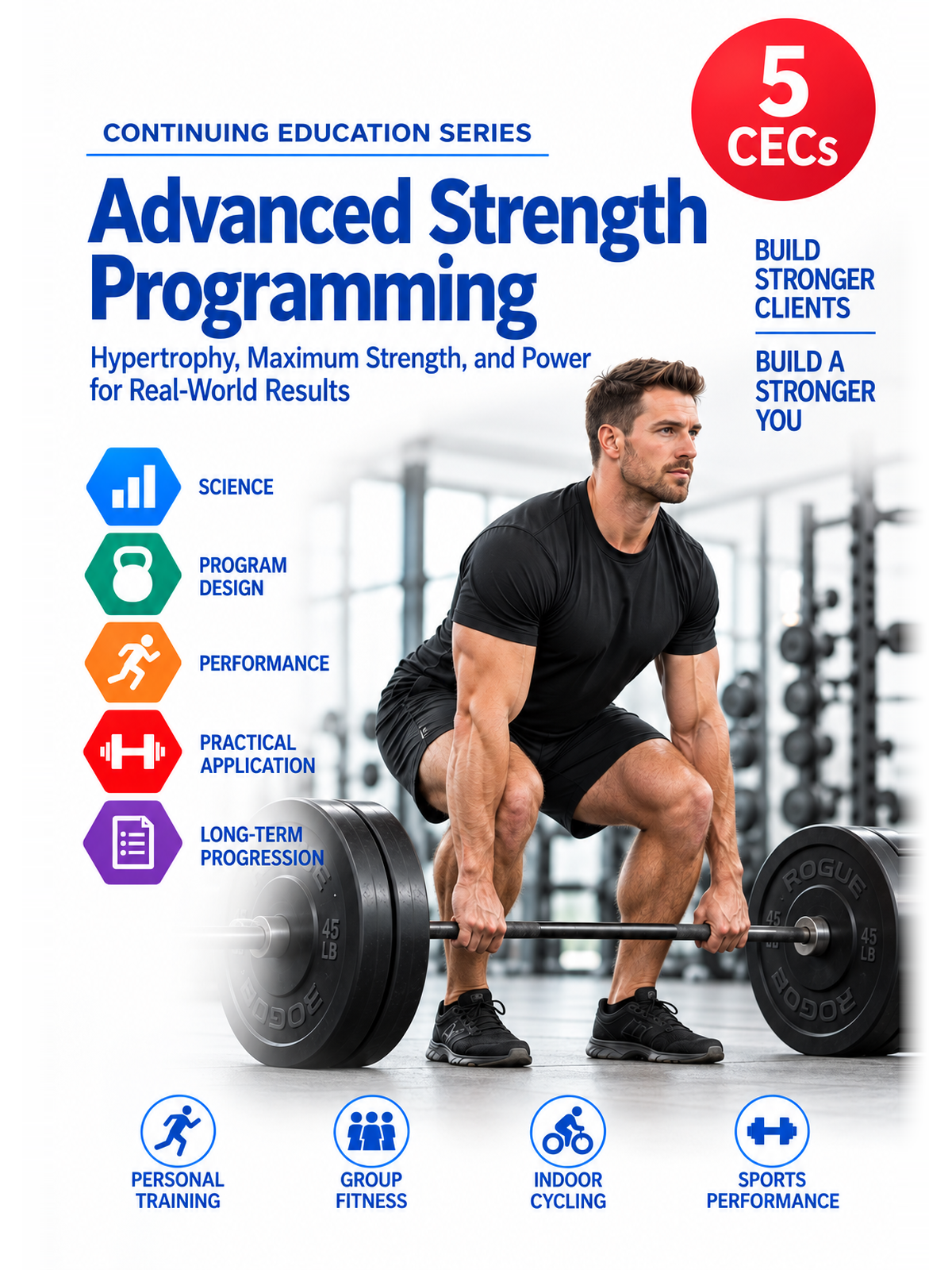
Hypertrophy, Maximum Strength, and Power
Evidence-Based Program Design for Building Muscle, Increasing Maximum Force, Developing Explosive Performance, and Managing Long-Term Progression
Then paste this full description underneath:
Build more effective strength programs by matching training variables to the adaptation you actually want.
Advanced Strength Programming is a comprehensive 5-CEC continuing education course designed for fitness professionals who want to move beyond basic resistance-training prescriptions and develop a deeper understanding of hypertrophy, maximum strength, power, fatigue management, progression, and long-term program design.
Advanced programming is not defined by complicated exercises or elaborate spreadsheets. It is defined by the quality of the decisions behind the program. As clients become more experienced, simply adding more weight, more sets, more exercises, or more intensity can increase fatigue faster than it improves results.
This course teaches the fitness professional to ask a more useful question:
What training stimulus is needed to produce the desired adaptation, and what is the lowest recovery cost at which that stimulus can be delivered repeatedly?
The course centers on three related but distinct training outcomes:
Hypertrophy — increasing muscle size
Maximum Strength — increasing high-force production
Power — producing force rapidly
The program-design variables used to develop those outcomes include load, volume, frequency, exercise selection, range of motion, proximity to failure, repetition intent, rest intervals, progression, and recovery.
Topics include:
The logic of advanced strength programming
Specificity and progressive overload
Stimulus-to-fatigue relationships
Training age and advanced programming needs
Load, volume, frequency, and effort
Exercise selection and exercise order
Range of motion
Rest intervals
Repetition intent and velocity
Hypertrophy programming
Productive weekly volume
Proximity to failure
Exercise selection for muscle growth
Hypertrophy frequency
Maximum-strength programming
Heavy-load specificity
Primary, secondary, and accessory strength work
Top sets and back-off work
Strength testing and estimated 1RM
Power development
The force–velocity continuum
Jumps and medicine-ball throws
Loaded ballistic training
Olympic-lift derivatives
Velocity-based training
Advanced exercise selection
RIR and RPE
Technical failure versus absolute failure
Autoregulation
Fatigue, readiness, and recovery
Plateau identification
Double progression
Load and volume progression
Power progression
Linear, undulating, and block periodization
Mesocycle design
Deloading, tapering, and transition weeks
Advanced training methods
Drop sets
Rest-pause training
Supersets
Cluster sets
Eccentric overload
Contrast training
Long-term integration of hypertrophy, strength, and power
The NFPA Advanced Strength Programming Process
Course Includes:
5 NFPA Continuing Education Credits
Self-paced PDF course
Advanced resistance-training programming
Hypertrophy, strength, and power applications
Practical mesocycle and periodization examples
Autoregulation and fatigue-management strategies
Advanced training-method guidance
Applied programming examples
Practice Knowledge Check with answer key
Course Code: CEC-ASP-501
Program the adaptation, not the trend.
Select the topic that best matches your professional interests, client needs, or continuing education goals.
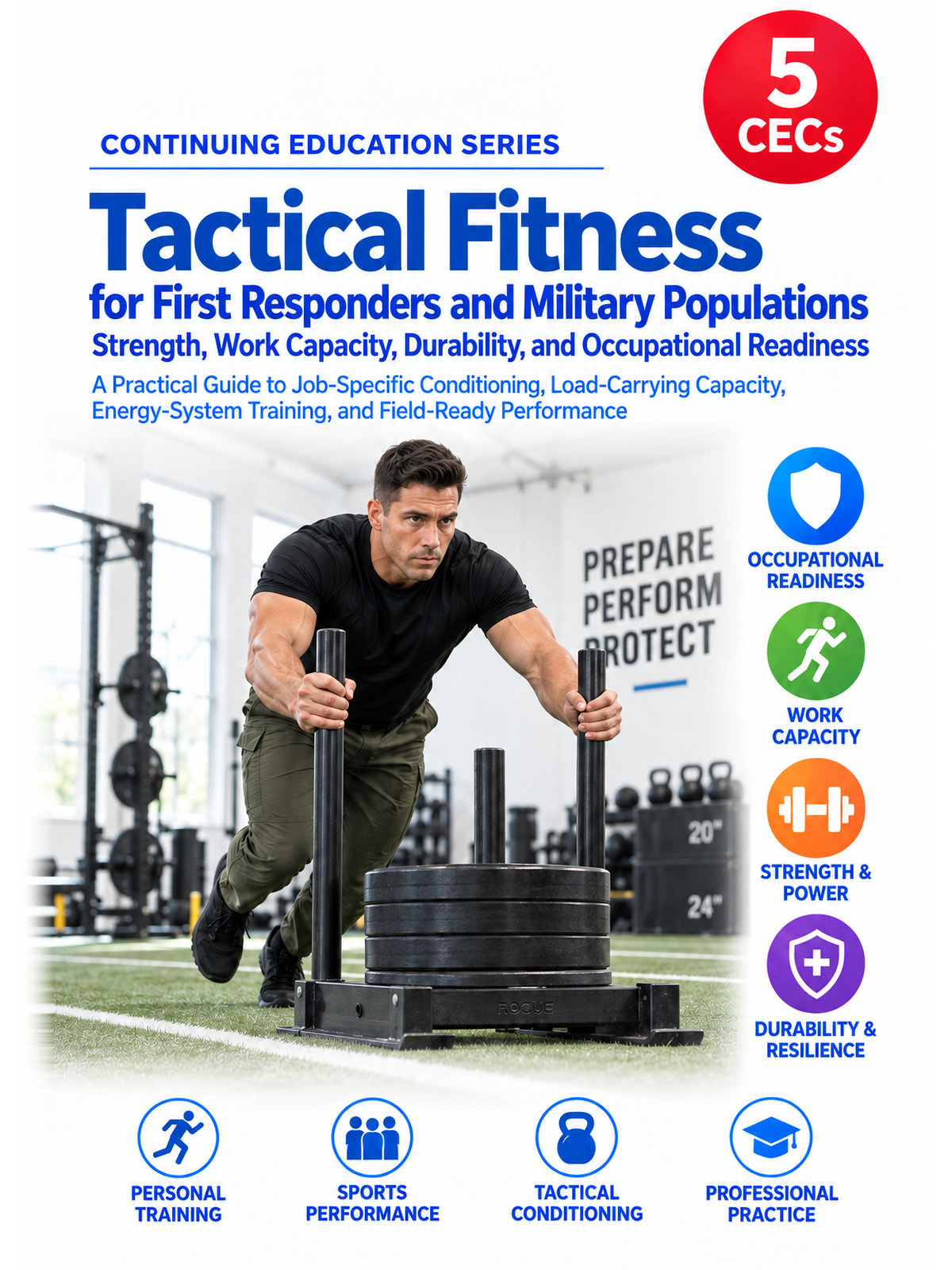
Strength, Power, Work Capacity, Load Carriage, Recovery, and Occupational Readiness
Evidence-Based Physical Preparation for Firefighters, Law-Enforcement Officers, EMS Professionals, and Military Personnel
Then paste this full description underneath:
Build the physical qualities that support the job—not just workouts that look tactical.
Tactical Fitness for First Responders and Military Populations is a comprehensive 5-CEC continuing education course designed to help fitness professionals build practical, evidence-informed programs for firefighters, law-enforcement officers, EMS professionals, military personnel, and other occupational populations with demanding physical requirements.
Tactical fitness is different from conventional sport preparation because occupational demands are not always predictable. First responders and military personnel may be required to lift, carry, drag, climb, sprint, move under load, work in protective equipment, perform repeated high-intensity efforts, and sustain physical work for extended periods—often while managing disrupted sleep, environmental stress, and limited recovery.
The course therefore emphasizes operational readiness rather than simply training someone like a competitive athlete. The starting point is the occupation itself: identify the tasks, determine the physical qualities that support those tasks, assess the individual, and then select training methods that build useful capacity.
The central NFPA principle is:
Train for the occupation, not for the label.
Topics include:
Tactical fitness versus conventional sport performance
Occupational needs analysis
General fitness versus job-specific readiness
Firefighter physical demands
Law-enforcement physical demands
EMS physical demands
Military physical demands
Fitness-test preparation versus long-term occupational capability
Absolute and relative strength
Squat, hinge, push, pull, carry, drag, and trunk training
Grip strength and occupational performance
Strength programming for tactical professionals
Power and rapid force production
Jumps, medicine-ball throws, and explosive resistance training
Acceleration and short-sprint development
Aerobic fitness for occupational readiness
Anaerobic capacity
Repeated-effort conditioning
Concurrent strength and endurance training
Work-capacity development
Load carriage and external-load demands
Progressive load-carriage training
Strength and aerobic preparation for loaded movement
Load, distance, speed, terrain, and environmental progression
Durability and injury-risk reduction
Lower-body and upper-body capacity
EMS lifting and patient-handling considerations
Heat stress and protective equipment
Heat acclimatization
Hydration and environmental stress
Heat-illness warning signs
Shift work and disrupted sleep
Readiness-based training modification
Green, yellow, and red readiness days
Tactical fitness testing
General fitness testing and occupational-performance testing
Periodization for tactical populations
General preparation
Specific preparation
High-demand operational periods
Maintenance training
Programming around fire-service schedules
Programming around law-enforcement shifts
Programming around EMS workload
Programming around military field training
Firefighter general-readiness programming
Law-enforcement readiness programming
Military and load-carriage preparation
EMS occupational preparation
Professional scope and referral
The NFPA Tactical Fitness Programming Process
Course Includes:
5 NFPA Continuing Education Credits
Self-paced PDF course
Occupational-needs analysis framework
Strength and power programming
Aerobic and repeated-effort conditioning
Load-carriage programming
Heat, hydration, and PPE considerations
Shift-work and readiness strategies
Practical firefighter, law-enforcement, EMS, and military programming examples
Practice Knowledge Check with answer key
Course Code: CEC-TAC-501
Train the job demands. Monitor the human being.
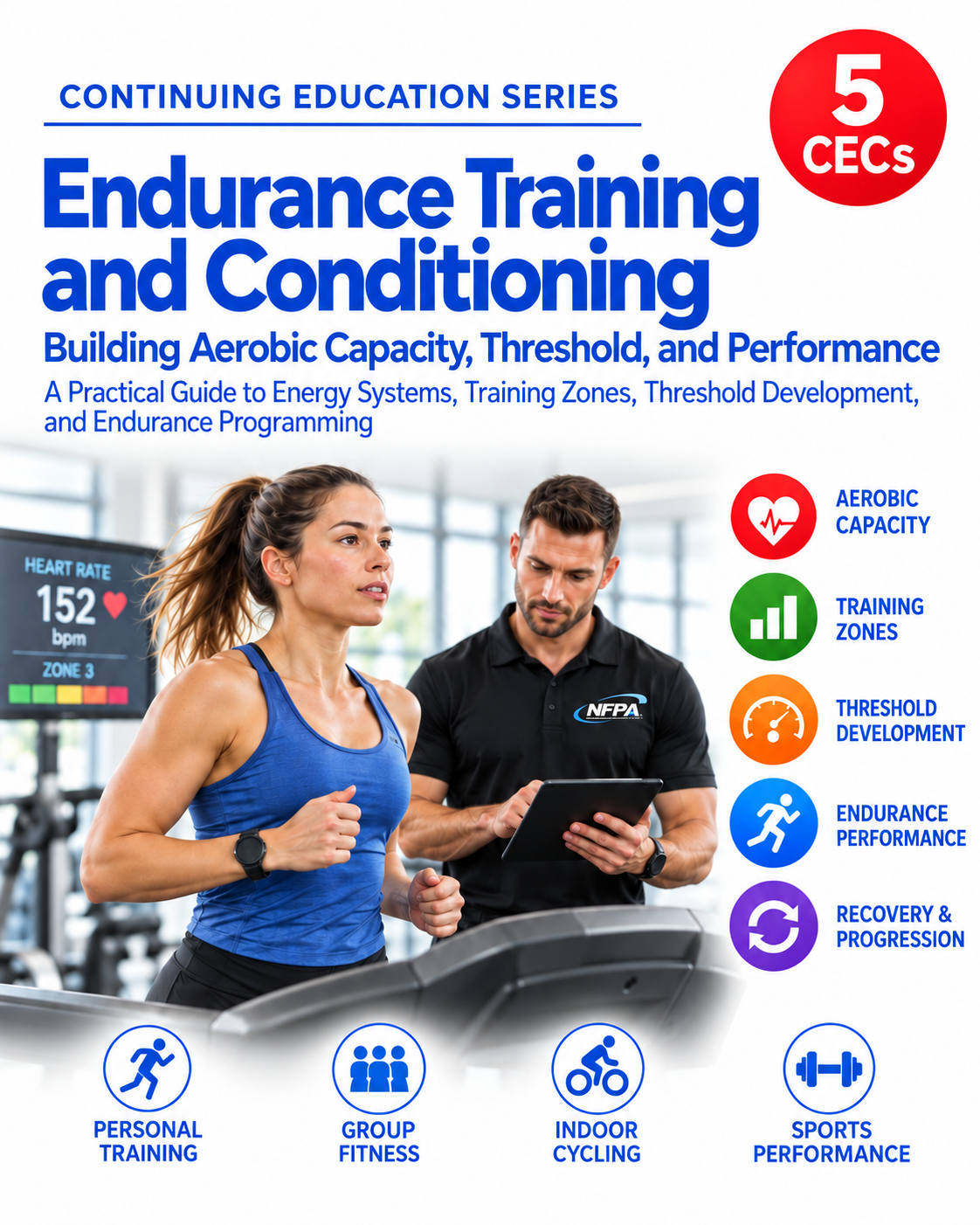
Building Aerobic Capacity, Threshold, and Performance
Learn how to develop effective endurance-training programs that improve aerobic capacity, sustainable exercise performance, movement economy, fatigue resistance, and recovery through evidence-informed training methods.
Endurance Training and Conditioning is a comprehensive 5-CEC continuing education course exploring the physiological foundations of endurance performance and the practical application of aerobic conditioning, threshold development, interval training, and individualized exercise programming.
The course examines why endurance training involves much more than simply performing additional cardiovascular exercise. Fitness professionals will learn how maximal oxygen uptake (VO₂max), sustainable threshold characteristics, movement economy, and durability interact to determine endurance performance.
Special attention is given to understanding exercise intensity and the limitations of traditional heart-rate zones. Participants will learn why the term Zone 2 can describe different physiological intensities depending on the training-zone model and why exercise intensity should be prescribed according to the intended adaptation rather than an arbitrary number.
The course explores central and peripheral aerobic adaptations, including changes in cardiac output, blood volume, capillary development, mitochondrial content, and muscular oxidative capacity.
Fitness professionals will learn how to establish an aerobic base, develop threshold performance, integrate high-intensity intervals, and select appropriate training-intensity distributions.
Participants will also explore polarized, pyramidal, and threshold-oriented training approaches, with an emphasis on why no single distribution is universally superior for every athlete or fitness client.
The course provides practical programming examples for beginning exercisers, recreational runners, cyclists, and experienced endurance athletes, while emphasizing progressive overload, fatigue management, strength training, recovery, and professional scope of practice.
Topics Include:
Understanding endurance beyond traditional cardiovascular exercise
VO₂max and maximal aerobic capacity
Sustainable threshold characteristics
Movement economy and efficiency
Durability and resistance to fatigue
Central cardiovascular adaptations to endurance exercise
Stroke volume, blood volume, and oxygen delivery
Mitochondrial adaptations and oxidative capacity
Skeletal-muscle capillarization and oxygen extraction
Understanding physiological exercise-intensity domains
Moderate, heavy, and severe exercise intensities
Heart-rate monitoring and its limitations
Rating of Perceived Exertion (RPE)
Talk Test applications in aerobic training
Pace and power monitoring
Combining internal and external training-load measures
Understanding three-zone and five-zone training models
Why Zone 2 does not mean the same thing in every system
Low-intensity aerobic exercise and endurance development
Building aerobic frequency, duration, and volume
Establishing a sustainable aerobic base
Long-duration aerobic training
Threshold training and sustainable high aerobic workloads
Continuous tempo workouts and cruise intervals
VO₂max-oriented interval training
High-intensity interval training (HIIT)
Work-to-recovery interval manipulation
Sprint interval training versus aerobic HIIT
Pyramidal training-intensity distribution
Polarized training-intensity distribution
Threshold-oriented training models
Selecting training distributions according to athlete level
Why recreational athletes should not automatically copy elite programs
Developing running economy and cycling efficiency
Integrating strength and power training into endurance programs
Monitoring accumulated fatigue and recovery
Heart-rate drift, performance changes, and training tolerance
Progressive endurance-training overload
Periodization and seasonal endurance development
Event-specific training and tapering
Endurance programming for beginners and experienced athletes
Cardiorespiratory training across running, cycling, rowing, and other modalities
Practical endurance-training coaching scenarios
The NFPA Endurance Programming Process
Course Includes:
5 NFPA Continuing Education Credits
Self-paced PDF continuing education course
25-question Practice Knowledge Check with answer key and explanations
4 integrated coaching cases involving training-zone interpretation, HIIT programming, VO₂max, and endurance-training distributions
4 detailed endurance program examples for beginner fitness, recreational running, recreational cycling, and experienced athletes
Practical training-zone interpretation, threshold workouts, interval prescriptions, and progression strategies
Evidence-informed guidance for monitoring training load, recovery, and endurance performance
Course Code: CEC-ETC-501
Build the capacity. Sustain the work. Recover and repeat.
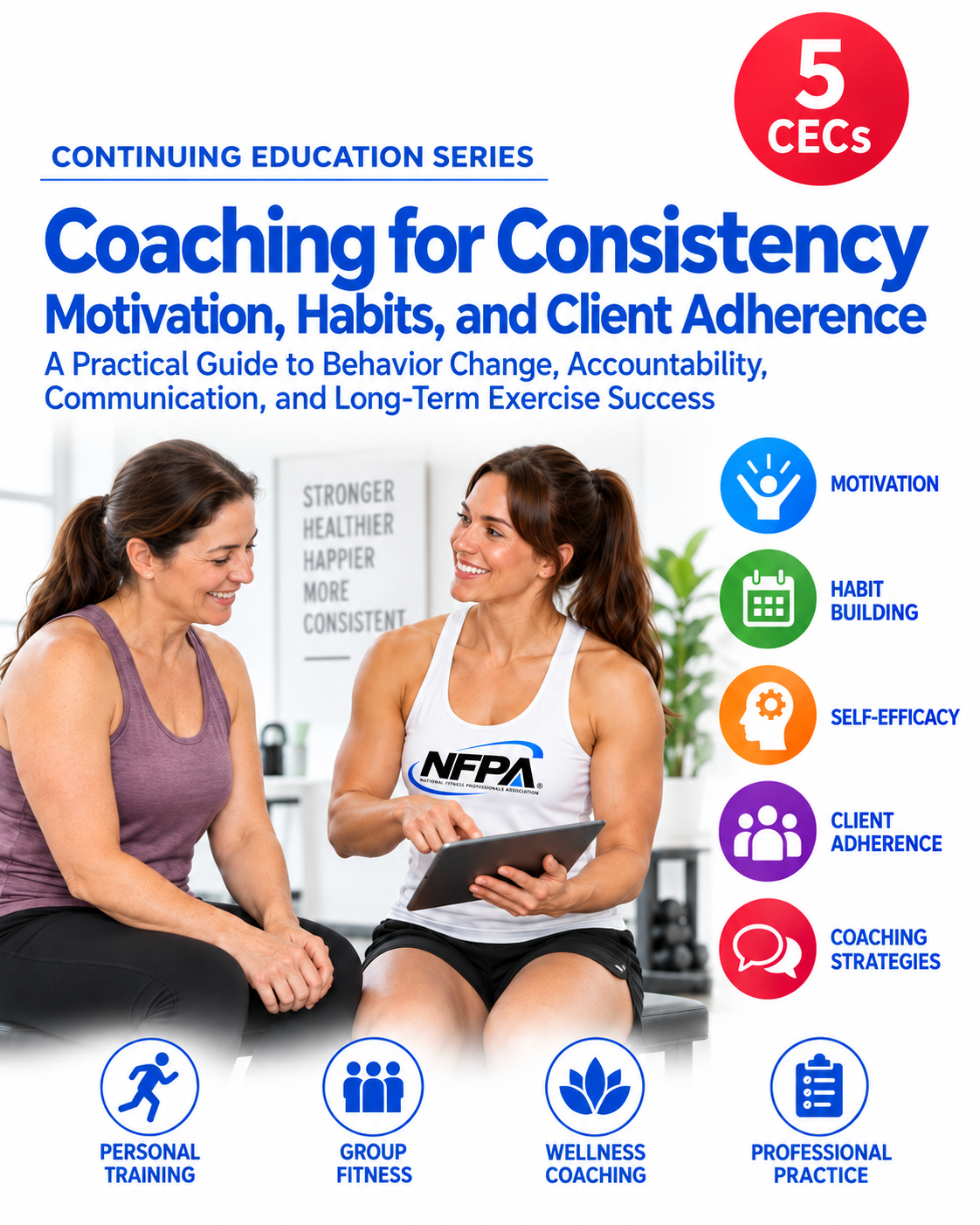
Motivation, Habits, and Client Adherence
Learn how to help fitness clients turn good intentions into sustainable exercise behaviors through evidence-informed motivation strategies, effective communication, realistic goal setting, habit development, and personalized accountability.
Coaching for Consistency is a comprehensive 5-CEC continuing education course exploring the behavioral and practical foundations of long-term exercise participation.
The course examines why understanding the benefits of exercise does not automatically lead to consistent physical activity. Fitness professionals will learn how motivation, confidence, personal values, environmental barriers, habits, social support, and everyday responsibilities influence a client's ability to follow an exercise program.
Special attention is given to the difference between motivation and behavioral systems. Participants will learn why effective coaching is not simply about encouraging clients to try harder, but about designing realistic routines and exercise plans that can be sustained when time, energy, and motivation fluctuate.
The course explores autonomous versus controlled motivation, self-efficacy, motivational interviewing-informed communication, readiness for change, implementation intentions, and practical methods for reducing barriers to exercise.
Fitness professionals will learn how to use open questions, affirmations, reflective listening, and summaries to improve coaching conversations without relying on guilt, shame, or excessive pressure.
Participants will also explore how to design flexible exercise programs, create alternative workout plans, monitor consistency, respond constructively to setbacks, and support greater client independence.
The course emphasizes that successful coaching builds long-term capabilities rather than making clients permanently dependent on a trainer for motivation.
Topics Include:
Understanding the intention-action gap in exercise
Why education alone does not guarantee exercise adherence
Treating adherence as part of exercise-program design
Motivation versus sustainable behavioral systems
Controlled and autonomous motivation
Self-determination theory and physical activity
Autonomy, competence, and relatedness
Developing personally meaningful reasons for exercise
Client readiness, ambivalence, and behavior-specific change
Understanding the Stages of Change framework
Importance and confidence scaling
Self-efficacy and exercise participation
Developing confidence through successful experiences
Mastery, modeling, feedback, and interpretation
Habit formation and environmental cues
Why there is no universal 21-day habit rule
Reducing behavioral friction and unnecessary decisions
Developing minimum viable exercise behaviors
Outcome, performance, behavior, and process goals
Creating implementation intentions and if-then plans
Developing coping plans for predictable obstacles
Building Plan A, Plan B, and Plan C exercise options
Motivational interviewing-informed fitness coaching
Partnership, acceptance, evocation, and compassion
Open questions, affirmations, reflective listening, and summaries (OARS)
Recognizing change talk and sustain talk
Asking permission before providing advice
Communication strategies that support client autonomy
Avoiding shame-based coaching and fear-based motivation
Identifying logistical, emotional, and environmental barriers
Supporting clients through missed workouts and setbacks
Distinguishing temporary lapses from recurring adherence problems
Self-monitoring and constructive progress reviews
Accountability without unnecessary trainer dependence
Flexible program design for challenging schedules
Adapting goals as client circumstances change
Supporting long-term exercise participation and independence
Recognizing psychological concerns requiring professional referral
Practical client adherence and motivation scenarios
The NFPA Coaching for Consistency Process
Course Includes:
5 NFPA Continuing Education Credits
Self-paced PDF continuing education course
25-question Practice Knowledge Check with answer key and explanations
4 integrated client coaching cases involving repeated exercise restarts, weight-loss expectations, motivation, habit development, and long-term engagement
Practical goal-setting, communication, accountability, and adherence-building frameworks
Evidence-informed strategies for helping clients develop sustainable exercise habits and greater independence
Course Code: CEC-CC-501
Motivation starts behavior. Systems sustain it. Coaching helps the client build both.
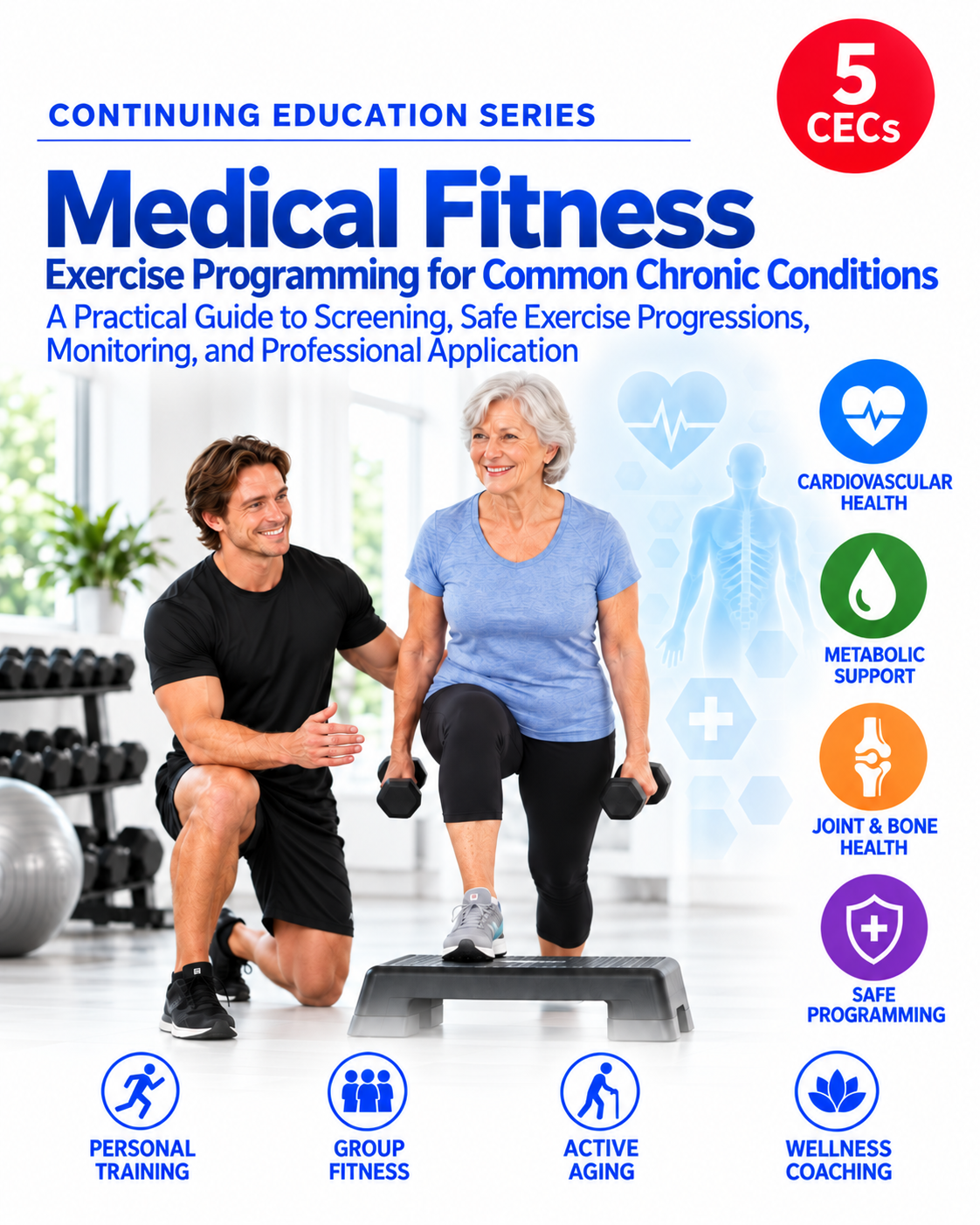
Exercise Programming for Common Chronic Conditions
Learn how to design safe, effective, and individualized exercise programs for medically appropriate clients living with common chronic health conditions.
Medical Fitness: Exercise Programming for Common Chronic Conditions is a comprehensive 5-CEC continuing education course exploring evidence-informed exercise screening, program modifications, monitoring, progression, and professional referral for clients with cardiovascular, metabolic, musculoskeletal, and pulmonary conditions.
The course examines why a chronic disease diagnosis does not automatically prevent someone from exercising. Fitness professionals will learn how current medical stability, symptoms, medications, functional limitations, healthcare guidance, and individual exercise responses influence programming decisions.
Special attention is given to understanding the professional boundary between fitness training and medical treatment. Participants will learn how to recognize when exercise is appropriate, when additional clarification or medical clearance may be needed, and when symptoms require exercise to stop.
The course provides practical programming strategies for six common health conditions: hypertension, stable cardiovascular disease, type 2 diabetes, osteoarthritis, osteoporosis, and chronic obstructive pulmonary disease (COPD).
Fitness professionals will learn how to modify exercise intensity, loading, range of motion, impact, exercise selection, rest periods, and progression while preserving meaningful strength, cardiovascular fitness, mobility, and physical function.
The course also addresses medication-related considerations, including beta-blockers, blood-pressure medications, insulin and insulin secretagogues, and prescribed pulmonary medications.
Participants will gain practical strategies for communicating with healthcare providers, managing clients with multiple chronic conditions, and developing progressive programs that respect both medical restrictions and individual fitness goals.
Topics Include:
Understanding the role of medical fitness in professional exercise programming
Fitness training versus clinical rehabilitation
Medical stability, screening, clearance, and referral
Recognizing exercise-related medical warning signs
The NFPA Medical Fitness Traffic-Light Screen
Reviewing health history and medication changes
Beta-blockers and altered heart-rate responses
Using RPE and the Talk Test to monitor exercise intensity
Blood-pressure medication and postexercise dizziness
Insulin, glucose monitoring, and hypoglycemia risk
Integrating aerobic and resistance exercise for chronic conditions
Hypertension and long-term blood-pressure management
Appropriate resistance training and controlled breathing
Severe blood-pressure readings and emergency warning signs
Stable cardiovascular disease and exercise programming
Fitness training versus medically supervised cardiac rehabilitation
Exercise intensity and symptom monitoring for cardiac clients
Type 2 diabetes and exercise-related glucose responses
Before-, during-, and after-exercise glucose considerations
Delayed hypoglycemia and established diabetes-care plans
Diabetes-related complications and exercise modifications
Osteoarthritis and individualized joint-loading strategies
Modifying exercise load, range, impact, and volume
Strength training for joint function and mobility
Osteoporosis, weight-bearing exercise, and bone health
Progressive resistance training and fall-risk reduction
Spine-safe exercise considerations for clients at higher fracture risk
COPD and appropriate aerobic and resistance exercise
Interval training and breathlessness management
Monitoring dyspnea, recovery, and exercise tolerance
Respecting prescribed oxygen and pulmonary medication plans
Programming for clients with multiple chronic conditions
Adjusting exercise according to symptoms and medical guidance
Progressing beyond beginner-level exercise when appropriate
Communicating with healthcare professionals
Applied medical-fitness coaching scenarios
The NFPA Medical Fitness Programming Process
Course Includes:
5 NFPA Continuing Education Credits
Self-paced PDF continuing education course
25-question Practice Knowledge Check with answer key and explanations
4 applied coaching cases addressing hypertension and beta-blockers, type 2 diabetes and exercise-related glucose concerns, osteoporosis with knee osteoarthritis, and COPD-related exercise tolerance
Practical screening, exercise-modification, monitoring, and referral frameworks
Condition-specific aerobic, resistance-training, mobility, balance, and exercise-progression recommendations
Evidence-informed guidance for integrating multiple chronic health conditions into individualized exercise programming
Course Code: CEC-MF-501
Exercise the person. Respect the condition. Monitor the response. Know when to refer.
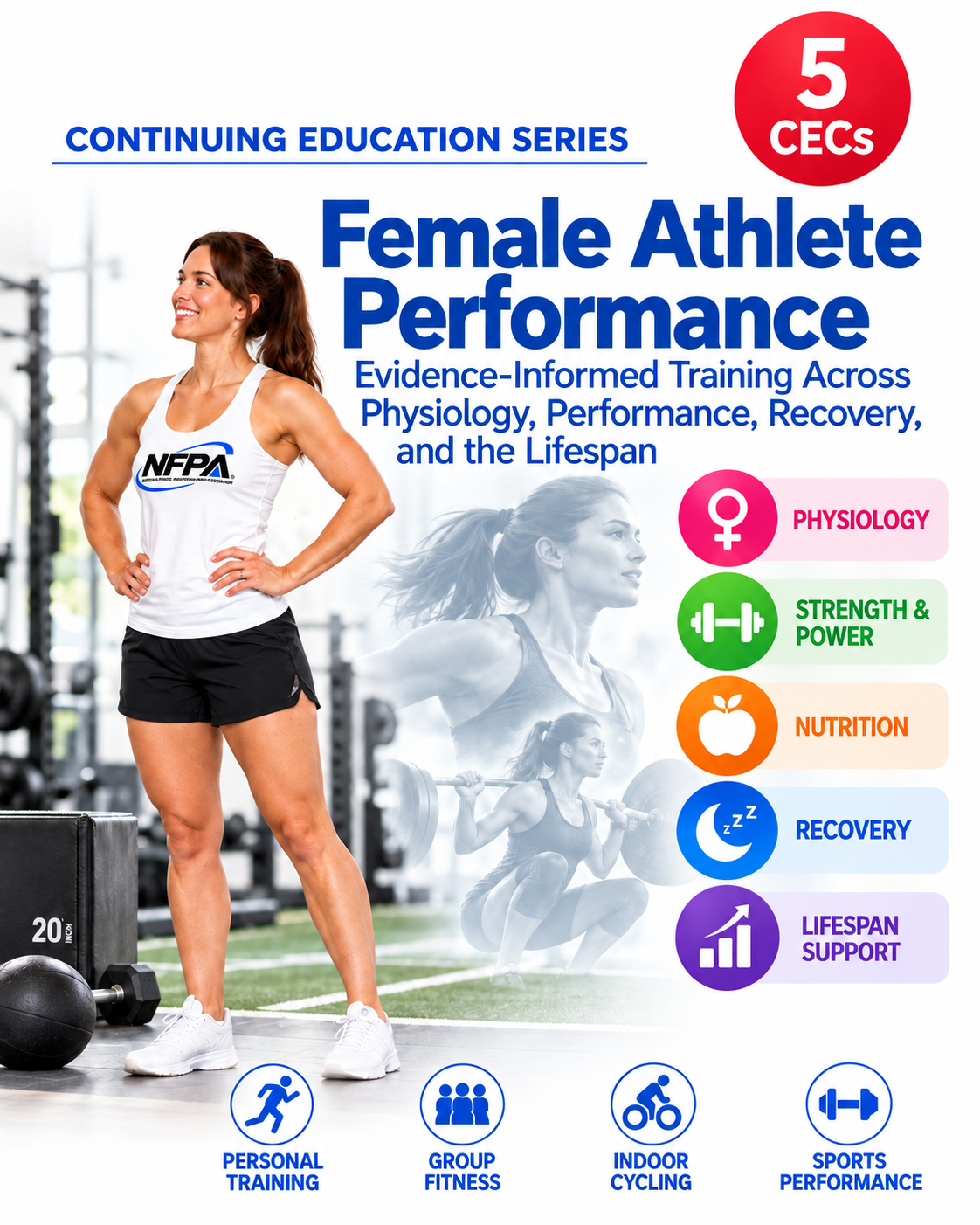
Evidence-Informed Training Across Physiology, Performance, Recovery, and the Lifespan
Learn how to design evidence-informed exercise programs that support female athletes through progressive strength training, power development, endurance conditioning, nutrition, recovery, and appropriate injury-risk-reduction strategies.
Female Athlete Performance is a comprehensive 5-CEC continuing education course exploring the physiological, physical, and practical considerations involved in coaching female athletes across different sports, training levels, and stages of life.
The course examines why female athletes benefit from the same foundational training principles used for all athletes while also requiring individualized consideration of menstrual function, reproductive health, energy availability, recovery, bone health, and life-stage changes when those factors meaningfully influence training.
Special attention is given to distinguishing scientific evidence from common misconceptions about female athletic performance. Fitness professionals will learn why universal menstrual-cycle training schedules, unnecessarily light resistance training, and broad assumptions about female physiology can interfere with effective programming.
Participants will explore strength and hypertrophy development, explosive power, sprinting, plyometrics, endurance conditioning, injury-risk-reduction training, and sport-specific workload management.
The course also examines low energy availability, Relative Energy Deficiency in Sport (REDs), the Female Athlete Triad, iron deficiency concerns, bone stress injury, hydration, sleep, and recovery.
Fitness professionals will learn how to recognize health-related warning signs, individualize exercise programming, and communicate effectively with qualified healthcare and sports nutrition professionals while remaining within professional scope.
Topics Include:
Understanding the NFPA Female Athlete Performance Framework
Universal training principles and female-specific considerations
Female physiology and individual training responses
Strength and power adaptations in female athletes
Menstrual function and exercise performance
Menstrual-cycle phases and common training misconceptions
Hormonal contraception and performance considerations
Symptom tracking and individualized exercise adjustments
Energy availability and athletic performance
Low energy availability and REDs
The Female Athlete Triad
Menstrual health and bone stress injury concerns
Bone health and progressive skeletal loading
Strength training for female athletes
Muscular hypertrophy and functional strength
Progressive overload and individualized loading
Speed, acceleration, and maximal-velocity development
Plyometric training and landing mechanics
Rotational, explosive, and sport-specific power
Autoregulation using RPE and performance monitoring
Endurance training and cardiovascular conditioning
Training load, fatigue, and recovery management
Heat exposure, hydration, and thermoregulation
Carbohydrate availability and athletic fueling
Protein intake and resistance-training recovery
Iron, calcium, vitamin D, and nutritional considerations
Sleep quality and recovery
Neuromuscular training and injury-risk reduction
ACL injury-risk-reduction programming
Landing, deceleration, and change-of-direction mechanics
Progressive training following injury and rehabilitation
Female athlete training during adolescence
Growth, maturation, and youth athletic development
Pregnancy and postpartum training considerations
Perimenopause, menopause, and masters athletics
Athlete communication and informed decision-making
Recognizing medical and nutritional referral concerns
Practical female-athlete coaching scenarios
The NFPA Female Athlete Performance Process
Course Includes:
5 NFPA Continuing Education Credits
Self-paced PDF continuing education course
25-question Practice Knowledge Check with answer key and explanations
20 applied coaching cases involving strength, endurance, menstrual symptoms, nutrition, recovery, injury concerns, and different life stages
Practical strength, power, endurance, and injury-risk-reduction programming examples
Evidence-informed frameworks for female athlete monitoring, individualized programming, and professional referral
Course Code: CEC-FAP-501
Train the athlete in front of you. Use female-specific information when it changes the decision.
What You Receive

How NFPA CECs Work

Explore Other CEC Values
Build Your Continuing Education Plan
Invest in your professional growth with NFPA continuing education courses.
Flexible. Relevant. Designed for Real-World Application.