3 CEC
Continuing Education Courses

Focused Education. Practical Application. Professional Growth.
Expand your professional knowledge with comprehensive NFPA continuing education courses designed for practical application. Each course below provides 3 NFPA Continuing Education Credits and is delivered as a self-paced digital course you can study on your schedule.

Select the topic that best matches your professional interests, client needs, or continuing education goals.
Choose Your 3 CEC Course
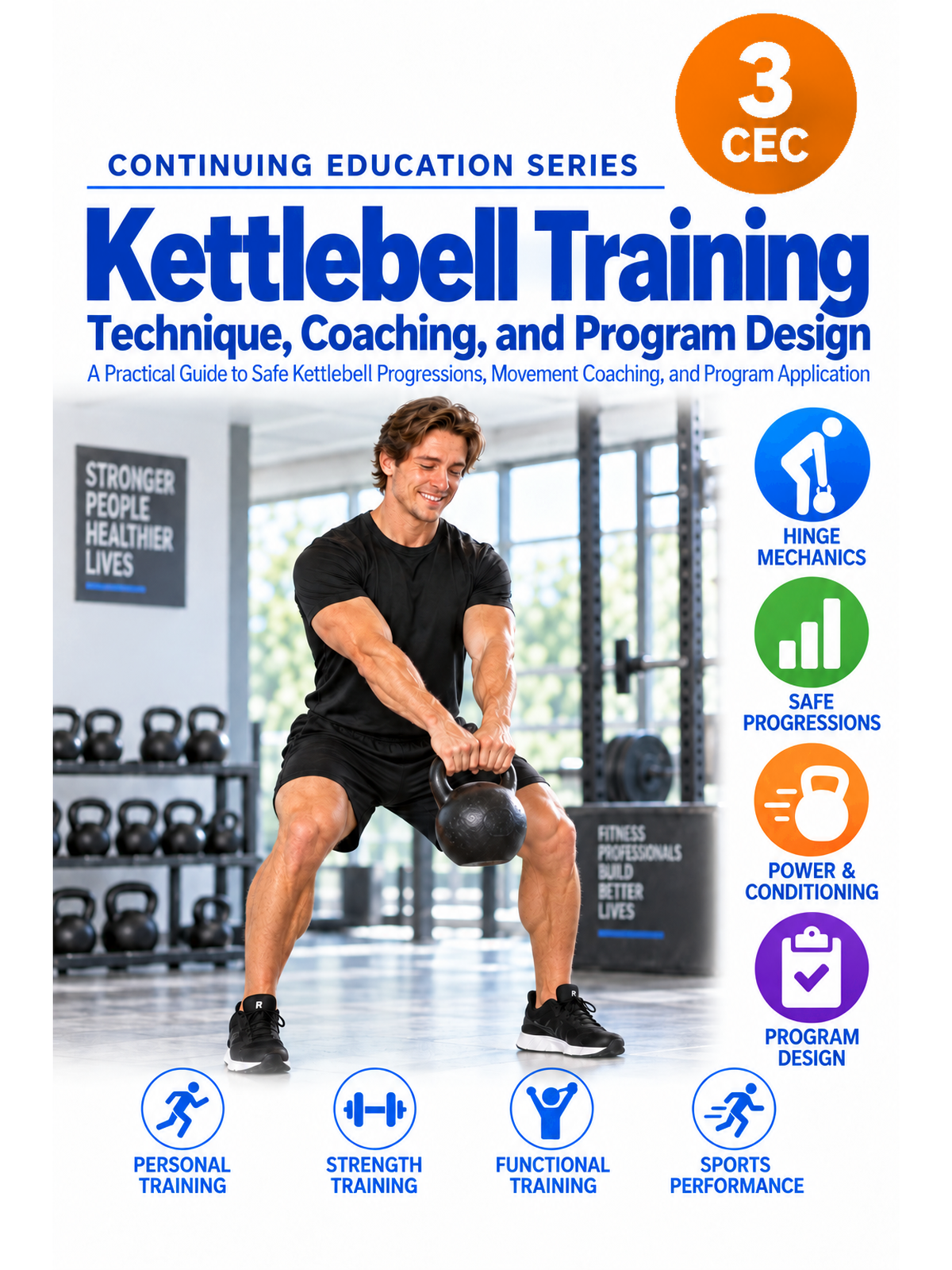
Technique, Coaching, and Program Design
A Practical Guide to Kettlebell Strength, Power, Conditioning, Exercise Progression, and Professional Coaching
Then paste this full description underneath:
Develop safer, more effective kettlebell coaching by understanding the movement before adding speed, load, or complexity.
Kettlebell Training: Technique, Coaching, and Program Design is a comprehensive 3-CEC continuing education course designed to help fitness professionals teach, progress, and program kettlebell exercise with greater technical understanding and professional judgment.
The course begins with kettlebell anatomy, equipment selection, safe handling, and foundational movement patterns before progressing into ballistic skills, strength exercises, carries, advanced movements, conditioning, and complete program design.
A central principle throughout the course is that the kettlebell is an implement within a training system—not the training system itself. Exercise selection should begin with the client's goal, movement ability, experience, and training needs rather than with the equipment.
Topics include:
Kettlebell anatomy, types, and equipment inspection
Appropriate load selection
Grinds versus ballistic movements
Hip-hinge mechanics and foundational deadlifting
Two-hand kettlebell swing technique
Swing faults and coaching corrections
Dead-stop and continuous swing progressions
One-arm swings and anti-rotation control
Goblet and front-rack squats
Pressing and rowing variations
Suitcase, farmer, rack, and overhead carries
Kettlebell clean technique and forearm-impact correction
Push press and snatch progressions
Turkish get-up instruction
Strength, power, endurance, and conditioning applications
EMOM, circuit, and density-training structures
Progressive overload and load progression
Exercise sequencing and fatigue management
Beginner, general-fitness, and performance applications
The NFPA Kettlebell Coaching Process
Course Includes:
3 NFPA Continuing Education Credits
Self-paced PDF course
Detailed technique instruction
Exercise progressions and regressions
Coaching cues and common-error corrections
Practical programming examples
Practice Knowledge Check with answer key
Course Code: CEC-KB-301
Earn the pattern before adding speed. Choose the kettlebell because it solves a training problem—not simply because it looks different.
The finished course contains the required 15-question Practice Knowledge Check and awards 3 CECs
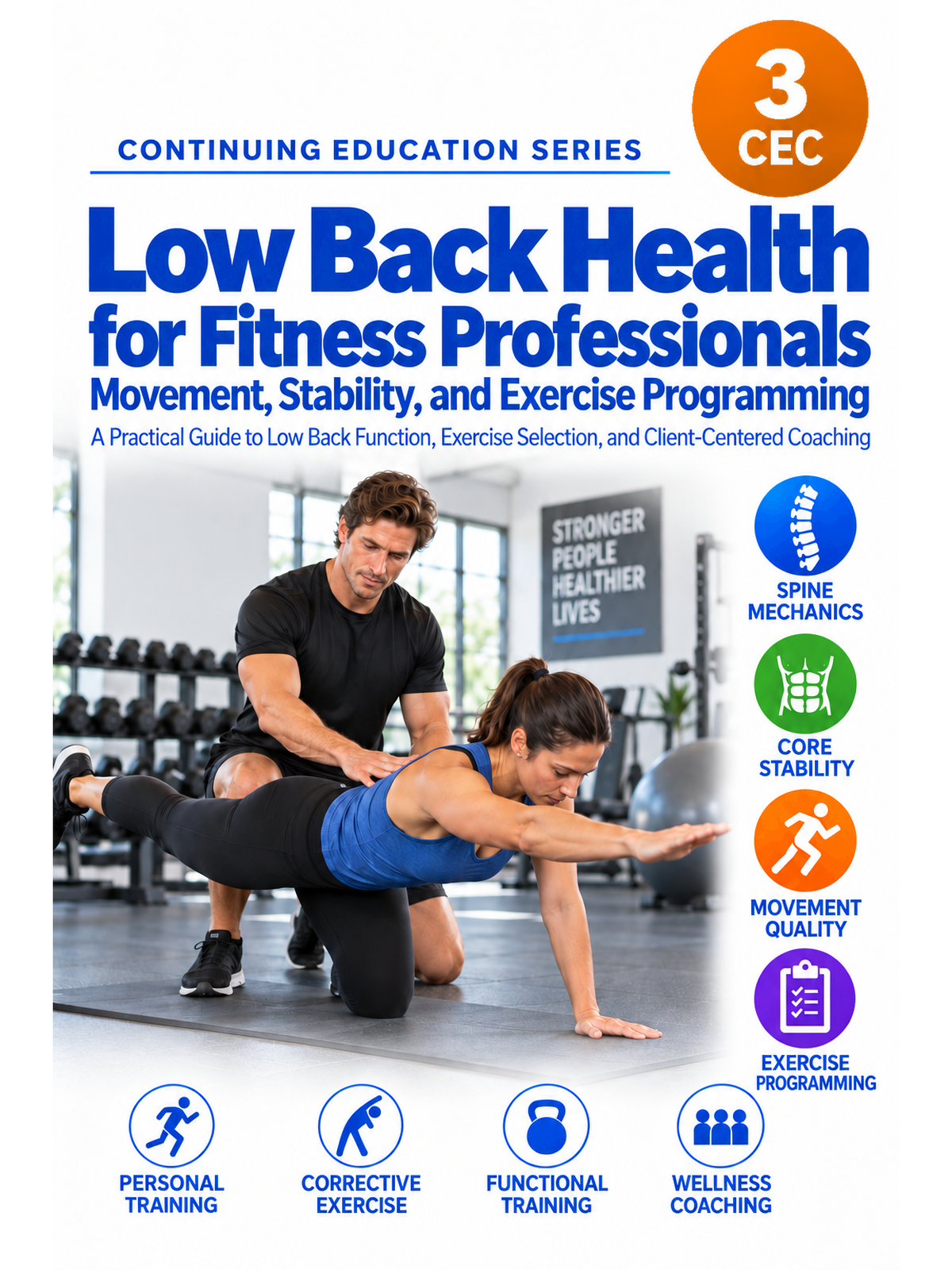
Exercise, Load Management, Movement, and Professional Decision-Making
A Practical Guide to Building Strength, Capacity, Confidence, and Function in Clients With Low Back Concerns *
Then paste this description underneath:
Help clients build strength, movement confidence, and physical capacity without oversimplifying low back pain or exceeding professional scope.
Low Back Health for Fitness Professionals is a comprehensive 3-CEC continuing education course designed to help fitness professionals work more effectively with clients who have current or previous low back concerns.
The course moves beyond fear-based explanations of the spine and simplistic ideas about posture, core weakness, or “bad” movement. Instead, it presents low back health through a practical evidence-informed framework that considers movement, physical capacity, training load, recovery, beliefs, symptoms, health history, and professional scope.
Fitness professionals are not responsible for diagnosing the source of a client’s pain. Their role is to screen appropriately, recognize red flags, understand the client’s goals and limitations, identify useful movement options, build strength and conditioning gradually, monitor the response to training, and refer when symptoms or circumstances exceed fitness scope.
Topics include:
Specific versus non-specific low back pain
Basic lumbar-spine anatomy and load sharing
Pain, imaging, beliefs, and the biopsychosocial model
Common age-related imaging findings
Red flags and neurological symptoms
Fitness-professional screening and referral
Posture, spinal flexion, and normal movement
Load, capacity, recovery, and adaptation
General resistance training for clients with low back concerns
Core training without “core” mythology
Bracing, trunk endurance, and controlled movement
Squat, hinge, carry, push, and pull progressions
Walking and aerobic conditioning
Graded exposure and movement confidence
Symptom flare-ups and exercise-dose modification
Load, range, volume, speed, and exercise-choice adjustments
Training older adults and resistance-trained clients
Work, sport, and real-life capacity
12-week low back capacity programming
Communication, collaboration, and professional boundaries
The NFPA Low Back Health Coaching Process
Course Includes:
3 NFPA Continuing Education Credits
Self-paced PDF course
Practical exercise progressions and programming examples
Red-flag and referral guidance
Symptom-monitoring strategies
Applied client cases
Practice Knowledge Check with answer key
Course Code: CEC-LB-301
Screen first. Keep people moving when movement is appropriate. Build capacity gradually. Train the person—not the MRI.
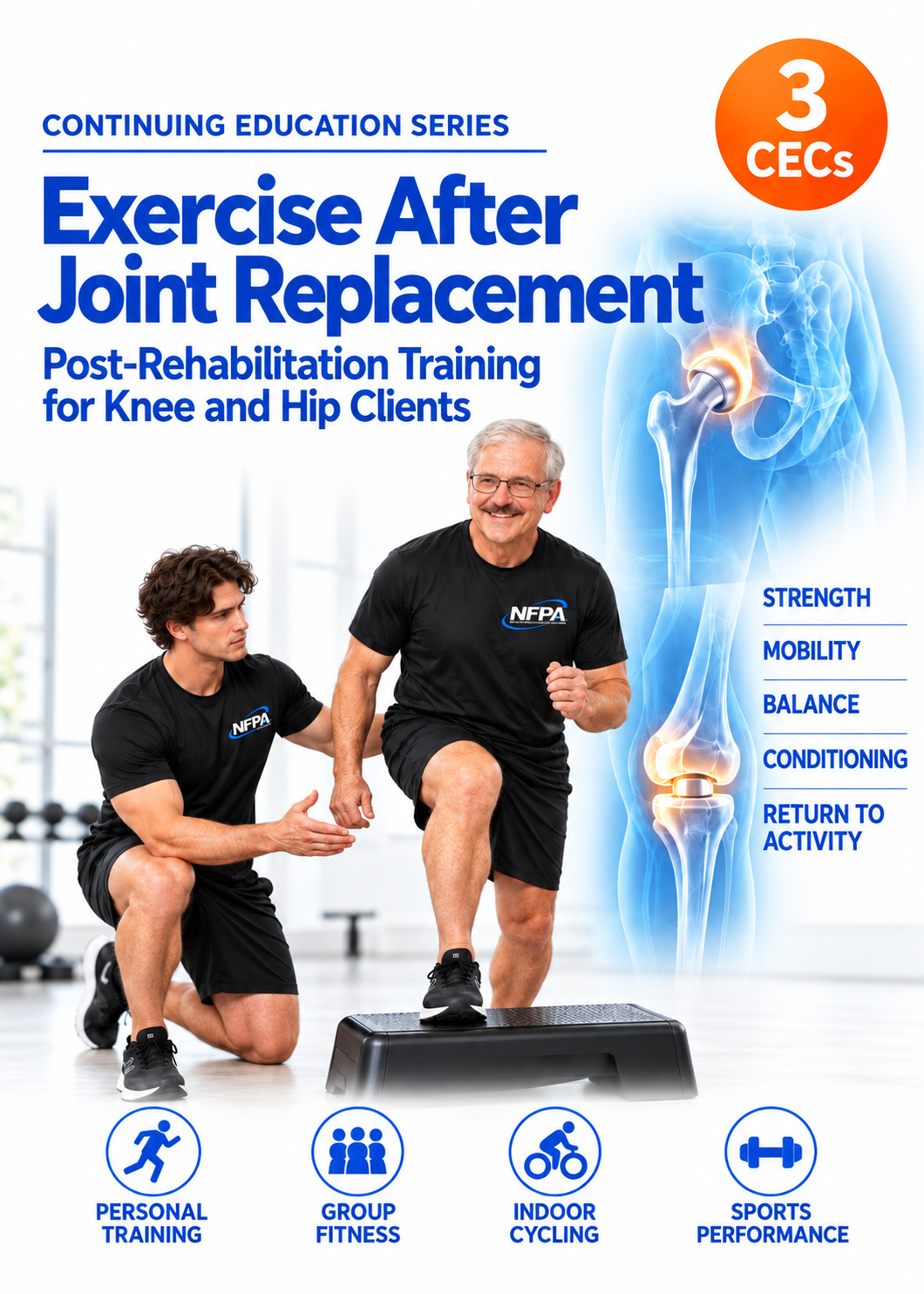
Post-Rehabilitation Training for Knee and Hip Clients
Learn how to help clients rebuild strength, mobility, balance, cardiovascular fitness, and confidence after total knee or hip replacement—while respecting medical restrictions and professional scope of practice.
Exercise After Joint Replacement is a practical 3-CEC continuing education course exploring evidence-informed fitness programming for individuals who have completed appropriate postoperative rehabilitation and have been released to participate in general exercise.
The course examines why successful joint replacement does not automatically restore muscular strength, functional capacity, or physical confidence. Fitness professionals will learn how to identify common post-rehabilitation limitations, select appropriate exercises, implement progressive resistance training, and help clients return to meaningful everyday activities.
Special attention is given to quadriceps strength after knee replacement; hip-abductor and hip-extensor strength after hip replacement; balance, gait, and stair capacity; and the distinction between medical clearance and physical readiness.
The course emphasizes safe progression, symptom monitoring, surgeon-directed restrictions, and recognizing when clients need additional healthcare or rehabilitation evaluation.
Topics Include:
Understanding total knee and total hip replacement
The transition from postoperative rehabilitation to fitness training
Medical clearance, surgeon restrictions, and professional boundaries
Common strength and mobility limitations after joint replacement
Quadriceps weakness and functional recovery after knee replacement
Hip-abductor and hip-extensor strength after hip replacement
Functional fitness screening and assessment
Sit-to-stand, gait, stepping, balance, and strength assessment
Recognizing complications and medical referral warning signs
Progressive resistance training after joint replacement
Squat and sit-to-stand exercise progressions
Hip-hinge and deadlift movement patterns
Step-ups, step-downs, and stair training
Balance, gait confidence, and single-leg capacity
Range of motion and functional mobility
Walking, cycling, aquatic exercise, and aerobic conditioning
Introducing muscular power without unnecessary impact
Managing exercise-related pain, swelling, and training load
Returning to golf, hiking, travel, recreation, and other activities
Understanding medical clearance versus physical readiness
Programming for clients with multiple joint replacements
Osteoporosis, obesity, cardiovascular disease, and diabetes considerations
Sample post-rehabilitation knee and hip training programs
Practical client coaching scenarios
The NFPA Post-Joint-Replacement Fitness Process
Course Includes:
3 NFPA Continuing Education Credits
Self-paced PDF continuing education course
15-question Practice Knowledge Check with answer key and explanations
10 practical coaching cases involving knee and hip replacement clients
Sample strength, balance, aerobic, and functional exercise programs
Respect the replacement—train the person.
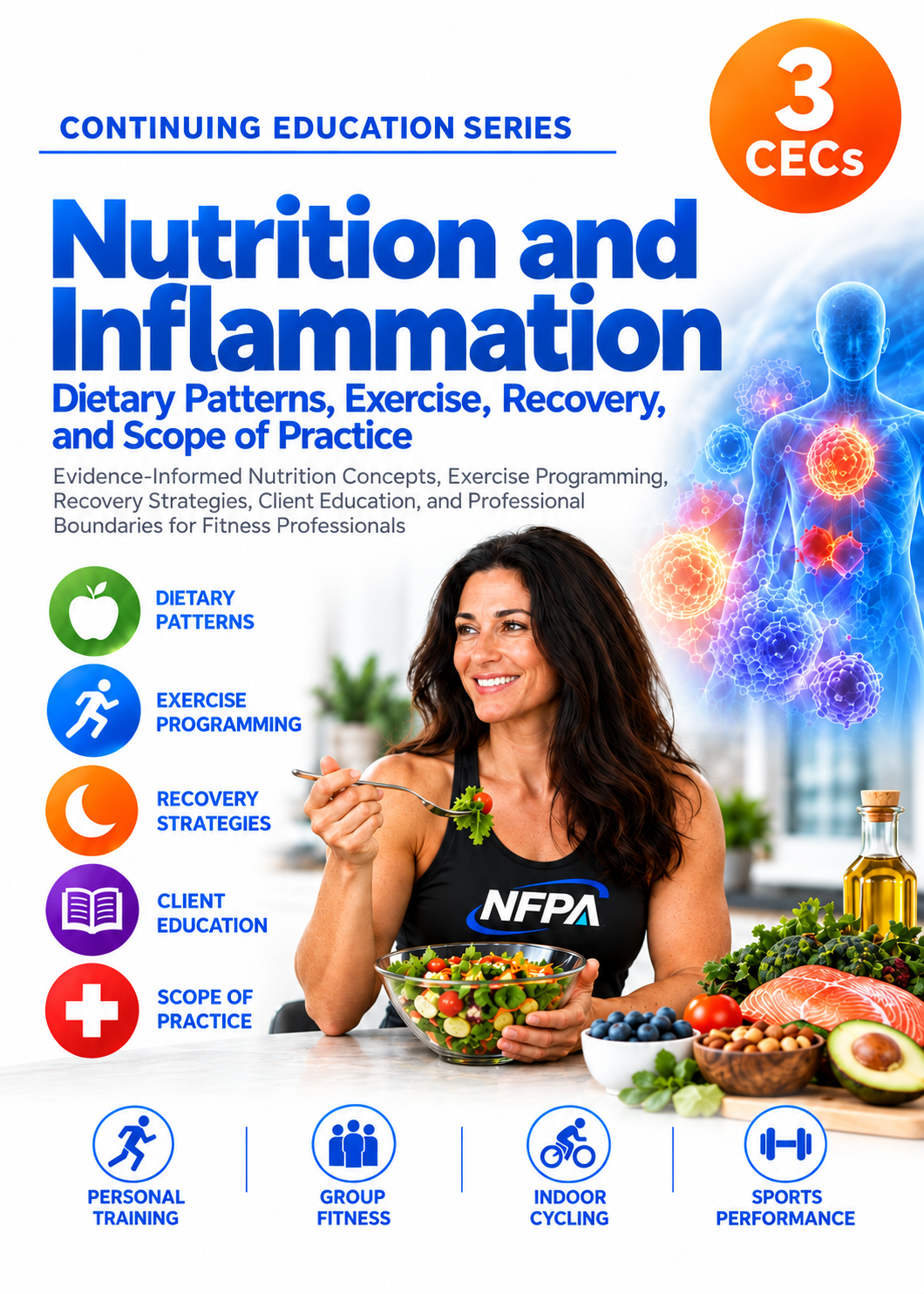
Dietary Patterns, Exercise, Recovery, and Scope of Practice
Learn how nutrition, physical activity, and recovery influence inflammatory processes while separating evidence-based guidance from common nutrition myths.
Nutrition and Inflammation is a practical 3-CEC continuing education course exploring evidence-informed nutrition concepts, exercise programming, recovery strategies, client education, and professional boundaries for fitness professionals.
The course examines the difference between normal acute inflammation and chronic inflammatory dysregulation, why inflammation is essential for tissue repair and exercise adaptation, and how overall dietary patterns influence long-term metabolic and cardiovascular health.
Fitness professionals will learn how to evaluate common claims surrounding sugar, carbohydrates, gluten, dairy, seed oils, omega-3 fatty acids, and ultra-processed foods without creating unnecessary food fear.
Special emphasis is placed on Mediterranean-style dietary patterns, adequate nutrition to support training recovery, the relationship between exercise and inflammatory markers, and the importance of staying within professional scope.
The course also explains when clients should be referred to qualified healthcare or nutrition professionals for medical evaluation, therapeutic diets, or disease-specific treatment.
Topics Include:
Understanding acute and chronic inflammation
Inflammation, immune defense, and tissue repair
Exercise-induced inflammatory signaling and adaptation
Chronic low-grade inflammation and metabolic health
C-reactive protein, cytokines, and inflammatory biomarkers
Oxidative stress and exercise recovery
Dietary patterns versus individual food ingredients
Mediterranean-style eating and inflammation research
Plant-forward and DASH dietary patterns
Carbohydrates, added sugars, and inflammatory claims
Dietary fiber, whole grains, and gut-related health
Gluten, carbohydrate restriction, and common misconceptions
Dietary fat quality and saturated-fat considerations
Omega-3 and omega-6 fatty acids
Seed oils and inflammation myths
Protein, meat, dairy, and plant-based foods
Ultra-processed foods and interpretation of research
Aerobic exercise, resistance training, and long-term inflammatory health
Muscle soreness, recovery, and training adaptation
Adequate energy, protein, carbohydrate, and hydration
Sleep, recovery, and overall lifestyle patterns
Antioxidant and anti-inflammatory supplement claims
Turmeric, curcumin, fish oil, and supplement safety
Client communication without food fear or stigma
Professional scope of practice and medical nutrition therapy
Recognizing situations requiring medical or dietitian referral
Practical nutrition and exercise coaching scenarios
The NFPA Nutrition-and-Inflammation Coaching Process
Course Includes:
3 NFPA Continuing Education Credits
Self-paced PDF continuing education course
15-question Practice Knowledge Check with answer key and explanations
12 practical coaching cases involving nutrition misconceptions, exercise recovery, inflammatory conditions, and professional boundaries
Evidence-informed nutrition education and practical exercise-programming applications
Course Code: CEC-NI-301
Build the pattern—do not chase a single “anti-inflammatory” food.
Scapular Mechanics, Rotator Cuff Function, and Exercise Programming
Learn how to develop shoulder strength, mobility, stability, and functional capacity through evidence-informed exercise programming, progressive resistance training, and appropriate coaching strategies.
Shoulder Health: Scapular Mechanics, Rotator Cuff Function, and Exercise Programming is a practical 3-CEC continuing education course exploring shoulder anatomy, coordinated movement, rotator cuff training, load management, and individualized exercise progression.
The course examines why the shoulder should be understood as an integrated system involving the glenohumeral joint, scapula, clavicle, thoracic region, rotator cuff, and surrounding musculature.
Fitness professionals will learn how the rotator cuff contributes to rotation and humeral-head control, how scapular muscles coordinate during reaching and overhead movement, and why there is no single perfect shoulder position or movement pattern for every client.
Special attention is given to developing shoulder capacity rather than unnecessarily restricting movement. The course explains how to modify training variables such as load, range of motion, volume, grip, angle, and speed to accommodate client needs while maintaining useful exercise stimulus.
Participants will learn to design progressive pressing, pulling, rotator cuff, mobility, and loaded-carry programs for general fitness clients, older adults, and recreational athletes.
The course also addresses shoulder symptoms, warning signs, postoperative considerations, appropriate referral, and the important distinction between fitness coaching and medical diagnosis.
Topics Include:
Understanding the shoulder as an integrated movement system
Glenohumeral, acromioclavicular, and sternoclavicular joint function
Scapulothoracic movement and shoulder coordination
The four rotator cuff muscles and their functions
Supraspinatus, infraspinatus, teres minor, and subscapularis
Rotator cuff contributions to rotation and humeral-head control
Serratus anterior and trapezius muscle function
Scapular upward rotation and overhead movement
Scapulohumeral rhythm and individual movement variation
Understanding scapular dyskinesis without overdiagnosis
Shoulder pain, imaging findings, and exercise tolerance
Recognizing shoulder red flags and referral concerns
Managing the relationship between training load and capacity
Modifying exercise through load, range, volume, angle, grip, and speed
Shoulder mobility and strength through usable range of motion
Push-ups, push-up plus, and scapular movement
Horizontal pressing and bench-press modifications
Incline, landmine, and overhead pressing progressions
Rows, pulldowns, and pull-up variations
Progressive external- and internal-rotation training
Scapular-focused strengthening and movement control
Farmer, suitcase, rack, and overhead carries
Designing effective shoulder warm-ups
Strength, mobility, and shoulder programming for older adults
Training considerations for overhead athletes and throwers
Whole-body force transfer and athletic shoulder performance
Returning to general fitness after formal rehabilitation
Progressive shoulder strength and conditioning programs
The NFPA Shoulder Capacity Model
Practical shoulder-health coaching scenarios
The NFPA Shoulder Health Coaching Process
Course Includes:
3 NFPA Continuing Education Credits
Self-paced PDF continuing education course
15-question Practice Knowledge Check with answer key and explanations
14 practical coaching cases addressing shoulder symptoms, exercise modifications, rotator cuff training, overhead activity, and professional referral
Sample shoulder-strengthening programs and progressive exercise strategies
Course Code: CEC-SH-301
Build shoulder capacity rather than chasing perfect shoulder mechanics.
Understanding the Connections That Influence Recovery, Mood, Energy, and Performance
Learn how communication between the gut and brain interacts with stress, sleep, physical activity, nutrition, and recovery—and how to apply this emerging science responsibly in fitness coaching.
The Gut-Brain Axis, Stress, Sleep, and Exercise is a practical 3-CEC continuing education course exploring evidence-informed relationships among the gastrointestinal system, nervous system, gut microbiome, stress physiology, sleep, exercise performance, and overall health.
The course examines how the gut and brain communicate through neural, endocrine, immune, and metabolic pathways. Fitness professionals will learn why this relationship is bidirectional and how psychological stress, disrupted sleep, dietary patterns, and exercise may influence gastrointestinal function and recovery.
Special attention is given to understanding the difference between established health recommendations and emerging microbiome research. The course addresses common misconceptions involving probiotics, serotonin, cortisol, leaky gut, commercial microbiome testing, and claims that specific foods or supplements can treat mental-health conditions.
Fitness professionals will learn to integrate practical strategies involving appropriate exercise intensity, sleep-supportive habits, balanced nutrition, stress management, and recovery monitoring without diagnosing medical conditions or exceeding professional scope.
Topics Include:
Understanding the microbiota-gut-brain axis
Gut microbiota versus the gut microbiome
Bidirectional communication between the brain and digestive system
The enteric nervous system and vagus nerve
Neural, endocrine, immune, and metabolic communication pathways
The hypothalamic-pituitary-adrenal (HPA) axis
Cortisol, stress physiology, and gastrointestinal function
Acute versus chronic stress responses
Stress-related digestive symptoms and gut-brain feedback loops
Short-chain fatty acids and microbial metabolites
Serotonin, tryptophan metabolism, and common misconceptions
Sleep duration, quality, and circadian rhythms
Sleep deprivation and emerging microbiome research
Exercise effects on gut-microbiome characteristics
Aerobic exercise, resistance training, and gastrointestinal tolerance
Strenuous endurance exercise and digestive discomfort
Hydration, fueling, heat exposure, and exercise intensity
Dietary fiber, fermentable carbohydrates, and food diversity
Prebiotics, probiotics, fermented foods, and synbiotics
Psychobiotics and supplement-related claims
Limitations of commercial microbiome testing
Anxiety, depression, and professional referral boundaries
Exercise, sleep, stress, nutrition, and recovery integration
Adjusting exercise programming when recovery is reduced
Recognizing gastrointestinal and mental-health warning signs
Practical coaching strategies for athletes and general fitness clients
The NFPA Gut-Brain Coaching Process
Course Includes:
3 NFPA Continuing Education Credits
Self-paced PDF continuing education course
15-question Practice Knowledge Check with answer key and explanations
12 practical coaching cases involving stress, gastrointestinal symptoms, exercise tolerance, sleep, nutrition, and professional referral
Evidence-informed strategies for integrating exercise, stress management, sleep, and recovery
Course Code: CEC-GB-301
Support the foundations—do not diagnose the microbiome.
Balance, Strength, and Power for Older Adults
Learn how to design safe, effective, and progressive exercise programs that help older adults improve balance, strength, muscular power, mobility, confidence, and the physical capacities associated with reducing fall risk.
Fall Prevention: Balance, Strength, and Power for Older Adults is a practical 3-CEC continuing education course exploring evidence-informed fall-risk-reduction strategies, functional assessment, balance training, resistance exercise, and individualized programming for older adults.
The course examines why falls become more common with age without treating falling as inevitable. Fitness professionals will learn how physical capacity, sensory input, reaction speed, medication effects, environmental hazards, and underlying health conditions can interact to influence fall risk.
Special attention is given to understanding static, dynamic, anticipatory, and reactive balance; improving gait and stepping responses; and developing the lower-body strength and muscular power needed for everyday activities and balance recovery.
Fitness professionals will learn how to use functional assessments, implement progressively challenging but controlled exercises, and integrate strength, power, balance, mobility, and aerobic conditioning into comprehensive programs.
The course also emphasizes recognizing warning signs, coordinating with healthcare providers when appropriate, and respecting the distinction between fitness programming and clinical fall-risk evaluation.
Topics Include:
Understanding falls and fall-risk factors in older adults
Why falling is not an inevitable consequence of aging
Intrinsic and extrinsic contributors to fall risk
Fear of falling, reduced activity, and deconditioning
Center of mass and base of support
Visual, vestibular, and somatosensory contributions to balance
Static, dynamic, anticipatory, and reactive balance
Ankle, hip, stepping, and grasping recovery strategies
Walking mechanics, turning, and directional changes
Foot clearance and obstacle negotiation
Lateral, backward, and multidirectional stepping
The relationship between strength, power, and balance recovery
Progressive resistance training for older adults
Sit-to-stand, squats, step-ups, calf raises, and functional strength
Safe power-oriented exercise progressions
Screening fall history and identifying referral concerns
Timed Up and Go (TUG) assessment
30-Second Chair Stand assessment
4-Stage Balance Test
Progressive balance-training techniques
Adjusting hand support, stance width, movement, and task complexity
Conservative reactive-balance and recovery-stepping exercises
Dual-task exercise and cognitive-motor challenges
Integrating balance, strength, power, mobility, and aerobic exercise
Tai chi and other balance-training approaches
Designing individualized and group fall-risk-reduction programs
Fall-risk considerations involving osteoporosis, arthritis, joint replacement, and mobility limitations
Medication, blood-pressure, sensory, and neurological referral considerations
Beginner, intermediate, and higher-risk client programming
Practical fall-prevention coaching scenarios
The NFPA Fall Prevention Coaching Process
Course Includes:
3 NFPA Continuing Education Credits
Self-paced PDF continuing education course
15-question Practice Knowledge Check with answer key and explanations
8 practical coaching cases involving balance, strength, fall history, confidence, functional movement, and referral
Sample 12-week progressive fall-risk-reduction exercise program
Practical balance, strength, muscular power, gait, and stepping progressions
Course Code: CEC-FP-301
Train the capacity to stay upright—and the capacity to recover when balance is lost.
Strength Development, Maturation, and Safe Exercise Progression
Learn how to develop safe, effective, and progressive resistance-training programs for children and adolescents while accounting for physical growth, biological maturation, movement competency, and long-term athletic development.
Youth Resistance Training and the Adolescent Growth Spurt is a practical 3-CEC continuing education course exploring evidence-informed strength training, movement development, exercise technique, load management, and professional coaching strategies for young athletes.
The course examines why properly supervised resistance training can be both safe and beneficial for children and adolescents. Fitness professionals will learn why well-designed strength training does not stunt growth and why young athletes should not simply follow adult training programs.
Special attention is given to the adolescent growth spurt and peak height velocity (PHV), when changes in height, body mass, limb length, leverage, and coordination may affect exercise performance and movement quality.
Fitness professionals will learn to distinguish chronological age from biological maturity and training experience, allowing them to individualize exercise selection, loading, progression, and supervision.
The course also explores growth-related pain, developing growth plates and tendon attachment sites, strength and power development across maturation, and the importance of integrating resistance training with school sports, private coaching, competition, and adequate recovery.
Participants will learn practical strategies for coaching technique, progressing resistance appropriately, communicating with parents and guardians, recognizing medical referral concerns, and supporting healthy long-term athletic development.
Topics Include:
Understanding youth resistance training and its benefits
Common misconceptions about children lifting weights
Why properly designed strength training does not stunt growth
Readiness, supervision, and appropriate training environments
Growth plates, apophyses, and developing skeletal structures
Recognizing growth-related pain and referral concerns
Chronological age versus biological maturity
Training age, developmental readiness, and individual differences
Peak height velocity and the adolescent growth spurt
How rapid growth changes movement mechanics and coordination
Early- and late-maturing athletes
Strength development before, during, and after puberty
Neuromuscular adaptation and movement competency
Strength and power development across maturation
Resistance training for female youth athletes
Technique instruction and effective coaching cues
Safe exercise selection and equipment considerations
Squat, hinge, push, pull, carry, and other foundational patterns
Bodyweight, resistance bands, free weights, and machines
Progressive resistance and appropriate training intensity
Understanding maximal strength testing in youth
Sets, repetitions, frequency, recovery, and training progression
Load management during rapid growth
Integrating strength training with team practice and competition
Managing total weekly athletic workload
In-season and off-season resistance-training priorities
Sleep, hydration, nutrition, and recovery considerations
Avoiding unnecessary early specialization
Recognizing under-fueling and unhealthy body-image pressures
Coaching minors and communicating with parents and guardians
Professional scope of practice and healthcare referral
Applied youth strength-training coaching scenarios
The NFPA Youth Resistance Training Coaching Process
Course Includes:
3 NFPA Continuing Education Credits
Self-paced PDF continuing education course
15-question Practice Knowledge Check with answer key and explanations
Applied coaching examples involving growth, maturation, exercise progression, training workload, and athlete safety
Practical resistance-training guidelines, developmental frameworks, and youth exercise-programming strategies
Course Code: CEC-YRT-301
Develop strength through proper coaching, progressive loading, and long-term athletic development—not chronological age alone.
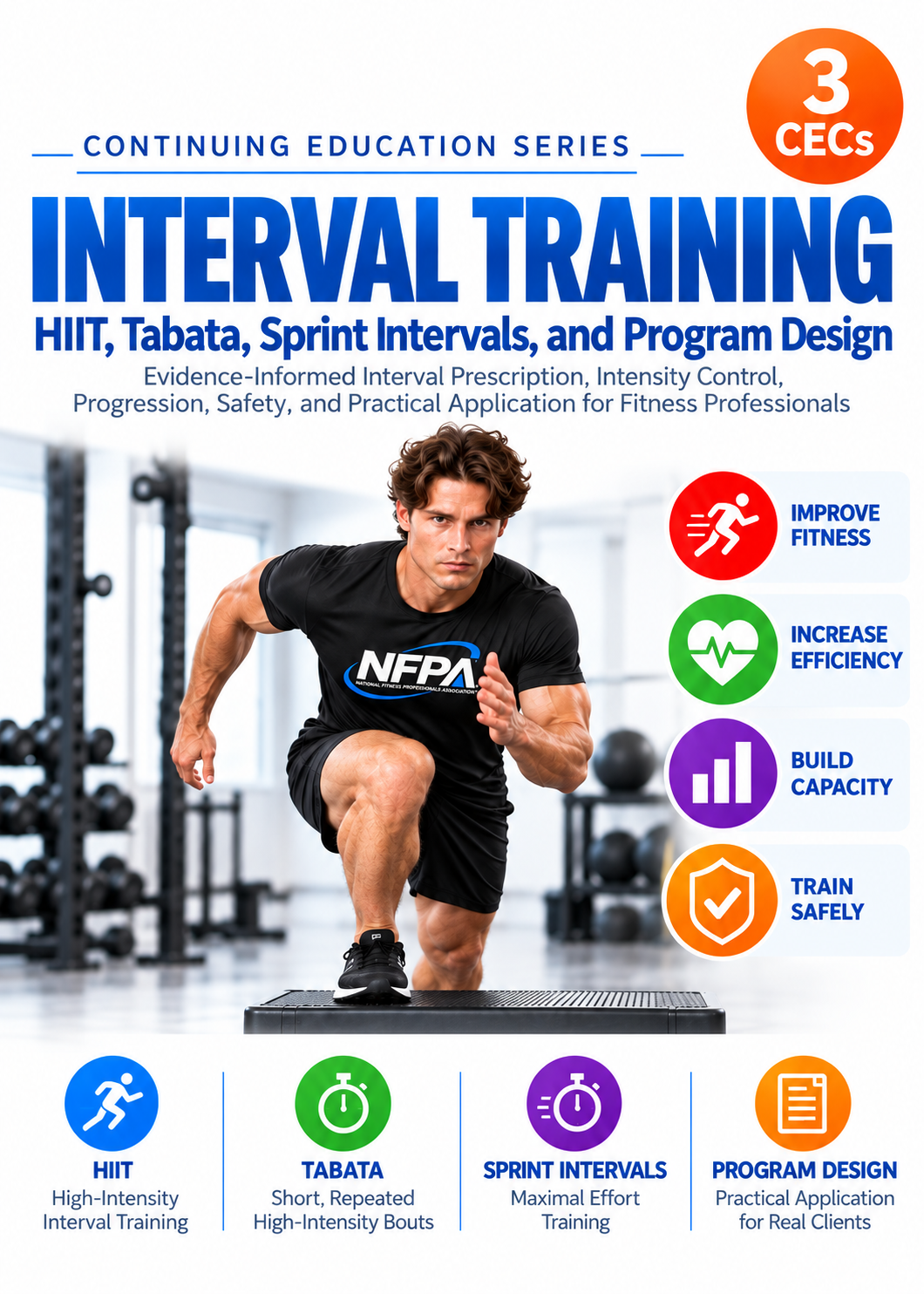
Evidence-Informed Interval Prescription, Intensity Control, Progression, and Safety
Learn how to design effective interval-training programs using high-intensity interval training (HIIT), sprint interval training, Tabata-inspired protocols, and individualized exercise progressions.
Interval Training: HIIT, Tabata, Sprint Intervals, and Program Design is a practical 3-CEC continuing education course exploring the science and application of interval training for fitness professionals.
The course examines how work intensity, exercise duration, recovery periods, training frequency, and exercise selection influence cardiovascular and metabolic adaptations. Fitness professionals will learn to distinguish moderate intervals, aerobic HIIT, sprint interval training, and the original Tabata research protocol.
Special attention is given to prescribing intensity using heart rate, ratings of perceived exertion (RPE), the Talk Test, pace, speed, and power.
The course also addresses the benefits and limitations of HIIT, appropriate interval training for older adults and special populations, exercise screening, recovery management, and the integration of interval training into comprehensive fitness programs.
Fitness professionals will learn how to develop safe, progressive interval sessions that support cardiovascular fitness, exercise performance, client adherence, and long-term health.
Topics Include:
Understanding the interval-training continuum
Moderate intervals versus high-intensity interval training
HIIT versus sprint interval training (SIT)
The original Tabata research protocol
Tabata-inspired timing versus true Tabata intensity
Aerobic and anaerobic energy-system contributions
Understanding work and recovery physiology
Work-to-recovery ratios and interval density
Active versus passive recovery
Short-, moderate-, and long-duration intervals
Prescribing intensity using heart rate and heart-rate reserve
Ratings of perceived exertion and the Talk Test
Speed, pace, power, and external workload
Selecting appropriate exercise modes
Cycling, running, rowing, uphill walking, and aquatic intervals
High cardiovascular intensity versus mechanical impact
Programming aerobic HIIT sessions
Sprint interval training and repeated-sprint performance
The 4 × 4-minute interval model
Short-interval and reduced-volume sprint protocols
Research-supported cardiovascular and metabolic benefits
HIIT versus moderate-intensity continuous training
Body composition, enjoyment, and client adherence
Interval training for older adults and beginners
Cardiovascular disease, hypertension, diabetes, and other health considerations
Screening, warning signs, and appropriate referral
Warm-up, cooldown, and recovery strategies
Progressive interval programming
Integrating interval training with resistance training and athletic preparation
Practical interval-training program examples
The NFPA Interval Training Programming Process
Course Includes:
3 NFPA Continuing Education Credits
Self-paced PDF continuing education course
15-question Practice Knowledge Check with answer key and explanations
Practical interval-training protocols and programming examples
Evidence-informed guidance for intensity prescription, recovery, progression, and safety
The timer does not define the training—the complete dose does.
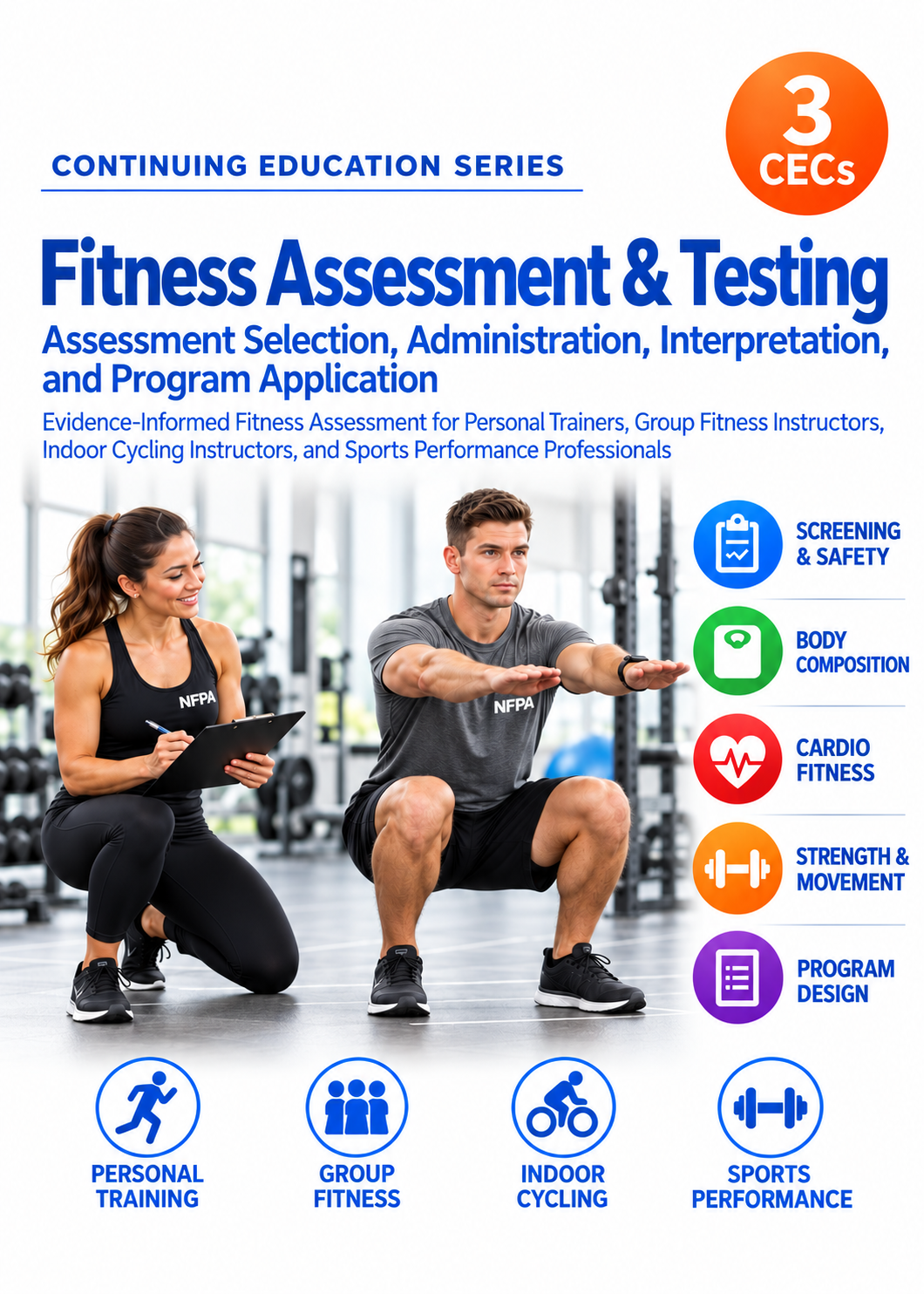
Assessment Selection, Administration, Interpretation, and Program Application
Learn how to select, administer, interpret, and apply fitness assessments that provide meaningful information for exercise programming, client progress, and professional decision-making.
Fitness Assessment & Testing is a practical 3-CEC continuing education course exploring evidence-informed assessment methods for personal trainers, group fitness instructors, indoor cycling instructors, and sports performance professionals.
The course examines why effective fitness assessment begins with a specific client goal or coaching question—not simply collecting measurements. Fitness professionals will learn how to choose appropriate tests based on client needs, health status, experience, equipment, safety, and practical usefulness.
Special attention is given to assessment validity, reliability, testing standardization, biological variability, and measurement error. The course explains why assessment results must be interpreted in context rather than treated as perfectly precise measures of fitness or health.
Fitness professionals will explore common methods of body-composition assessment, cardiorespiratory testing, muscular strength and endurance testing, power assessment, movement observation, flexibility, mobility, and functional performance.
The course also emphasizes informed consent, client privacy, appropriate testing frequency, recognizing signs that require test termination, and distinguishing fitness assessment from medical diagnosis.
Participants will learn how to translate assessment findings into meaningful exercise selection, training intensity, progression, reassessment, and referral decisions.
Topics Include:
The NFPA philosophy of evidence-informed fitness assessment
Selecting assessments based on client goals and coaching questions
Screening, assessment, testing, observation, and diagnosis
Validity, reliability, objectivity, and sensitivity to change
Floor effects, ceiling effects, and test specificity
Testing standardization and biological variability
Measurement error and meaningful interpretation
Pre-test preparation, client communication, and testing order
Resting heart rate and blood-pressure measurement
Test safety, termination criteria, and referral considerations
Body mass, BMI, and circumference measurements
Skinfold testing and body-composition estimates
Bioelectrical impedance analysis (BIA)
Body-composition testing limitations and client consent
Direct versus estimated cardiorespiratory fitness
Maximal, submaximal, and field-based aerobic testing
Walking, cycling, treadmill, running, and step-test protocols
Heart rate, RPE, and the Talk Test
One-repetition maximum (1RM) strength testing
Multiple-repetition maximum and estimated strength testing
Muscular endurance and standardized repetition tests
Vertical jump and other muscular power assessments
Movement observation, flexibility, and mobility testing
Balance, gait, and functional performance
Interpreting results using goals, baseline data, and appropriate norms
Distinguishing measurement variability from meaningful progress
Designing efficient assessment batteries
Reassessment schedules and progress monitoring
Translating assessment results into individualized exercise programs
Professional scope of practice and appropriate referral
Practical fitness assessment case studies
The NFPA Fitness Assessment & Testing Process
Course Includes:
3 NFPA Continuing Education Credits
Self-paced PDF continuing education course
15-question Practice Knowledge Check with answer key and explanations
8 applied case studies involving assessment selection, testing limitations, client communication, and program application
Practical assessment-selection frameworks, testing procedures, and interpretation examples
Course Code: CEC-FAT-301
Test what matters. Interpret what the test actually measures. Use the results to make better programming decisions.
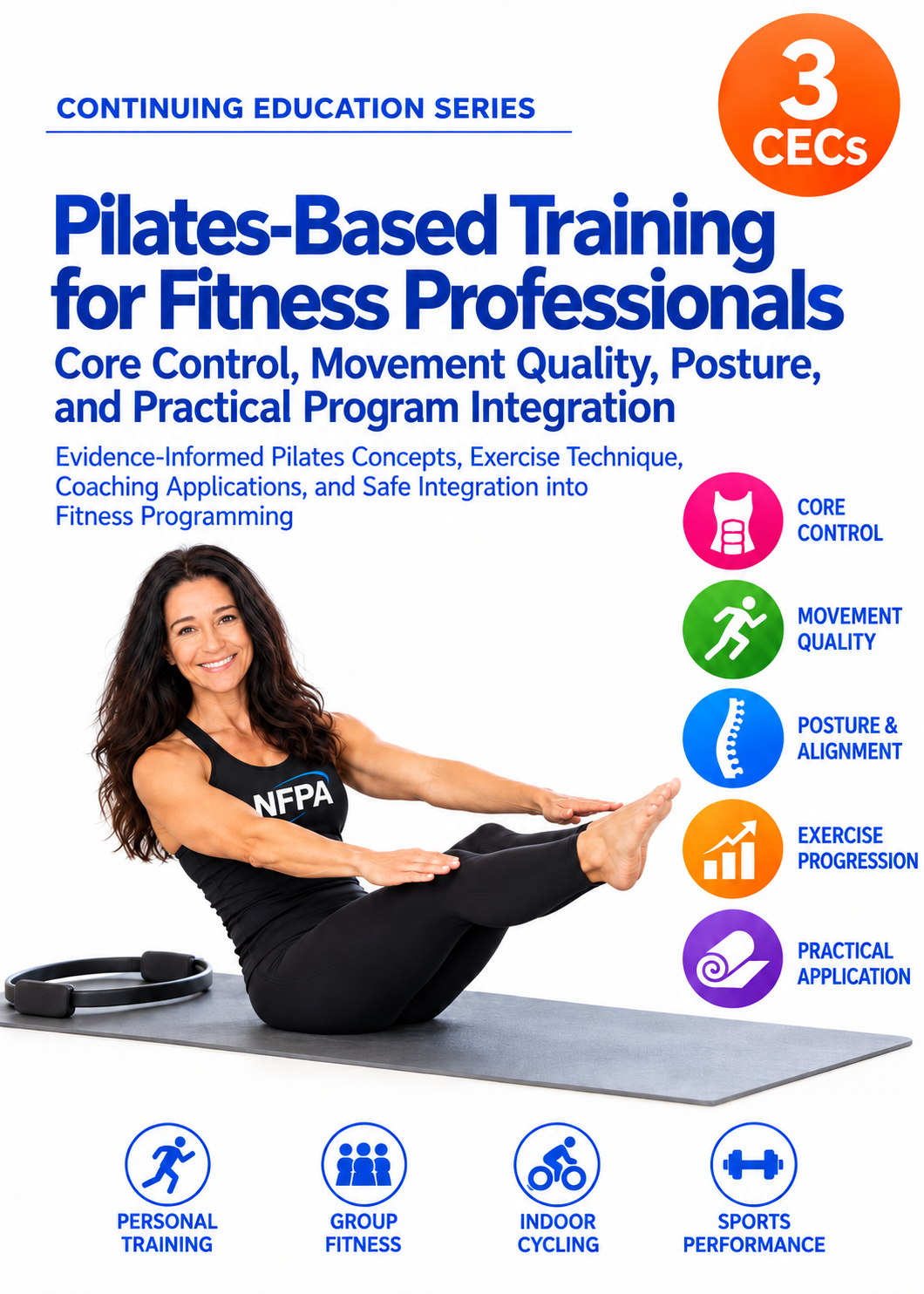
Core Control, Movement Quality, Posture, and Practical Program Integration
Learn how to incorporate Pilates-based exercise into safe, effective fitness programs that develop core control, movement quality, mobility, strength, balance, and coordination.
Pilates-Based Training for Fitness Professionals is a practical 3-CEC continuing education course exploring evidence-informed Pilates principles, exercise techniques, coaching strategies, and integration into comprehensive fitness programs.
The course examines Pilates as a versatile exercise system rather than a single standardized workout. Fitness professionals will learn how traditional Pilates concepts—including concentration, control, centering, precision, flow, and breathing—can be applied using modern exercise-science principles.
Special attention is given to trunk control, spinal and pelvic organization, exercise leverage, range of motion, breathing coordination, and progressively challenging movement patterns.
The course also explores the research supporting Pilates for selected fitness outcomes, including abdominal muscular endurance, balance, functional performance, and chronic low back pain, while explaining why Pilates is not automatically superior to other appropriately designed exercise programs.
Fitness professionals will learn how to integrate Pilates with resistance training, cardiovascular exercise, and athletic preparation while maintaining appropriate professional boundaries.
Topics Include:
Understanding Pilates as an exercise system
Classical and contemporary Pilates approaches
Mat-based versus apparatus-based Pilates
The six traditional Pilates principles
Core musculature and functional trunk control
Breathing mechanics and exercise coordination
Abdominal bracing versus drawing-in strategies
Neutral spine, pelvic control, and spinal movement
Supine trunk-control exercises and progressions
Bridging and hip-extension exercises
Trunk flexion and abdominal endurance training
Side-lying hip and pelvic-control exercises
Quadruped movements and bird-dog variations
Plank progressions and support positions
Spinal mobility and controlled movement
Standing Pilates and balance exercises
Progression through leverage, range, base of support, resistance, and complexity
Movement quality and individualized exercise regression
Effective verbal, visual, and tactile cueing
Coaching with appropriate consent and professional boundaries
Beginner, intermediate, and integrated Pilates programming
Pilates for muscular endurance, mobility, and functional fitness
Research evidence involving healthy adults and older populations
Pilates and chronic nonspecific low back pain
Pregnancy, osteoporosis, arthritis, and special-population considerations
Integrating Pilates with resistance and cardiovascular training
Pilates applications for recreational athletes
Functional movement assessment and programming
Practical Pilates coaching scenarios
The NFPA Pilates-Based Training Process
Course Includes:
3 NFPA Continuing Education Credits
Self-paced PDF continuing education course
15-question Practice Knowledge Check with answer key and explanations
10 practical coaching cases covering exercise progression, movement control, modifications, and professional application
Exercise progressions and practical programming examples
Course Code: CEC-PBT-301
Control first—then build range, load, complexity, and flow.
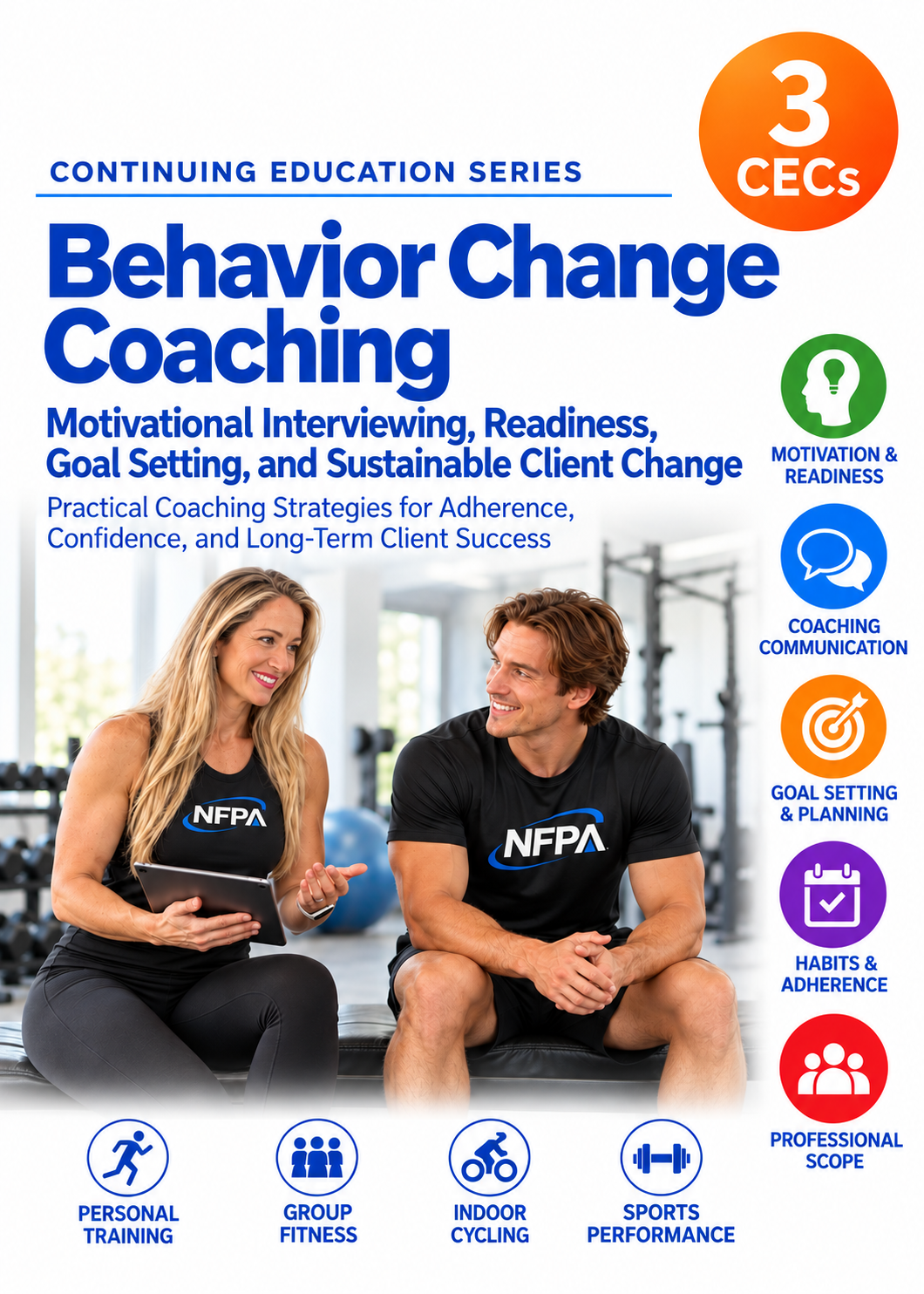
Motivational Interviewing, Readiness, Goal Setting, and Sustainable Client Change
Learn how to help clients move from good intentions to consistent exercise habits through effective communication, meaningful goal setting, realistic action planning, and confidence-building strategies.
Behavior Change Coaching is a practical 3-CEC continuing education course exploring evidence-informed behavior-change principles and their application to personal training, group fitness, and other professional exercise settings.
The course examines why knowing the benefits of exercise does not automatically lead to consistent participation. Fitness professionals will learn how motivation, confidence, personal values, environmental barriers, social support, stress, and daily routines influence exercise adherence.
Special attention is given to motivational interviewing-informed communication, understanding ambivalence, supporting client autonomy, and recognizing readiness for specific behavior changes.
Fitness professionals will learn how to use open questions, affirmations, reflections, and summaries to develop collaborative coaching conversations without relying on guilt, pressure, or confrontation.
The course also explores practical strategies for setting meaningful goals, developing action and backup plans, reducing environmental barriers, monitoring progress, responding constructively to setbacks, and helping clients become increasingly independent.
Topics Include:
Understanding the knowledge-action gap in fitness
Personal, social, and environmental influences on exercise adherence
Intrinsic, extrinsic, autonomous, and controlled motivation
Self-determination theory and exercise behavior
Autonomy, competence, and relatedness
Readiness for change and behavior-specific planning
Understanding client ambivalence
Motivational interviewing-informed fitness coaching
Engaging, focusing, evoking, and planning
Recognizing and reducing the righting reflex
Open questions, affirmations, reflections, and summaries (OARS)
Change talk versus sustain talk
Helping clients identify their own reasons for change
Developing confidence and self-efficacy
Importance and confidence scaling
Mastery experiences and achievable exercise progressions
Outcome, performance, process, and action goals
SMART goals and their limitations
Action planning and coping planning
Implementation intentions and if-then strategies
Developing realistic backup exercise plans
Minimum viable exercise behaviors
Habit formation and common misconceptions
Environmental design, cues, and reducing friction
Self-monitoring, feedback, and supportive accountability
Responding constructively to missed workouts and setbacks
Supporting long-term client independence
Maintaining professional boundaries in behavior-change coaching
Recognizing mental-health and eating-disorder referral concerns
Practical client coaching scenarios
The NFPA Behavior Change Coaching Process
Course Includes:
3 NFPA Continuing Education Credits
Self-paced PDF continuing education course
15-question Practice Knowledge Check with answer key and explanations
7 practical coaching cases involving motivation, readiness, exercise barriers, confidence, setbacks, and professional referral
Practical communication examples, goal-setting frameworks, and action-planning strategies
Course Code: CEC-BCC-301
The goal is not simply to make clients follow instructions—it is to help them become increasingly capable of making useful decisions independently.
What You Receive

How NFPA CECs Work

Explore Other CEC Values
Build Your Continuing Education Plan
Invest in your professional growth with NFPA continuing education courses.
Flexible. Relevant. Designed for Real-World Application.